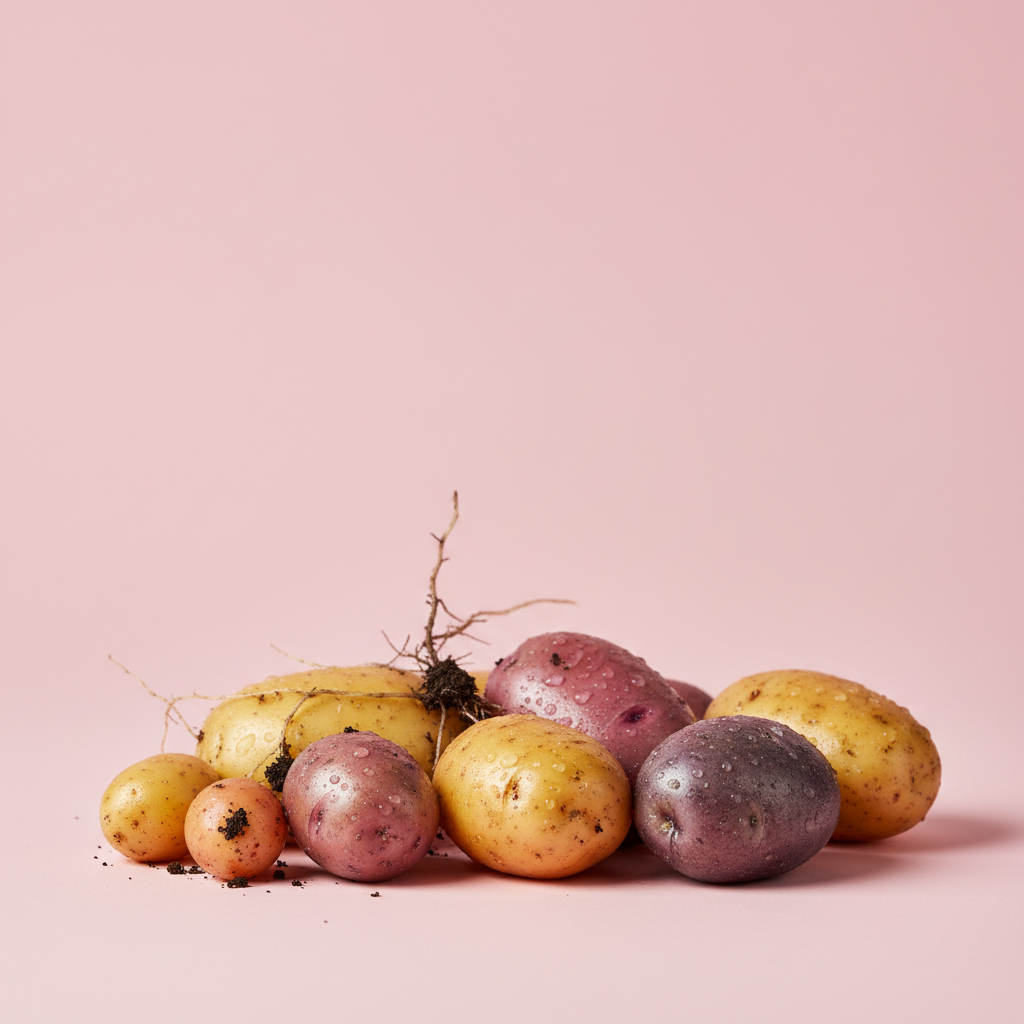
Potatoes are one of the most satisfying vegetables to grow, but knowing when to harvest them takes a little attention. Harvest too early and you'll get small, watery tubers. Wait too long and the skins will become too thick — or worse, the tubers may begin to rot in the ground.
Types of Potatoes and Their Harvest Timing
New (Early) Potatoes
New potatoes are harvested young, before the skin has set. The signal to dig is when the plant flowers — typically 60–70 days after planting. The tubers will be small (golf ball to egg-sized) with thin, almost translucent skin that you can rub off with your thumb. New potatoes don't store well, so harvest only what you'll use in the next few days.
Main Crop Potatoes
Main crop varieties need 80–120 days to mature. The foliage will naturally die back — turning yellow and collapsing — which is your primary indicator that the tubers are ready. Wait 2 weeks after the foliage dies back completely before digging. This allows the skins to set properly, dramatically improving storage life.
How to Check Without Digging
Use your fingers to gently feel around the base of the plant, just below the soil surface. You should be able to feel firm tubers. If they feel like marbles, give them more time. If they feel egg-sized or larger, do a test dig with one plant.
The Skin Rub Test
Rub the skin of a freshly dug potato firmly with your thumb. If it peels off easily — the potato is a new potato or not yet mature. If the skin holds firm and doesn't peel, the potato has properly set and is ready for storage.
How to Harvest Potatoes
- Use a garden fork rather than a spade to avoid piercing the tubers
- Insert the fork 30cm (12 inches) from the base of the plant and lever up gently
- Let the soil fall away — don't bang the potatoes together to remove dirt
- Leave them on the soil surface to dry for a few hours before storing
Curing and Storing Potatoes
Main crop potatoes benefit from a curing period of 1–2 weeks in a warm (15–18°C), humid, dark space before moving to cool storage. This heals any minor cuts and toughens the skin. After curing, store in a cool, dark, well-ventilated place — a hessian sack or paper bag is ideal. Do not store with apples, which emit ethylene gas that causes potatoes to sprout.
Buying Potatoes at the Supermarket: What to Look For
- Firm, smooth skin with no soft spots or green patches
- No sprouting — sprouts indicate age and increased solanine content
- No green tinge (greening indicates solanine, which should be cut away)
- Consistent shape and weight for the variety
Nutritional Value
Potatoes are an excellent source of potassium, vitamin C, vitamin B6, and fibre (especially in the skin). A medium potato with skin provides about 4g of fibre and is naturally fat-free. Boiled or baked potatoes retain far more nutrients than deep-fried preparations.
Freshness Checker
Type any produce to get freshness tips instantly
Powered by PickFresh AI · Scan real produce with your camera →