If you have ever cut open a capsicum and wondered whether the cluster of seeds inside is something you should be eating or throwing away, you are not alone. It is one of those produce questions that seems too simple to ask but too practical to ignore. The short answer is yes, capsicum seeds are safe to eat. The slightly longer answer is that most people choose to remove them for reasons of texture and appearance rather than safety.
Are Capsicum Seeds Safe?
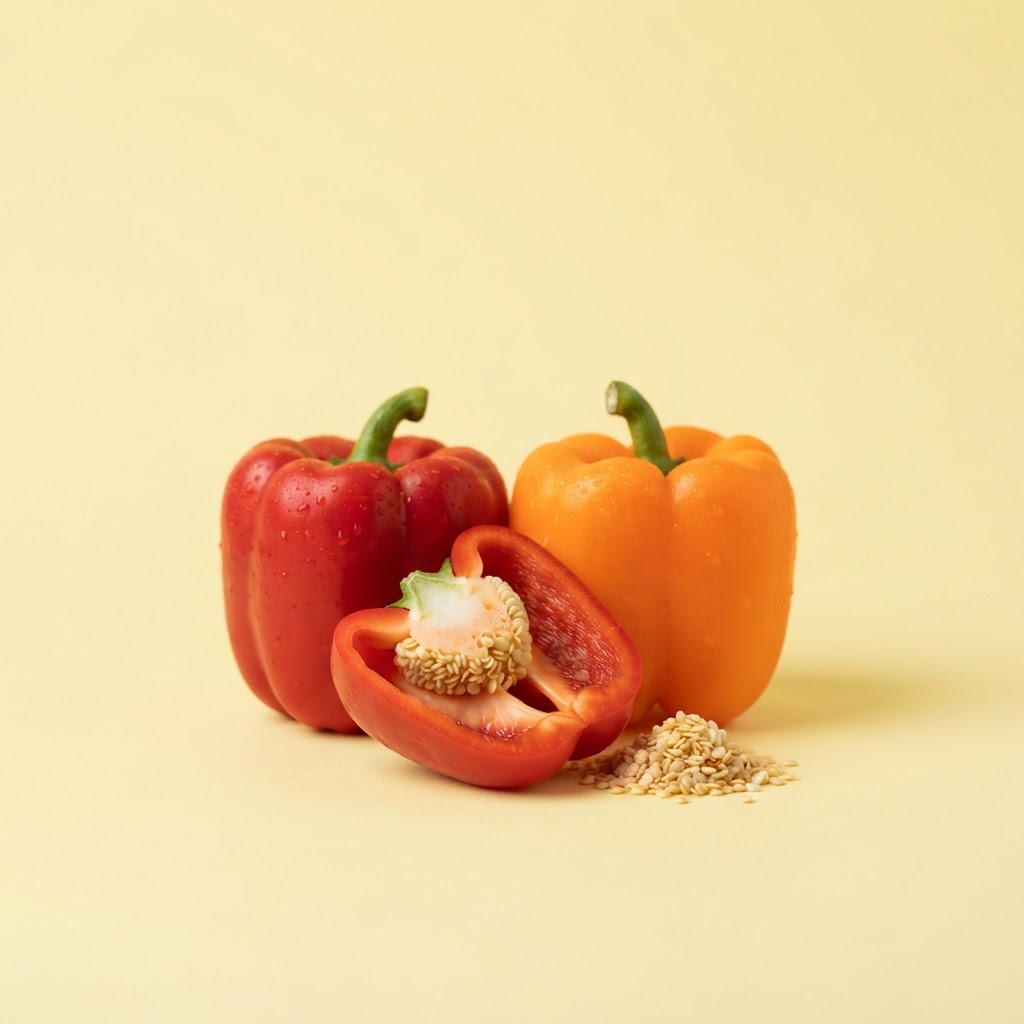
Capsicum seeds — the small, flat, cream-coloured seeds clustered around the white pith inside a bell pepper — are completely non-toxic. Unlike the seeds of some fruits (like apple seeds, which contain trace amounts of amygdalin, or lychee seeds, which contain hypoglycin), capsicum seeds contain no compounds that are harmful to humans. You could eat a whole capsicum, seeds and all, with no ill effects.
The seeds do contain small amounts of fibre and a few trace nutrients, but the quantities are so small that they are not a meaningful nutritional source. You would need to eat a very large number of capsicum seeds to get any noticeable nutritional benefit from them. So while they are safe, they are not particularly nutritious either.
Why People Remove Them
The main reason cooks remove capsicum seeds is texture. The seeds are papery and slightly crunchy, with a thin, translucent skin that can feel odd between your teeth. In a stir-fry or salad, where the rest of the ingredients are crisp and tender, the seeds can introduce an unwanted textural note. They also tend to stick to everything and look untidy scattered through a dish.
The second reason is taste. Capsicum seeds have a very mild bitterness — not enough to ruin a dish, but enough that some people notice it, particularly if the seeds are eaten on their own. The white pith that holds the seeds is more noticeably bitter, which is why most recipes tell you to remove both the seeds and the pith. The flesh of the capsicum is sweet and pleasant; the seeds and pith are not.
What About the Pith?
The white spongy pith that the seeds cling to is also technically edible and non-toxic, but it is more bitter than the seeds themselves. Most recipes call for removing it along with the seeds. If you are in a hurry or don't mind a bit of bitterness, you can leave a little pith in — it won't hurt you. But if you want the sweetest, cleanest flavour from your capsicum, remove both the seeds and as much of the pith as you can.
Different Colours, Same Seeds
All colours of capsicum — green, red, yellow, and orange — have the same type of seeds. The colour of the capsicum depends on the variety and how long it has been left to ripen on the plant. Green capsicums are simply unripe red, yellow, or orange ones. The seeds are the same regardless of the colour of the flesh, and the safety and taste considerations are identical across all colours.
Capsicum Seeds vs Chilli Seeds
There is a common misconception that the seeds of a capsicum are spicy. They are not. Capsicum (bell pepper) plants do not produce capsaicin — the compound that makes chilli peppers hot. This is true of the flesh and the seeds alike. A capsicum seed has zero heat.
Hot chilli peppers, on the other hand, do produce capsaicin, and the highest concentration is in the white pith inside the chilli, not the seeds themselves. The seeds often get coated in capsaicin from sitting against the pith, which is why people think the seeds are the hot part. If you want to reduce the heat of a chilli, remove the pith and seeds. If you want to learn more about why chillies get hotter, see our article on why chillies get hotter the longer they stay on the plant.
Can You Grow Capsicum from Store-Bought Seeds?
If you are the gardening type, you might wonder whether those seeds can be planted. The answer is yes, with a caveat. Capsicum seeds from a store-bought fruit will generally germinate and grow into plants. However, most commercial capsicum are hybrid varieties, which means the seeds may not produce fruit that is identical to the parent. The offspring can have different characteristics — different size, shape, colour, or flavour. If you want reliable results, buy seeds from a seed supplier. If you are just experimenting, planting seeds from a kitchen capsicum can be a fun project and will often produce edible, if unpredictable, results.
The Practical Answer
For everyday cooking, the answer is simple: remove the seeds if you want a cleaner texture and appearance, leave them if you don't mind. There is no safety issue either way. If you are chopping capsicum into a soup or bolognese where the seeds will be barely noticeable, don't bother removing every single one. If you are making a salad or a dish where the capsicum is a featured ingredient, take the extra minute to clean it out. The seeds won't hurt anyone, but their absence will make the dish look and taste a little better.
Frequently Asked Questions
Yes, capsicum (bell pepper) seeds are completely safe to eat. They are not toxic and contain small amounts of fibre and nutrients. Most people remove them for texture reasons — the seeds can be slightly bitter and have a crunchy, papery texture that some find unpleasant — but there is no safety reason to avoid them.
Freshness Checker
Type any produce to get freshness tips instantly
Powered by PickFresh AI · Scan real produce with your camera →