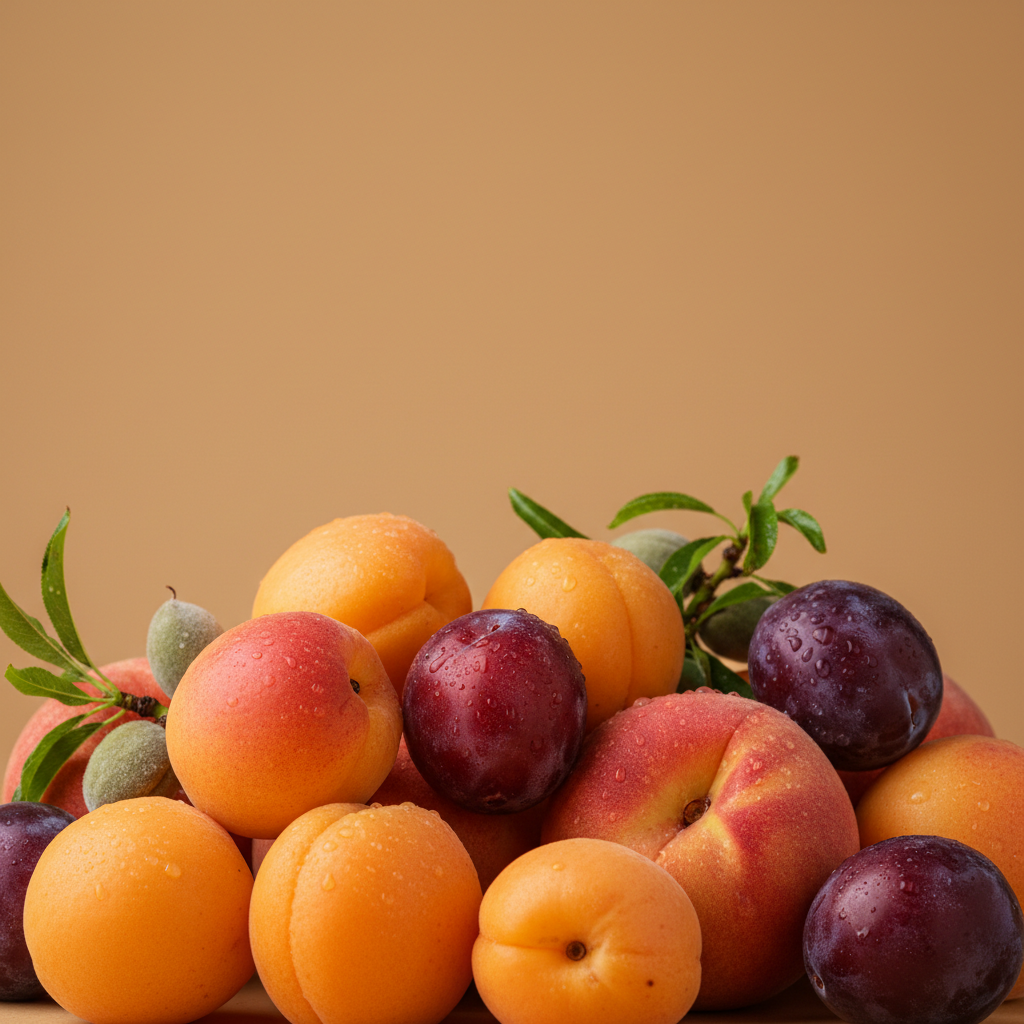
What Fruit Is In Season Now?
We set your region and month automatically from your device. Change either one to check any location or any month.
- AppleFuji, Pink Lady, Braeburn
- PearBosc, Comice at their best
- Grape (late)Very sweet, all varieties
- Fig (late)Very soft and sweet
- PersimmonSoft = sweetest
- Pumpkin (early)For cooking
- Pomegranate (early)Juice-filled seeds
- QuinceFragrant
- Stone FruitQuality very poor
📅 Coming Into Season
Apricots in October: Out of Season
October — first early apricots starting to appear.
Apricot Season in Australia: Month-by-Month
| Month | Season Status | Best Variety to Buy |
|---|---|---|
| January | Peak Season | Golden Apricot (Shepparton, VIC) |
| February | Late Season | Late Moorpark |
| March – October | Out of Season | Imported only — avoid |
| November | Early Season | Early Moorpark (Stanthorpe, QLD) |
| December | Coming into Season | Castlebrite |
Apricot Season by Australian State
| State | Peak Season | Key Growing Region |
|---|---|---|
| Victoria | December – January | Goulburn Valley (Shepparton) |
| South Australia | December – January | Riverland (Renmark, Berri) |
| New South Wales | December – February | Murrumbidgee Irrigation Area |
| Queensland | November – December | Stanthorpe (Granite Belt) |
| Tasmania | January – February | Huon Valley |
Victoria's Goulburn Valley produces over 60% of Australia's apricots, with the Riverland in South Australia a close second. Queensland's Granite Belt near Stanthorpe kicks off the season earliest, often with the first apricots hitting Brisbane markets by mid-November.
How to Pick a Ripe Apricot (3-Second Test)
- Deep orange colour: A ripe apricot is fully orange with no green or pale patches. The redder blush is sun exposure — it doesn't indicate sweetness.
- Fragrance: The most important indicator — ripe apricots smell intensely of apricot at the stem. No smell = no sweetness.
- Slight give: Gently press — slight softness means ripe. Rock hard means underripe and will never develop full flavour.
- No bruising: Apricots bruise very easily — small soft spots spread rapidly and taste fermented.
Apricot Nutrition
Three apricots (117g): 51 calories, 12g carbs, 2.1g fibre, vitamin A (24% DV), vitamin C (18% DV), potassium and beta-carotene. Apricots are one of the best fruit sources of beta-carotene — the orange pigment that converts to vitamin A and supports eye health and immune function.
Try These Apricot Recipes
How to Store Apricots
Unripe apricots
Keep unripe apricots at room temperature stem-end down on the bench. They will soften in 1–2 days but will not get sweeter — apricots do not ripen properly after picking. The sugars are fixed at harvest, so buy them already fragrant and fully orange.
Ripe apricots
Once ripe (fragrant, slightly soft), refrigerate immediately and eat within 2–3 days. Apricots deteriorate very quickly at room temperature once ripe — they go from perfect to mealy within 24 hours.
Freezing apricots
Halve, pit and freeze apricots on a tray, then transfer to a bag. Frozen apricots last 3 months and are perfect for smoothies, baking and jam. They lose texture for fresh eating but are excellent cooked.
Drying apricots
Dried apricots concentrate the nutrients — they're one of the richest sources of beta-carotene and potassium of any dried fruit. Dry at 60°C for 12–18 hours, or use a dehydrator. Dried apricots last 6–12 months in an airtight container.
Apricot Health Benefits (Expanded)
- Beta-carotene: Apricots are one of the best fruit sources of beta-carotene — the orange pigment that converts to vitamin A. Essential for eye health, immune function and skin. Three apricots provide 24% of your daily vitamin A.
- Vitamin C: 18% of your daily vitamin C per three apricots — supports immune function and collagen production.
- Potassium: Helps regulate blood pressure and supports heart health.
- Fibre: 2.1g per three apricots — supports digestion and blood sugar regulation.
- Antioxidants: Apricots contain catechins, chlorogenic acid and quercetin — the same antioxidant family found in green tea. These compounds have anti-inflammatory properties.
- Low calorie: Just 51 calories per three apricots — a nutrient-dense, low-calorie snack.
Apricot Varieties in Australia
- Castlebrite: Early-season (November–December). Bright orange, medium size, sweet and juicy. The first apricots to market each year.
- Moorpark: The classic heritage variety (December–February). Large, rich flavour, excellent for eating fresh and preserving.
- Golden Apricot: Victoria's flagship (January). Deep golden-orange, intensely sweet, the most common supermarket variety.
- Trevatt: Mid-season (December–January). Large, pale orange, excellent for drying and canning.
- Story: Late-season (January–February). Firm, sweet, good shelf life.
Related Seasonal Guides
Frequently Asked Questions
Apricots are in season in Australia from November to February, peaking sharply in December and January. The season is only about 8 weeks long. Victoria Goulburn Valley (Shepparton) produces over 60 percent of the crop, with South Australia Riverland and Queensland Stanthorpe also significant.