What Fruit Is In Season Now?
We set your region and month automatically from your device. Change either one to check any location or any month.
- AppleFuji, Pink Lady, Braeburn
- PearBosc, Comice at their best
- Grape (late)Very sweet, all varieties
- Fig (late)Very soft and sweet
- PersimmonSoft = sweetest
- Pumpkin (early)For cooking
- Pomegranate (early)Juice-filled seeds
- QuinceFragrant
- Stone FruitQuality very poor
📅 Coming Into Season
When Are Passionfruit in Season in your region?
Passionfruit are available at different times of year in your region, and supply varies through the year. Use the seasonal tool below for a month-by-month guide.
The Counterintuitive Guide to Picking Passionfruit
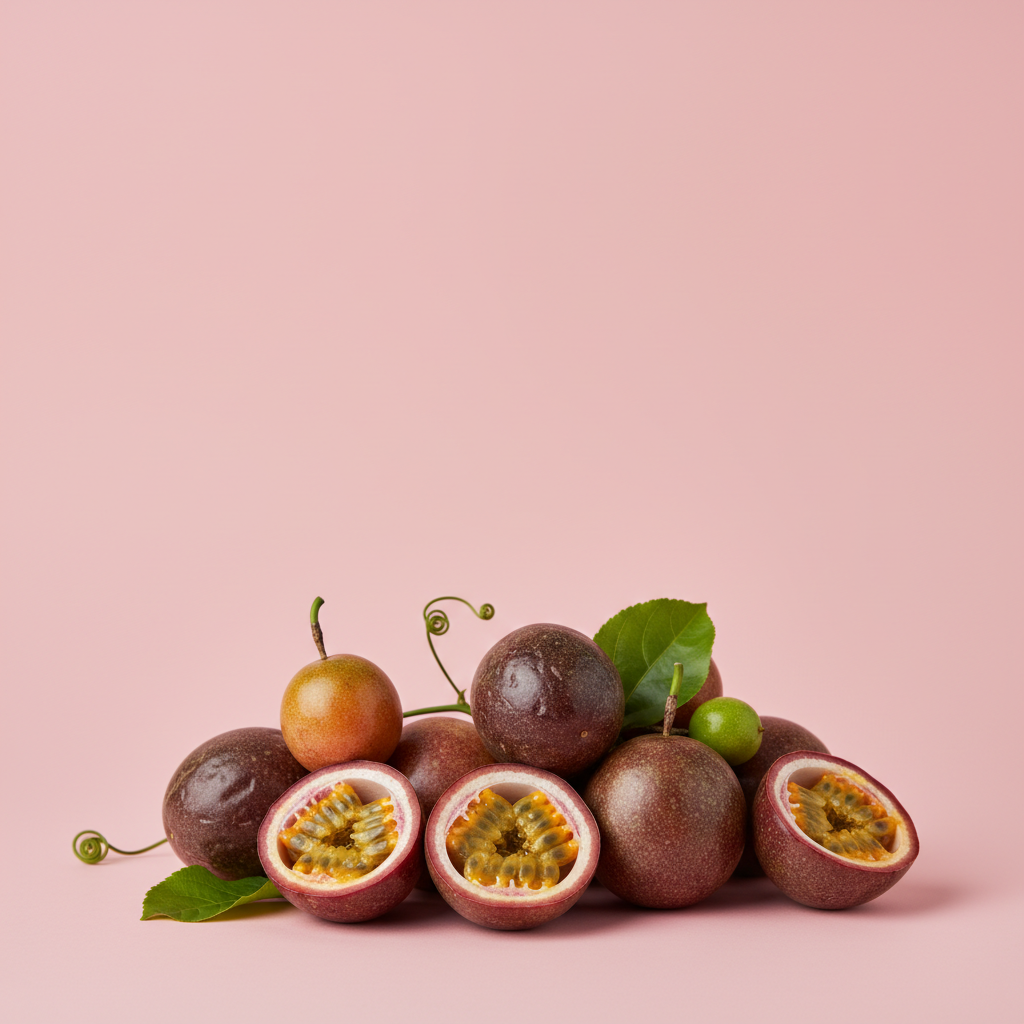
- Wrinkled skin = perfectly ripe: The most important rule. A heavily wrinkled passionfruit has lost water from the skin while the pulp has concentrated — this is peak flavour.
- Smooth and plump = underripe: Fresh-looking smooth skin means the fruit was just picked and the pulp isn't sweet yet. Leave at room temperature for 5–7 days.
- Heavy for size: A ripe passionfruit should feel heavy — lots of juicy pulp inside.
- Shake test: You should hear and feel the pulp moving inside when you shake it.
- Deep purple colour: Fully ripe Nellie Kelly (grafted) passionfruit are deep purple. Yellow varieties (banana passionfruit) are sweeter and tropical-flavoured.
How to Get the Most Out of Passionfruit
Passionfruit seeds are fully edible and provide fibre and crunch — never strain them out for pavlova or desserts. For juicing, cut in half and scoop pulp into a sieve, pressing gently. One passionfruit yields about 2–3 tablespoons of pulp. Freeze excess pulp in ice cube trays for smoothies and sauces.
Passionfruit Nutrition
Two passionfruit (36g): 35 calories, 8g carbs, 3.3g fibre, vitamin C (23% DV), vitamin A, iron and potassium. Despite their small size, passionfruit are nutritionally impressive. The seeds are a significant source of piceatannol — a stilbenoid compound with research backing for anti-obesity and skin health benefits.