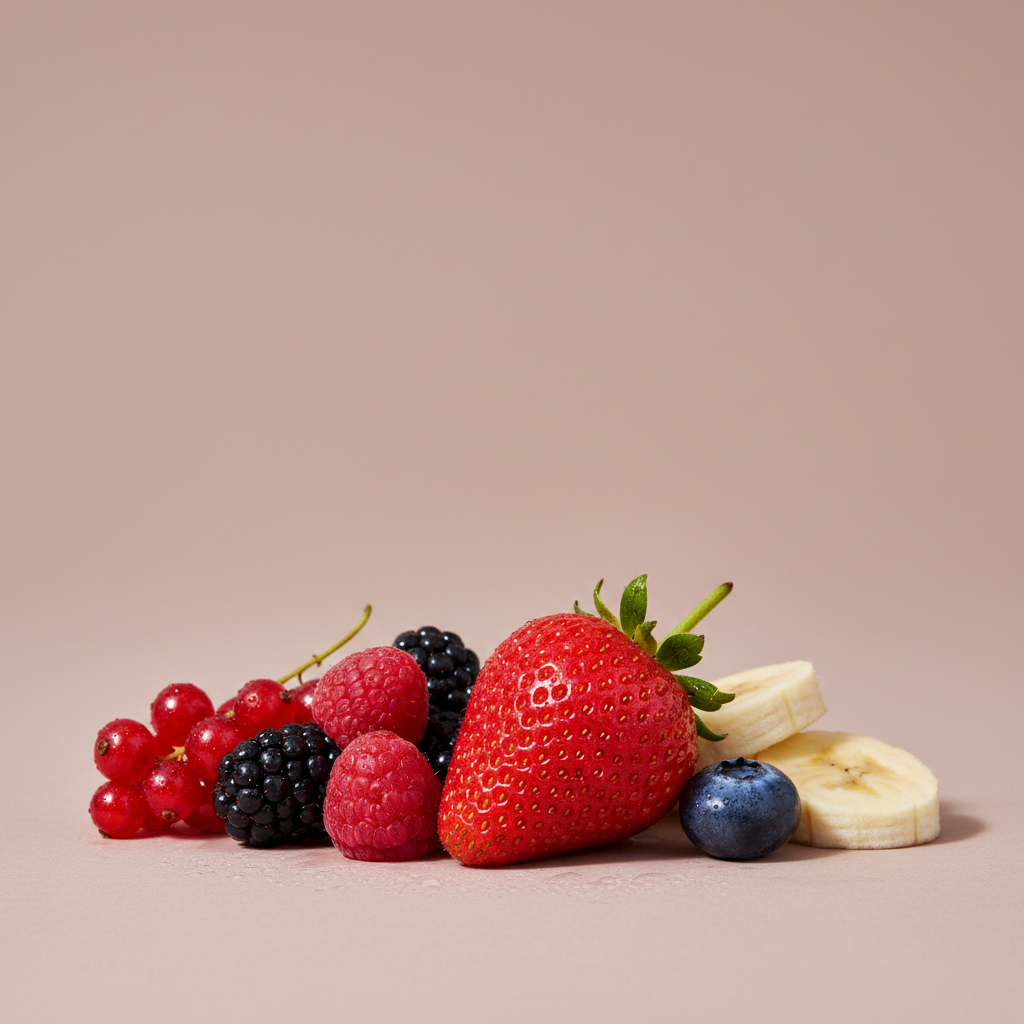

Here's a trivia question that catches almost everyone: are strawberries actually berries? The answer is no — at least, not botanically. Despite the name, strawberries are what botanists call a "false fruit" or "accessory fruit." The real surprise? Bananas, tomatoes and grapes are all true berries.
Why Strawberries Aren't Berries
In botanical terms, a true berry is a simple fleshy fruit produced from a single ovary. The entire fruit wall (pericarp) is fleshy, with seeds embedded inside the flesh. Think of a grape or a tomato — seeds surrounded by juicy flesh, all from one flower with one ovary.
Strawberries don't work this way. The red, fleshy part you eat isn't the fruit at all — it's the swollen receptacle (the base of the flower). The actual fruits are the tiny "seeds" dotting the surface. Each one of those seeds is a tiny individual fruit called an achene, each containing a single real seed inside.
So a single strawberry is actually dozens of tiny fruits sitting on a fleshy platform. That's why botanists classify it as an "aggregate accessory fruit" — not a true berry.
What Is a True Berry, Then?
| Fruit | True Berry? | Why |
|---|---|---|
| Banana | Yes | Single ovary, seeds inside fleshy wall |
| Tomato | Yes | Single ovary, seeds embedded in flesh |
| Grape | Yes | Single ovary, fleshy throughout |
| Blueberry | Yes | Single ovary, many seeds in flesh |
| Kiwi | Yes | Single ovary, seeds in flesh |
| Strawberry | No | Accessory fruit — flesh is receptacle, "seeds" are the real fruits |
| Raspberry | No | Aggregate fruit — cluster of tiny drupes |
| Watermelon | No | Pepo — a specialised berry with thick rind |
The Culinary vs Botanical Distinction
Here's where things get confusing. In the kitchen, we call any small, sweet, fleshy fruit a "berry." That's the culinary definition, and it's what most people mean when they say "berry."
But botanists are stricter. They classify fruits based on their structure, not their taste. This leads to some mind-bending facts:
- Bananas are berries — they develop from a single flower with one ovary.
- Tomatoes are berries — same botanical structure as grapes.
- Strawberries are NOT berries — they're accessory fruits.
- Raspberries and blackberries are NOT berries — they're aggregate fruits (clusters of tiny drupelets).
- Watermelons and pumpkins are "pepos" — a specialised type of berry with a hard rind.
Does It Matter?
For eating purposes, not at all. Strawberries are still packed with vitamin C, manganese, folate and antioxidants regardless of what you call them. The botanical classification matters for science, agriculture and plant breeding — but for your smoothie, a strawberry is still a "berry" in every way that counts.
The Strawberry's Strange Family Tree
The modern garden strawberry (Fragaria × ananassa) is a human-made hybrid, first bred in France in the 1750s by crossing a North American species (Fragaria virginiana) with a South American one (Fragaria chiloensis). The result is the large, sweet fruit we know today — but neither parent species produces the enormous fruit we're used to.
Before this hybrid, Europeans ate wild strawberries (Fragaria vesca), which are tiny — about the size of a fingernail — but intensely flavoured. These are still grown today and are sometimes called "alpine strawberries." They're the same species whether they're botanically a berry or not (they're not).
Why Botanical Classification Matters for Growing
Understanding whether a fruit is a true berry, aggregate fruit, or accessory fruit matters for growers because it affects how the plant reproduces and how you breed new varieties:
- True berries (bananas, grapes): Seeds are inside the flesh. You can grow a new plant from the seeds inside the fruit.
- Strawberries (accessory fruits): The "seeds" on the outside are actually fruits. Each one can theoretically grow a new plant, but strawberries are usually propagated from runners (clones) rather than seed.
- Raspberries (aggregate fruits): Each tiny segment (drupelet) contains a seed. New plants come from root cuttings or suckers.
This is also why strawberries don't grow true from seed — the offspring of a supermarket strawberry won't produce the same fruit. Commercial growers use runners to clone the exact variety. If you're growing at home, buy certified plants rather than planting seeds from a strawberry.
Other "Berries" That Aren't Really Berries
The botanical world is full of surprises. Here are more fruits we call "berries" that technically aren't:
| Fruit | Common Name | Actual Classification |
|---|---|---|
| Strawberry | Berry | Accessory fruit (aggregate of achenes) |
| Raspberry | Berry | Aggregate fruit (cluster of drupelets) |
| Blackberry | Berry | Aggregate fruit (cluster of drupelets) |
| Cherry | Stone fruit | Drupe (single seed inside hard pit) |
| Peach | Stone fruit | Drupe — see our peach guide |
| Watermelon | Melon | Pepo (modified berry with thick rind) |
| Pumpkin | Vegetable | Pepo — botanically a fruit |
And here are fruits you probably don't think of as berries that technically are:
- Bananas — true berries (see banana season guide)
- Tomatoes — true berries (see tomato classification)
- Grapes — true berries (see grape season guide)
- Kiwifruit — true berries
- Blueberries — actually are berries (the name doesn't lie)
- Oranges and lemons — a specialised berry called a "hesperidium"
Does the Botanical Classification Affect Nutrition?
Not at all. Whether a fruit is a true berry or an accessory fruit has zero bearing on its nutritional value. Strawberries are still one of the most nutrient-dense fruits you can eat — a single serving of 8 medium strawberries (see our serving guide) provides almost 100% of your daily vitamin C, plus manganese, folate and powerful antioxidants called anthocyanins.
The high antioxidant content of strawberries — particularly the anthocyanins that give them their red colour — is linked to reduced risk of heart disease, improved blood sugar control, and anti-inflammatory effects. See our anti-inflammatory foods guide for more on how berries reduce inflammation.
The Legal Case: Is a Tomato a Fruit or Vegetable?
Botanical classification even reached the US Supreme Court. In 1893, the case Nix v. Hedden asked whether tomatoes should be taxed as vegetables (which had a higher import tariff) or fruits. The court ruled that while tomatoes are botanically fruits, they are used as vegetables in cooking — so legally, they're vegetables. This "culinary vs botanical" distinction is still cited today.
Want to know when strawberries are at their best? Check our strawberry season guide for the month-by-month availability calendar.
Frequently Asked Questions
No, strawberries are not botanically berries. They are classified as aggregate accessory fruits. The red flesh you eat is actually the swollen receptacle of the flower, and the tiny seeds on the surface are the real fruits (called achenes). True berries, like bananas and tomatoes, develop from a single ovary with seeds inside the flesh.
Freshness Checker
Type any produce to get freshness tips instantly
Powered by PickFresh AI · Scan real produce with your camera →