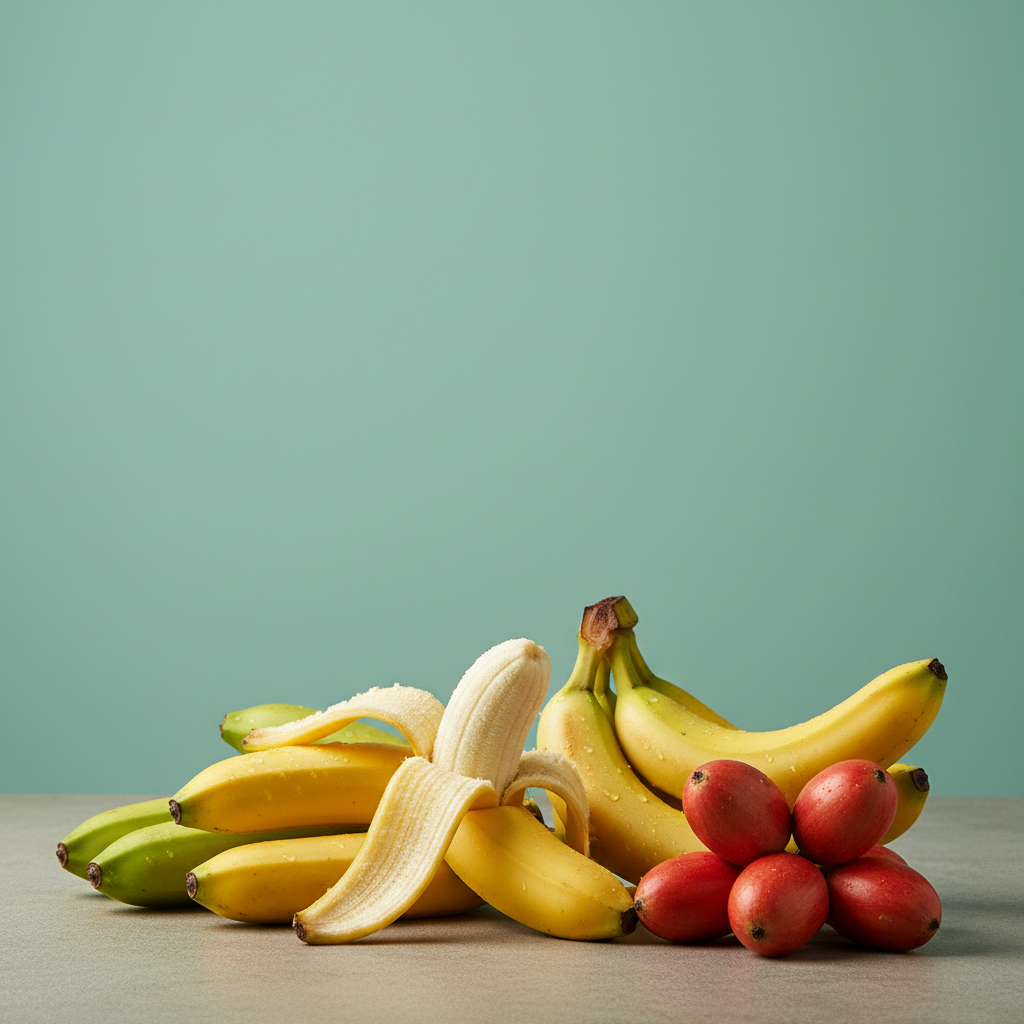
What Fruit Is In Season Now?
We set your region and month automatically from your device. Change either one to check any location or any month.
- AppleFull range available
- Pear (late)Comice, Seckel peak
- PomegranateJuice-filled, sweet
- PersimmonSoft and sweet
- PumpkinSugar pumpkins best
- CranberryTart and fresh
- Grape (very late)Quality declining
- Kiwifruit (early)New Zealand varieties
- Stone FruitVery poor quality
📅 Coming Into Season
Next
More you can do with this Apple
Tap one and we will work it out for this exact one. Nothing is generated until you do.
Are Bananas in Season in your region?
Bananas are available at different times of year in your region, and supply varies through the year. Use the seasonal tool below for a month-by-month guide.
How to Choose the Right Ripeness
The perfect banana depends on what you're using it for. Here's the complete ripeness guide:
🟢 Green
Unripe, starchy, resistant starch is a great prebiotic. Best for cooking (green banana curry).
Ripen in 2–4 days at room temperature.
🟡 Yellow with green tips
Starting to ripen, still firm. Mild sweetness. Good for those managing blood sugar.
Ripen in 1–2 days.
💛 Fully yellow
Perfect for eating fresh. Sweet, soft and easy to digest.
Eat today or tomorrow.
🟤 Brown spotted
Very sweet and soft — highest natural sugar content. Best for baking banana bread.
Bake now or freeze immediately.
Banana Nutrition Facts
One medium banana (118g) provides: 105 calories, 27g carbohydrates, 3g fibre, 1.3g protein, potassium (422mg), vitamin B6, vitamin C and magnesium. Bananas are one of the most affordable and nutritious convenience foods available.
The Prebiotic Power of Bananas
Green and slightly underripe bananas contain significant resistant starch — a type of prebiotic fibre that feeds beneficial gut bacteria. As bananas ripen, resistant starch converts to simple sugars. If you're focused on gut health, buy slightly underripe bananas and eat them before they're fully yellow.
How to Ripen Bananas Faster
- Paper bag trick: Put bananas in a paper bag with an apple or pear — ethylene gas from these fruits accelerates ripening.
- Warm spot: Place bananas in a warm spot (top of fridge) — warmth speeds ripening.
- Oven method: For baking, place unpeeled bananas at 150°C for 15 minutes until skin turns black.
Try These Banana Recipes
Where Do Australian Bananas Grow?
Australian bananas are grown almost exclusively in tropical and subtropical regions:
| Region | Main Varieties | Notes |
|---|---|---|
| Far North Queensland (Tully, Innisfail, Atherton) | Cavendish, Lady Finger | The largest banana-growing region in Australia. High rainfall and tropical climate produce the best fruit. |
| South-East Queensland (Bundaberg, Coffs Harbour) | Cavendish | Subtropical growing — slightly smaller fruit but still excellent quality year-round. |
| Northern NSW (Murwillumbah, Lismore) | Lady Finger, Cavendish | A smaller but significant growing region, particularly for Lady Finger bananas. |
Because bananas are grown in tropical north Queensland, they don't have a traditional "season" — they're harvested every week of the year. However, supply peaks in March, April and May when growing conditions are ideal, and dips slightly in February during cyclone season.
Cavendish vs Lady Finger Bananas
The two main banana varieties in Australia are quite different:
- Cavendish: The everyday banana — long, slightly curved, mild and sweet. This is what you'll find at Coles and Woolworths. Best for eating fresh, smoothies and baking.
- Lady Finger: Shorter, fatter and distinctly sweeter with a richer, more complex flavour. More expensive but worth seeking out. Best eaten fresh — the flavour is too good to bake with.
How to Store Bananas
To slow ripening
Keep bananas at room temperature away from other fruit (bananas release ethylene gas that ripens nearby produce faster). Once fully yellow, you can refrigerate them — the skin will go black but the flesh stays firm for 3–5 more days.
To speed ripening
Place bananas in a paper bag with an apple or pear. The trapped ethylene gas accelerates ripening to 1–2 days. For baking bananas that need to be very ripe, try the oven method: place unpeeled bananas at 150°C for 15 minutes until the skin turns black.
Freezing bananas
Peel and slice overripe bananas, then freeze in an airtight container or bag. Frozen bananas last 3 months and are perfect for smoothies or banana bread. Never freeze bananas in their peel — it's nearly impossible to remove once frozen.
Banana Health Benefits (Expanded)
- Potassium: 422mg per banana — supports healthy blood pressure, muscle function and nerve signalling. Contrary to popular belief, bananas aren't the highest-potassium food (potatoes and spinach have more), but they're the most convenient.
- Resistant starch: Green and slightly underripe bananas contain resistant starch — a prebiotic fibre that feeds beneficial gut bacteria and helps regulate blood sugar. As bananas ripen, this converts to sugar.
- Vitamin B6: One banana provides 33% of your daily B6 — essential for brain development, neurotransmitter production and mood regulation.
- Natural antacid: Bananas naturally coat the stomach lining and can help soothe heartburn. They're also one of the best foods to eat on an upset stomach.
Related Seasonal Guides
Frequently Asked Questions
Yes, bananas are available year-round in Australia. They are grown in tropical north Queensland and harvested every week. Supply peaks in March, April and May when prices are lowest and quality is highest.
Frequently Asked Questions
Bananas are available year-round in Australia as they are a tropical crop that produces continuously. North Queensland is the main growing region, particularly around Innisfail and Tully. Peak supply is from March to November, but there is no true off-season for bananas.