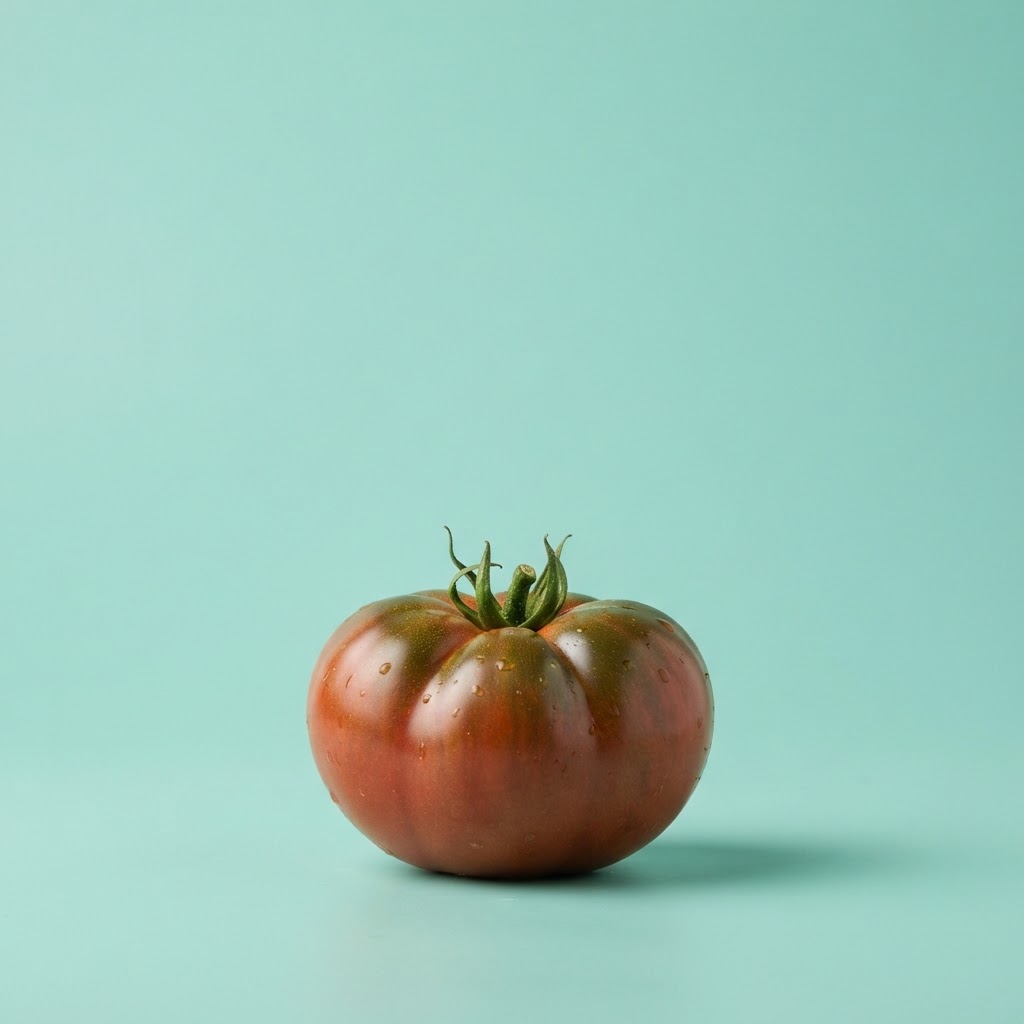
Identifying a tomato down to the variety is genuinely difficult, and it is worth saying so up front. There are thousands of named cultivars, many are regional synonyms for the same fruit, and growing conditions change the size and colour of a tomato far more than most people expect.
What you can do reliably is narrow a tomato down to a type and often to a specific variety. Four features do almost all the work.
One: Size Class
Tomatoes fall into rough size bands, and the band tells you what the fruit is for.
- Cherry and grape. Under about 30g. Sweet, thin-skinned, eaten whole. Grape types are elongated; cherry types are round.
- Salad and standard. Roughly 80–150g. The everyday slicing tomato.
- Beefsteak. 200g and up, often 400g or more. Wide, flat, heavily ribbed, and mostly flesh.
- Plum and paste. Elongated and dense, with few seeds and thick walls. Roma and San Marzano sit here.
Weigh one tomato rather than guessing. A beefsteak that fits in your palm is not a beefsteak.
Two: Shape
Shape is more stable than size across growing conditions, which makes it the most useful single feature.
| Shape | What it looks like | Typical varieties |
|---|---|---|
| Round | A clean sphere, minimal ribbing | Most cherry types, Moneymaker |
| Slightly flattened | Wider than tall, a shallow dip at the stem | Most supermarket round tomatoes |
| Plum / elongated | Roughly twice as long as wide, blocky ends | Roma, San Marzano, Amish Paste |
| Oxheart | Long, tapering to a point, often with a shoulder hump | Cuor di Bue, Hungarian Heart |
| Heavily ribbed | Deep ridges running from stem to base | Costoluto Genovese, many beefsteaks |
| Pear / teardrop | Narrow at the stem, fat at the base | Yellow Pear, Red Pear |
Three: Colour and Shoulders
Tomato colour is not just red. The full range runs from near-white through yellow, orange, pink, red, brown, purple-black and green, and several varieties are striped or bicoloured.
The most useful colour clue is the shoulders — the area around the stem. On many older varieties the shoulders stay dark green even when the rest of the fruit is fully ripe. That green shoulder is a characteristic of particular heirloom lines, and it is a genuine identifying feature rather than a sign of underripeness.
Note the difference between red and pink tomatoes. A pink tomato is not an underripe red one; it has clear rather than yellow skin over red flesh, which makes it look pink. Brandywine is the classic example, and the difference is visible the moment you slice one.
Four: Skin, Scar and Flesh
- Skin thickness. Thin and tender suggests a fresh-eating heirloom. Thick and tough suggests a shipping variety.
- Stem scar. A large, corky, irregular scar suggests a large-fruited variety. A small neat scar is common on cherries and plums.
- Flesh. Dense, dry and seedless at the core means a paste type. Juicy with many seeds means a slicer.
- Core. A hard white core is typical of some commercial beefsteaks and is not a defect you caused.
Common Varieties Worth Knowing
Roma. Plum-shaped, deep red, dense and low in water. A paste and sauce tomato rather than a salad one.
San Marzano. Longer and thinner than Roma with a pointed tip, fewer seeds, and a sweeter, less acidic flavour. The classic Italian canning tomato.
Brandywine. Large, flattened, pink-red beefsteak with potato-type leaves. Rich and low in acid, and famously prone to cracking.
Black Krim. Dark purple-brown shoulders fading to red, with a smoky, salty flavour. The dark colour comes from anthocyanins, the same pigments as in blueberries.
Green Zebra. Small, round, and striped in green and yellow even when fully ripe. It stays green, which is exactly why it confuses people — a ripe Green Zebra is not an unripe tomato.
Yellow Pear. Small, pear-shaped, and bright yellow. Very productive and very sweet.
If you want to know why a shop tomato tastes of so little compared with any of these, the answer is in why supermarket tomatoes taste bland, and it has nothing to do with the variety.
Why Variety Names Are So Slippery
Three things make named-variety identification harder than it looks.
First, the same tomato is sold under different names in different countries. The tomato sold as Roma in Australia is closely related to, but not identical with, the Italian Roma.
Second, seed companies rename varieties freely. A tomato sold as a heritage variety under a romantic name may be an older commercial line with a new label.
Third, environment changes appearance dramatically. The same variety grown in cool weather will be smaller, slower and often paler than the same seed grown in a hot summer. A single fruit is never enough to confirm a variety; you need the plant, the fruit and the season together.
For a comparison of how variety identification works in another fruit where the same problem applies, see our apple variety identifier guide. If you are starting from the plant rather than the fruit, the tomato plant identifier covers what to look for on the foliage, and reading a tomato leaf goes further into leaf detail.
One more useful test: smell the stem end. A ripe tomato should smell sweet and green. If it smells of nothing at all, it was almost certainly picked before it was ready and gassed to colour, which is the normal commercial process. Our guide to tomato season explains when buying local actually gets you a better fruit.
The Short Version
Weigh it, look at its shape, check the colour and shoulders, then look at the skin and stem scar. That narrows almost any tomato to a type, and often to a variety. Just do not expect a single photo to settle a name that seed companies have been arguing about for a century.
Frequently Asked Questions
Work through four features: size class (cherry to beefsteak), shape (round, plum, oxheart, ribbed), colour including whether the shoulders stay green, and skin and stem scar. Shape is the most reliable because it changes least with growing conditions.