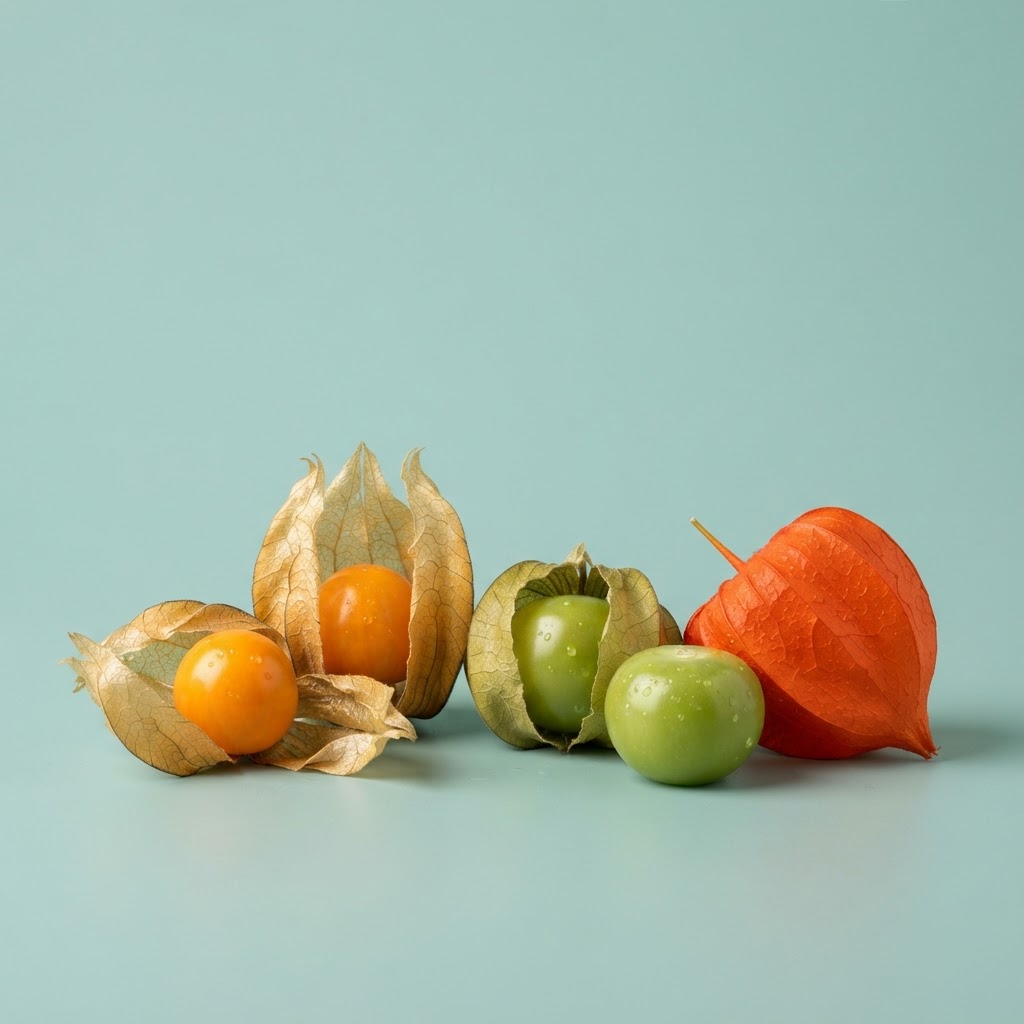
The husk is the whole story. Once you have seen a Physalis fruit, you will recognise the genus for the rest of your life, because nothing else in a garden wraps a single berry inside a papery lantern.
What the husk does not tell you is which Physalis you have, and that matters — one of the group is a popular edible fruit, another is the base of salsa verde, and another is a garden ornamental that should not be eaten.
Start With the Husk
- Thin, pale, papery, veined. An edible ground cherry or a tomatillo.
- Bright orange, rigid, inflated like a paper lantern. Chinese lantern, Physalis alkekengi — ornamental.
- Husk splitting open at the top to reveal the fruit. A ripening ground cherry.
- Husk still green and closed. The fruit is unripe. Leave it.
The Chinese lantern husk is unmistakable once seen: a vivid orange, almost plastic-looking lantern that holds its shape for weeks and is often sold dried in bunches. It is grown for that husk, not for food.
The Edible Members of the Group
Cape gooseberry (Physalis peruviana). The most commonly eaten ground cherry. A sprawling, soft-leaved plant with tomato-like foliage and small orange fruit inside a pale papery husk. The flavour is sweet-tart, somewhere between pineapple and tomato, and it is excellent eaten fresh or made into jam.
Ground cherry (Physalis pruinosa and similar). Smaller and sweeter, with fruit that drops from the plant when ripe — hence the name. Often described as tasting of pineapple or vanilla.
Tomatillo (Physalis philadelphica). Larger, green or purple, inside a husk that stays green. It is the base of Mexican salsa verde and is eaten cooked rather than raw. It is sticky under the husk, and that stickiness is normal.
What the Plant Looks Like
Every Physalis looks like a small, sprawling tomato plant. Soft green leaves, often slightly fuzzy, sometimes with wavy or toothed edges. Small bell-shaped flowers that are usually yellow with dark purple or brown markings in the throat — those dark markings are a good identifying feature for the genus.
The plants are low and floppy rather than upright. Cape gooseberries in particular sprawl across the ground and through whatever is next to them, which is why the fruit ends up lying on the soil inside its husk.
If you are trying to tell the genus from foliage alone, the combination of tomato-like leaves with a sprawling habit and those dark-throated yellow flowers is close to diagnostic. Our tomato plant identifier covers the differences from the plant it most resembles.
The Unripe Fruit Warning
This is the part that matters most. Like tomatoes, potatoes and eggplants, Physalisbelongs to the nightshade family, and like the rest of that family it produces solanine-class compounds in its green, unripe parts.
Unripe ground cherries — green fruit inside a green, closed husk — should not be eaten, and the foliage is not a food. The fruit is safe when it is fully ripe, which means the husk has dried and turned pale or brown, and the fruit inside has coloured fully to orange or yellow and dropped from the plant.
For tomatillos the rule is different. They are harvested while still green but fully sized, when the husk has filled out and split. A green tomatillo at that stage is ripe; a small hard green tomatillo on an immature plant is not.
One more point: the ornamental Chinese lantern should simply be left alone. It is not a food plant, and the bright orange lanterns that make it attractive are exactly the part you would be tempted to eat.
Ripeness and Harvesting
Ground cherries tell you when they are ready by dropping. Fruit that is still attached to the plant is not ripe; fruit on the ground inside a dried husk is. The husk protects the fruit from the soil, which is precisely why the plant evolved it.
In practice this means harvesting daily, picking up the fallen fruit and discarding the husks. Fruit keeps for a week or two in the husk at room temperature and longer if refrigerated.
Cape gooseberries behave slightly differently and can be picked from the plant once the husk has dried and turned pale, even if the fruit has not dropped. They continue to ripen after picking.
Tomatillos are harvested from the plant when the husk fills out and begins to split. They store well and freeze even better, which is why they are often frozen whole for salsa.
What to Do With Them
Ground cherries and Cape gooseberries are best eaten fresh, out of the husk, as a snack or over ice cream. They also make outstanding jam and chutney, and they work well in a fruit salad alongside pineapple and mango where their tartness cuts through.
Tomatillos are almost always cooked. Roast or boil them with chilli, onion and coriander, blend, and you have salsa verde. They are also good in a green curry and in braises where their acidity balances rich meat.
If you are identifying fruit more broadly, the tropical fruit scanner guide covers the skin-and-shape method for fruits that are less familiar than an apple, and identifying berries covers the wider berry group by attachment and colour. For the plant side, our vegetable plant recognition guide explains how to work through a mixed bed of nightshade-family plants.
The Short Version
Papery lantern husk means Physalis. Thin pale husk with an orange fruit inside means an edible ground cherry or Cape gooseberry. Green husk with a larger green fruit means tomatillo. Bright orange rigid lantern means Chinese lantern — ornamental, not food. And never eat a green, unripe fruit from any of them.
Frequently Asked Questions
Look for a small orange or yellow fruit inside a thin, pale, papery husk that splits open at the top. The plant is low and sprawling with soft tomato-like leaves and small yellow bell flowers with dark markings in the throat. Ripe fruit drops from the plant inside its husk.