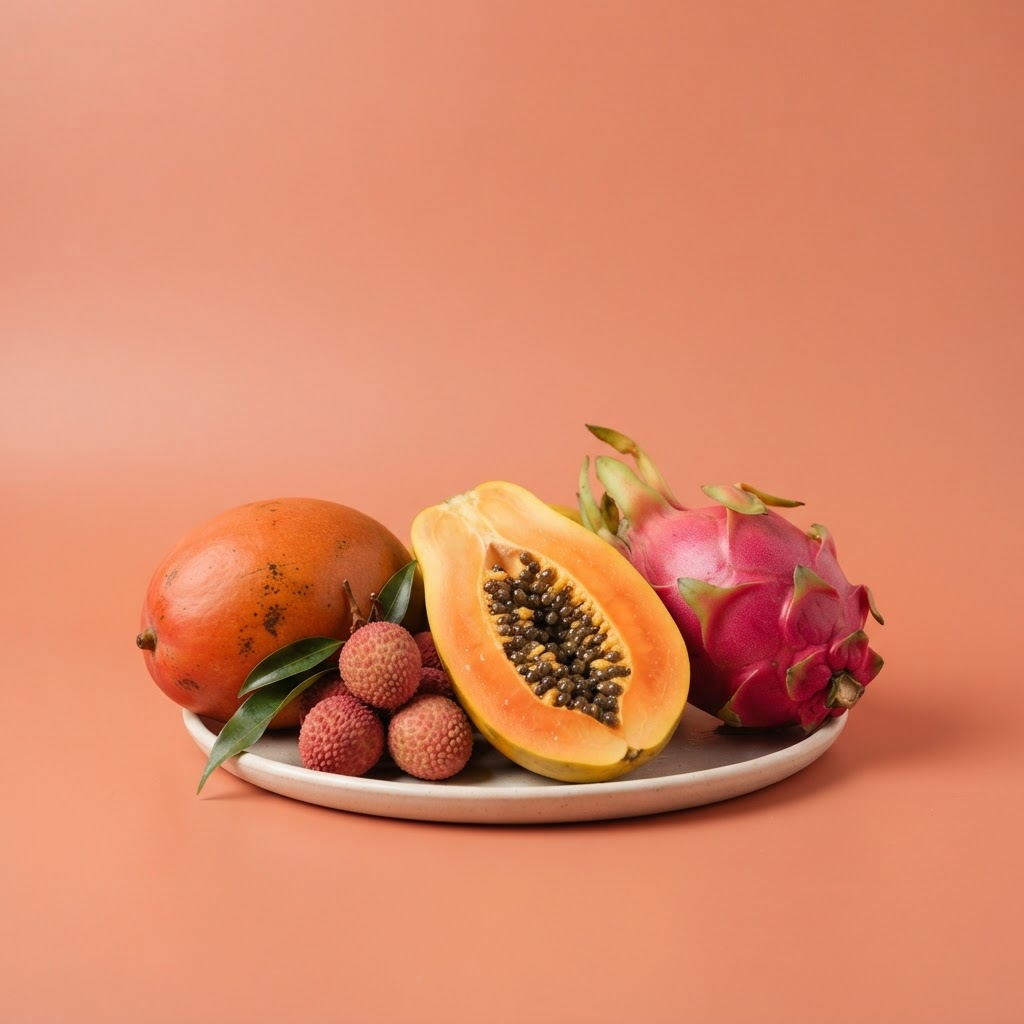
Tropical fruit is where identification gets interesting, because the range is enormous and much of it is unfamiliar to shoppers outside the tropics. It is also where ripeness judgement matters most, since many tropical fruits are picked hard and green for transport and never develop proper flavour unless you finish the job at home.
Here is how to name what you are holding, and how to tell when it is worth eating.
Identifying by Skin and Shape
Skin texture is the fastest way to sort tropical fruit into groups.
| Fruit | Skin and shape | Size | Ripeness signal |
|---|---|---|---|
| Mango | Smooth, waxy, oval with a slight beak | 8–15cm | Fragrant at the stem end, slight give when squeezed |
| Papaya | Smooth, thin, pear-shaped | 15–30cm | Skin turns from green to yellow-orange |
| Lychee | Bumpy, leathery, pink-red | 3–4cm | Skin turns deep pink-red, slight give |
| Rambutan | Covered in soft green-tipped hairs | 3–5cm | Hairs turn red, fruit gives slightly |
| Longan | Smooth, dull brown, round | 2–3cm | Slightly soft, skin leathery |
| Jackfruit | Huge, green-yellow, covered in blunt spikes | 20–50cm | Strong sweet smell, sounds hollow, spikes soften |
| Durian | Large, covered in sharp pyramidal spikes | 20–40cm | Strong smell, seam begins to split |
| Mangosteen | Small, round, deep purple, hard shell | 4–8cm | Shell gives slightly when pressed |
| Custard apple | Green, knobbly, made of fused segments | 8–12cm | Segments separate slightly, gives when pressed |
| Dragon fruit | Bright pink with green scale-like fins | 10–15cm | Fins yellow slightly, gives to gentle pressure |
| Passionfruit | Round, smooth, purple or yellow | 5–8cm | Skin wrinkles deeply — wrinkled means ripe |
| Star fruit | Glossy, yellow, five longitudinal ridges | 8–12cm | Deep yellow with brown edges on the ridges |
Mango: The Most Common Question
Mangoes cause more ripeness confusion than anything else, largely because colour is a poor guide. Some varieties blush deep red when perfectly ripe; others stay green even when ready. The colour of the skin tells you very little.
Use smell and feel instead. A ripe mango smells sweet and floral at the stem end — hold it to your nose and you should get a clear hit. It should also give slightly when you squeeze it gently with your whole hand, like a ripe avocado. A rock-hard mango is not ready, and one that is soft all over is past it.
If you have a hard mango, leave it at room temperature — a paper bag speeds things up considerably. Refrigerating an unripe mango stops the process permanently, which is worth knowing before you put one in the crisper. Our guides to ripening mango in the fridge and freezing mango cover both ends of the process.
Lychees, Rambutans and Longans
These three are closely related and all have a leathery outer skin that peels away to reveal a translucent, grape-like flesh around a single dark seed.
- Lychee: bumpy pink-red skin, sweet floral flesh. Ripe when the skin is fully coloured and gives slightly.
- Rambutan: covered in soft hairs that turn from green to red as it ripens. The flesh is similar to lychee but slightly more acidic.
- Longan: dull brown, smooth skin and a milder, muskier flavour. Often called "dragon's eye" for the translucent flesh around a dark seed.
All three brown quickly after picking, which does not necessarily mean the flesh inside has gone off. A brown lychee skin with firm, translucent flesh underneath is still perfectly good — see why lychees turn brown. Our lychee season guide covers the very short window when they are at their best.
The Big Ones: Jackfruit and Durian
Jackfruit and durian are the two that genuinely intimidate people, and reasonably so — both are enormous and both are armoured.
Jackfruit is the largest tree-borne fruit in the world, reaching 50kg. The green, spiky exterior hides dozens of yellow, banana-flavoured bulbs. Ripe jackfruit smells strongly sweet and sounds hollow when tapped. Unripe green jackfruit is used as a meat substitute because its texture is remarkably like pulled pork.
Durian is famous for its smell, which is either intoxicating or repellent depending entirely on who you ask. The chemistry behind it is genuinely interesting — see why durian smells so bad. It is ripe when the smell is strong and the seam between segments begins to split.
Both are usually sold pre-cut at markets for good reason. Opening either at home requires a heavy knife, gloves and patience.
Buying and Storing Tropical Fruit
Most tropical fruit is picked mature but firm for transport and finishes ripening at room temperature. That means the fruit on the shelf is often not ready, and buying the hardest one is not the safe choice — buying one that is nearly ready and finishing it at home gives better results.
- Ripen at room temperature, out of direct sun. A paper bag traps ethylene and speeds things up.
- Refrigerate only once ripe. Cold stops ripening permanently in most tropical fruit.
- Keep away from other produce if you want the rest to last — tropical fruit produces a lot of ethylene.
- Cut fruit should be refrigerated and eaten within a few days.
Our storage guide covers the detail for individual fruits, and the ripe fruit guide has the general tests that work across most produce.
The Short Version
Sort tropical fruit by skin: smooth means mango or papaya, bumpy leathery means lychee, hairy means rambutan, spiky and enormous means jackfruit or durian. Colour is a poor ripeness guide for most of them — smell and gentle give are far more reliable. Ripen at room temperature and refrigerate only once ripe.
Frequently Asked Questions
Smell it at the stem end — a ripe mango smells sweet and floral. It should also give slightly when squeezed gently with your whole hand, like a ripe avocado. Skin colour is a poor indicator, since some varieties stay green when fully ripe.