What Fruit Is In Season Now?
We set your region and month automatically from your device. Change either one to check any location or any month.
- AppleFuji, Pink Lady, Braeburn
- PearBosc, Comice at their best
- Grape (late)Very sweet, all varieties
- Fig (late)Very soft and sweet
- PersimmonSoft = sweetest
- Pumpkin (early)For cooking
- Pomegranate (early)Juice-filled seeds
- QuinceFragrant
- Stone FruitQuality very poor
📅 Coming Into Season
When Are Quinces in Season in your region?
Quinces in your region: peak season runs January. Timing shifts with local climate and supply, so treat this as a guide — the seasonal tool below breaks it down month by month.
How to Pick a Good Quince
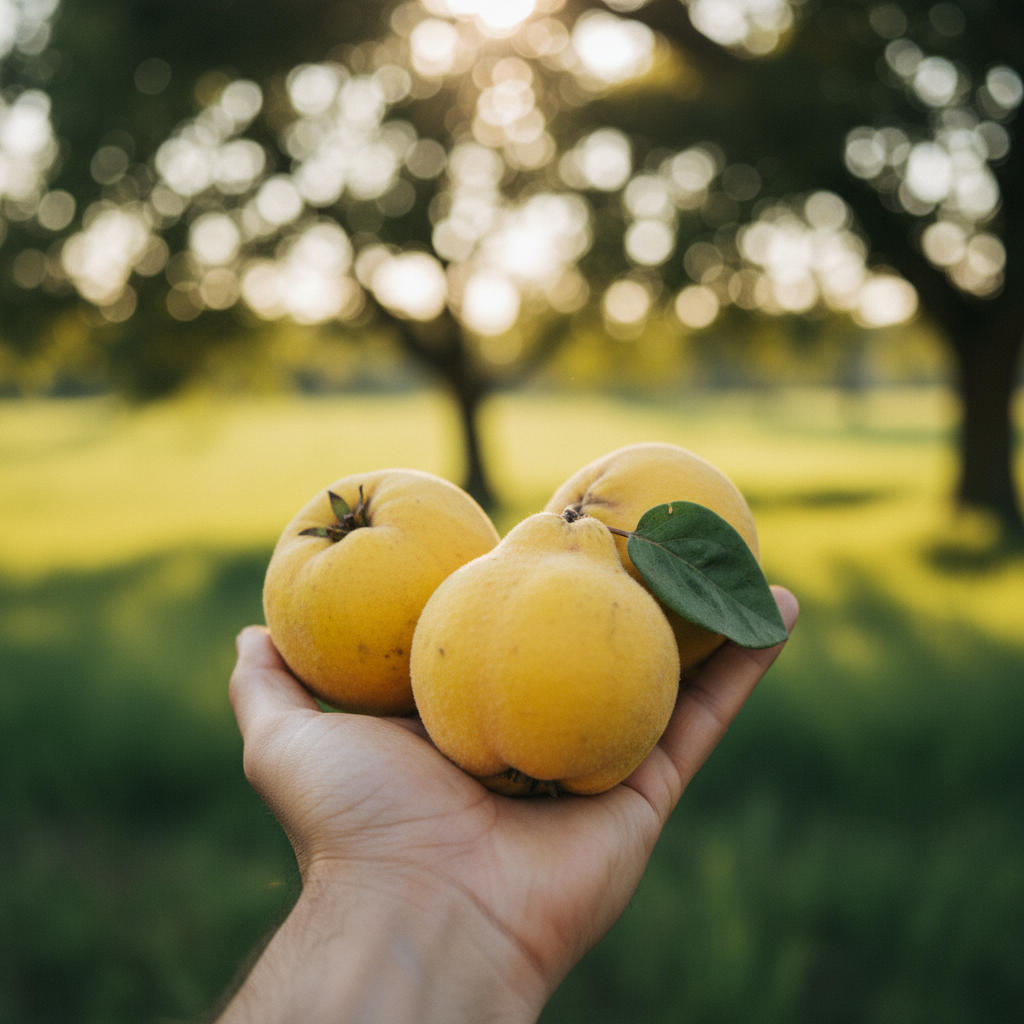
- Bright golden-yellow skin: Ripe quinces are fully golden-yellow, not green. Fuzzy down on the skin is normal and will rub off.
- Fragrant: A ripe quince has a distinctive floral, rose-like perfume — even a single quince can scent an entire room.
- Firm throughout: Unlike most fruit, quinces should be very firm. They don't soften when ripe the way pears do.
- No bruising: Quince flesh browns and softens quickly at bruise points — choose undamaged fruit.
Why Quinces Turn Pink When Cooked
Raw quince flesh is pale cream-yellow. When cooked slowly with sugar, the tannins and acids react with oxygen in a process called anthocyanin development — turning the flesh from yellow to deep ruby-red. The longer and slower the cooking, the deeper the colour. Slow-braised quince for 3+ hours achieves the richest garnet colour.
Quince Nutrition
One quince (92g): 52 calories, 14g carbs, 1.75g fibre, vitamin C (25% DV), copper, iron and polyphenols. Quinces are rich in pectin — a soluble fibre that feeds beneficial gut bacteria and has cholesterol-lowering properties. Quince paste (membrillo) concentrates these benefits significantly.
Quince Storage
Whole quinces store exceptionally well — keep them in a cool, dark place or the fridge for up to 2 months. Store away from other fruit, as their powerful fragrance can transfer. Once cooked, quince paste keeps for 6 months refrigerated.
Where Do Australian Quinces Grow?
Quinces are grown in cooler Australian regions, primarily as a small-scale or backyard crop:
- Victoria (Yarra Valley, Gippsland): The main commercial quince-growing region. Cool autumn nights produce the best-flavoured fruit.
- Tasmania: Ideal cool climate for quinces — the trees thrive in Tasmanian winters and produce exceptional fruit.
- South Australia (Adelaide Hills): Small commercial and home-garden production. Quality is excellent in this cool-climate region.
- New South Wales (Blue Mountains, Southern Highlands): Backyard and small-scale growing in cooler elevated areas.
Quinces are relatively rare in supermarkets — you're more likely to find them at farmers markets, specialty grocers and in season from April to July. If you find them, buy extra — they store for months.
How to Cook Quinces
Quinces must be cooked — they are inedibly astringent and hard when raw. Here are the best cooking methods:
Poached quince
Peel, quarter and core the quinces. Simmer in a sugar syrup (1 cup sugar to 4 cups water) with a cinnamon stick, star anise and lemon peel for 1.5–3 hours over very low heat. The flesh turns from pale yellow to deep ruby red. Serve with yoghurt, ice cream or as a dessert on its own.
Quince paste (membrillo)
Cook peeled, cored quinces until very soft, then puree and cook with equal weight sugar and a splash of lemon juice over low heat for 1.5–2 hours, stirring constantly, until it turns deep red and comes away from the pan. Pour into a lined tin, cool, and slice. Serve with Manchego cheese.
Quince jam
Quinces are naturally high in pectin, making them perfect for jam. Cook with sugar and lemon juice — the jam sets firmly and turns a beautiful amber-pink.
Roasted quince
Quarter and core, place in a baking dish with honey, butter, cinnamon and a splash of white wine. Cover and bake at 160°C for 1.5–2 hours until tender and deep red.
Quince Health Benefits (Expanded)
- Pectin: Quinces are one of the richest fruit sources of pectin — a soluble fibre that feeds beneficial gut bacteria, lowers cholesterol and helps regulate blood sugar. This is also why quince paste sets so firmly.
- Vitamin C: 25% of your daily vitamin C per quince. Note that cooking reduces vitamin C content, but the remaining nutrients are still valuable.
- Polyphenols: Quinces contain high levels of antioxidants, particularly in the skin. The anthocyanins that develop during cooking have anti-inflammatory properties.
- Low calorie: Just 52 calories per raw quince. Quince paste is higher in calories due to added sugar.
- Traditional medicine: In various cultures, quince syrup and tea have been used to soothe sore throats and digestive issues.
Related Seasonal Guides
Frequently Asked Questions
No, raw quince is inedible. The flesh is extremely hard, astringent and tannic — it will make your mouth pucker and feel dry. Cooking transforms quinces: the flesh softens, the astringency disappears, and the colour changes from pale yellow to deep ruby red.