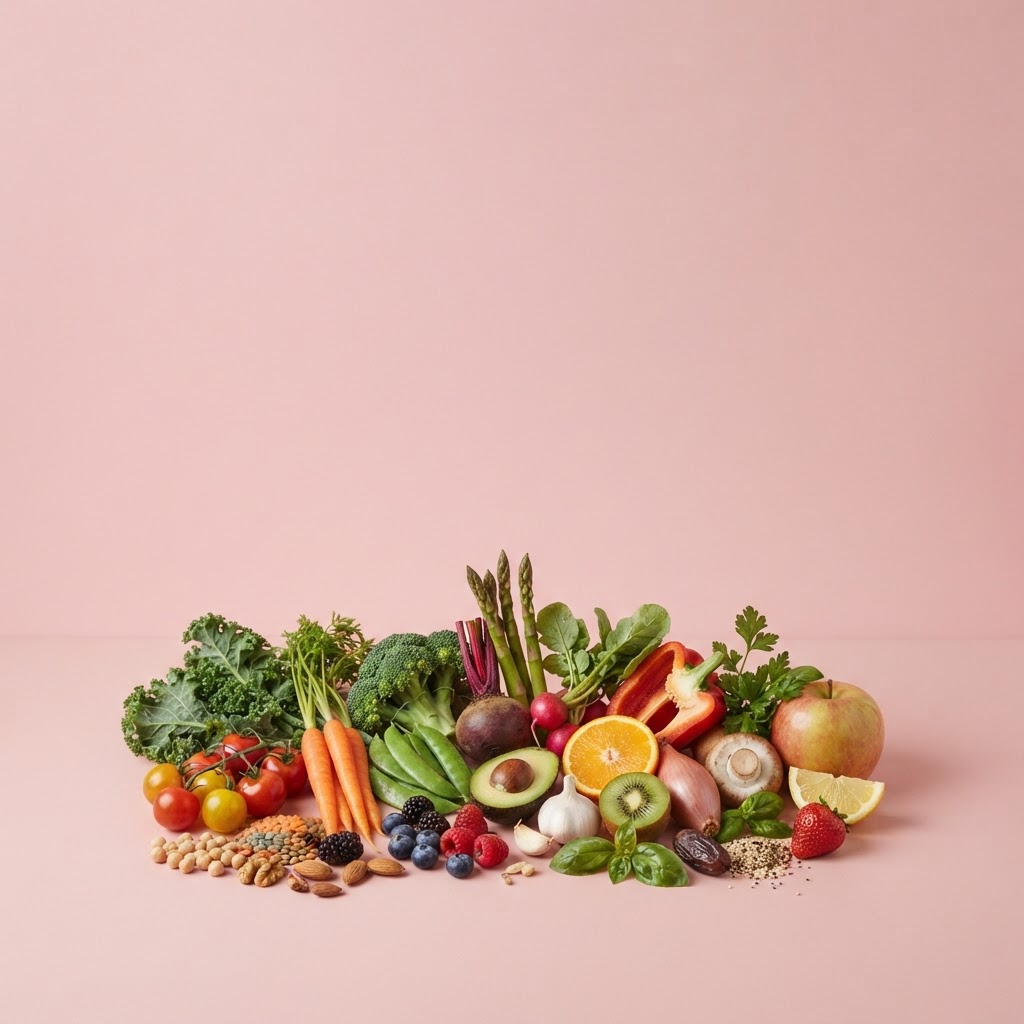
Interactive Tool
30 Plants a Week Tracker
Tap every plant you eat this week and watch your variety score climb to 30 — right here, no sign-up.
If you have read anything about gut health in the last few years, you have probably bumped into the number 30. The idea is that eating thirty different plants a week is linked to a more diverse gut microbiome, and that this diversity matters more for your health than whether the food on your plate is labelled "vegan" or "omnivore". The hard part has never been understanding the goal. The hard part is actually counting.
That is where a 30 plants a week tracker comes in. You tap each plant you have eaten this week, the tracker adds it to a running total, and you can see at a glance whether you are heading for a varied week or recycling the same five vegetables you always buy. This page explains where the 30 number comes from, why variety matters, and how to use a tracker to actually hit the target — and the interactive tracker below lets you start right now, no download or account required.
Where the 30 Plants a Week Number Comes From
The target traces back to the American Gut Project, a citizen-science study that recruited more than ten thousand volunteers to submit stool samples and food questionnaires. The results, published in the journal mSystems in 2018, found that the single strongest predictor of a diverse gut microbiome was the number of different plants a person ate each week. People who clocked up thirty or more had noticeably more microbial diversity than people who ate ten or fewer.
What made the finding stick was that the diversity gap showed up regardless of the diet label. A vegetarian eating twelve plants had a less diverse microbiome than an omnivore eating thirty-five. The label mattered less than the variety. That is a useful insight because it reframes healthy eating away from restriction and toward breadth — a message that is, frankly, easier to follow.
The number has since been popularised by researchers like Tim Spector and carried into the mainstream through the British Gut Project and the ZOE PREDICT studies. Thirty is not a magic threshold passed at midnight — it is a practical target that most people can hit with a bit of attention, and the tracker exists to make that attention easy.
Why Variety Beats Quantity for Your Gut
Your gut is home to trillions of bacteria, and different bacteria feed on different plant fibres and phytochemicals. A diet heavy on three plants feeds a narrow cast of microbes. A diet spanning thirty plants feeds a broad ensemble, and that ensemble is what the research links to better markers of health — less inflammation, more stable blood sugar, better immune function. Fibre is the headline fuel, but the polyphenols, resistant starches and other compounds in herbs, spices, skins and seeds matter too.
This is why a curry can quietly do a lot of work. A single bowl might contain onion, garlic, ginger, turmeric, cumin, coriander, tomato, lentils and spinach — nine plants before you count the rice. A bowl of porridge with mixed berries, seeds and a pinch of cinnamon is another four or five. Variety accumulates faster than people expect once they start counting, which is exactly why a tracker changes behaviour. Most people underestimate their count before they measure it, and then overestimate how hard it would be to raise it.
If you want the deeper nutrition picture, our guides on high-fibre foods and gut health foods cover the building blocks, and our piece on probiotic foods explains the other half of the gut-health equation.
How a 30 Plants a Week Tracker Actually Works
The mechanics are deliberately simple. You open the tracker, browse plants by category, and tap each one you have eaten this week. Every tap adds a point to your total, shown on a progress ring that fills toward thirty. The tracker saves your selections to your device, keyed to the current week, and resets each Monday so you start fresh. There is no login, no cloud sync, and no one looking over your shoulder at what you ate.
The useful features are the ones that solve the real friction. A search box finds a plant fast when you cannot remember which category it sits in. A custom-add field lets you log anything not on the list, because the plant world is bigger than any pre-built list. A "suggest one" button picks a plant you have not yet eaten, for the midweek moment when you are out of ideas and stuck on twenty-two. And a category breakdown shows whether your thirty is lopsided — heavy on fruit, light on legumes — so you can adjust your next shop rather than just admire your score.
You can use the tracker above on this page, or open the full 30 Plants a Week Tracker tool which gives you the same counter with a bit more room and an explainer around it. Both work on a phone in the kitchen and on a laptop while you plan the week.
What Counts as a Plant (and What Doesn't)
The research definition of a plant is generous. Vegetables, fruit, herbs, spices, nuts, seeds, legumes and whole grains all count, and each unique plant is one point regardless of portion size. A pinch of turmeric and a whole cauliflower each count as one. This is not a loophole; it is the point. The variety signal comes from exposing your gut to many different plant compounds, and a teaspoon of cumin contributes compounds a head of broccoli does not.
What does not count is the same plant in two forms. An apple and apple juice are one plant, not two. White rice and brown rice are one (they are the same species). Red and green grapes are one. If you want to read the fine print, our dedicated guide on what counts as a plant point breaks down every edge case, including the tricky ones like coffee, cocoa and herbs used as tea.
How to Build Variety Without Changing Your Diet Much
The fastest way to climb from ten plants a week to thirty is not to overhaul your meals. It is to widen the ingredients that already go into them. Swap single-ingredient staples for mixed ones: mixed frozen berries instead of just blueberries, mixed salad leaves instead of just rocket, a jar of mixed seeds instead of just chia, a mixed spice blend instead of just pepper. Each of those swaps turns one plant into three or four for no extra cooking effort.
The second lever is to add a herb or spice to dishes that currently have none. A sprinkle of oregano on a tomato pasta, coriander on a soup, cinnamon on porridge. These are nearly free plant points. The third is to buy a different vegetable each week — one you do not normally reach for — and work it into a meal. Over a month that adds eight new plants with barely any thought.
If you want a structured approach, our guide on easy ways to hit 30 plants a week lists the swaps that add the most points for the least effort, and our beginner meal plan shows what a thirty-plant week looks like on a plate.
Making the Tracker Part of Your Week
The tracker works best as a small habit, not a project. The pattern that sticks is to log plants as you eat them — a quick tap on your phone at breakfast, another at dinner — rather than trying to reconstruct the week on Sunday from memory, which is how people both undercount and give up. A few seconds twice a day is enough, and the ring filling up is a surprisingly good motivator.
If you meal-plan, run your week through the tracker first. Plan the meals, tap the plants, and see where you land. If you are short, the "suggest one" button or a glance at the category breakdown tells you what to add to the shopping list. Speaking of which, the tracker pairs well with our shopping list tool and the Food Portion Calculator — plan the plants, right-size the amounts, and your week is sorted in a few minutes.
And if you ever end the week with plants in the fridge you did not get to, the Pantry-to-Plate scanner turns whatever is there into a meal before it goes to waste — which also happens to be another way to sneak in a few more plant points.
The Bottom Line
Thirty plants a week is a target built on solid evidence, and the only thing standing between most people and hitting it is that nobody counts. A tracker removes that obstacle. Tap what you eat, watch the ring fill, and use the breakdown to nudge your next shop toward more variety. Start with the tracker above, or open the full 30 Plants a Week Tracker — both are free, private, and reset every Monday.
Frequently Asked Questions
It is a tool that counts how many different plants you eat in a week. You tap each fruit, vegetable, herb, spice, nut, seed, legume and whole grain, and the tracker tots up your unique plants toward a target of thirty, the number linked to a more diverse gut microbiome.