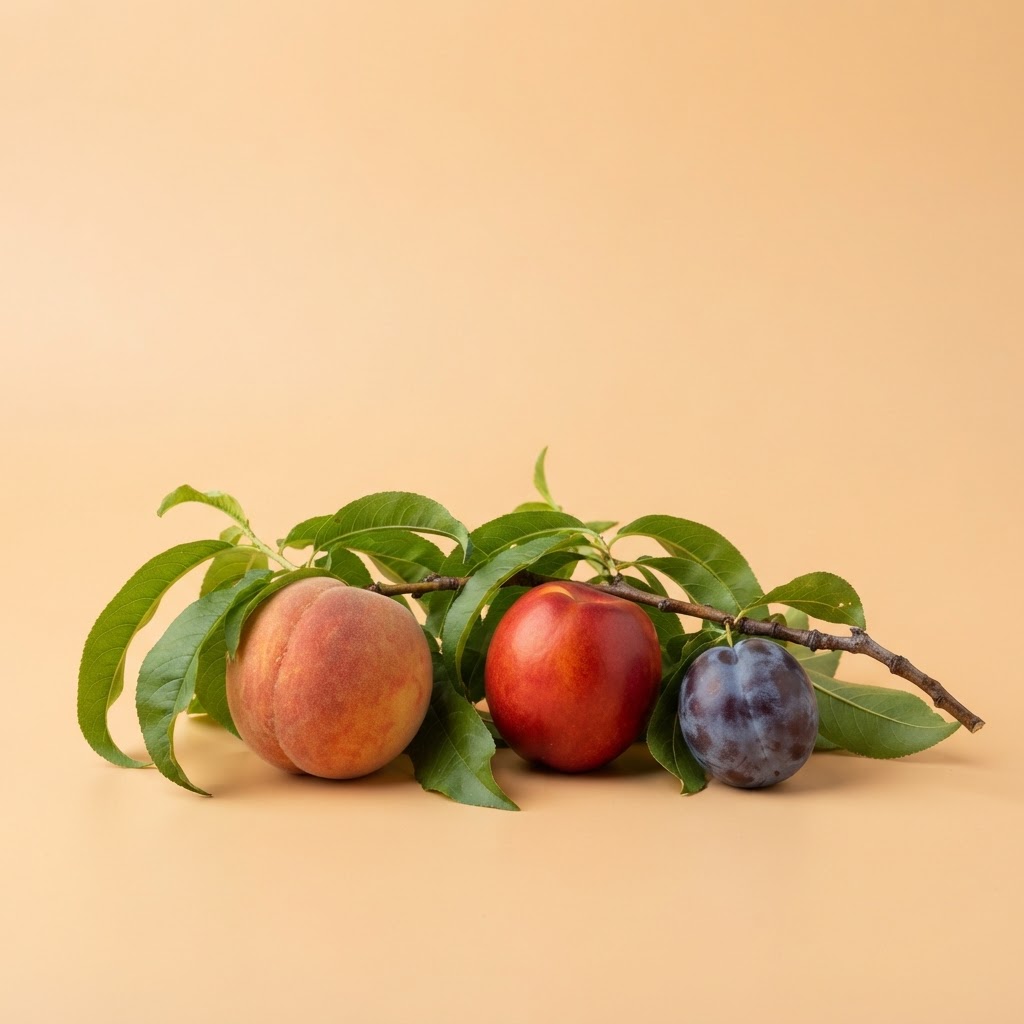
The single most common mistake home fruit growers make is picking too early. Fruit that comes off the tree before it is ready never reaches the flavour it would have had, and unlike a supermarket peach, it will not ripen into something better on the kitchen bench. It just sits there, getting softer without getting sweeter.
The good news is that most tree fruit tells you plainly when it is ready. You just have to know what to look for on each type.
The Five Ripeness Tests
Across almost every tree fruit, the same five signals apply. Learn these and you can judge any tree without looking anything up.
- Colour change. The background colour — the skin between the blushes — shifts from green to yellow or cream. That background colour is more reliable than the red, which develops early and does not indicate ripeness.
- Ease of separation. Ripe fruit comes away from the branch with a gentle twist. If you have to pull hard, it is not ready.
- Softness. Gentle pressure near the stem or at the blossom end should give slightly. The shoulder of the fruit softens first.
- Scent. Ripe fruit smells like fruit. A peach with no smell is a peach that is not ready.
- Taste. The definitive test. Pick one and eat it. If it is good, pick the rest.
Month by Month: What Ripens When
Timing varies by region and variety, but the general sequence across southern Australia runs like this.
| Period | What is ripening |
|---|---|
| Late spring | Early cherries, early apricots, loquats |
| Early summer | Cherries, apricots, early peaches, mulberries, early plums |
| Mid summer | Peaches, nectarines, plums, apricots, early apples, figs |
| Late summer | Late peaches, plums, apples, pears, figs, early grapes |
| Autumn | Apples, pears, quinces, late figs, olives, persimmons |
| Winter | Citrus — oranges, mandarins, lemons, grapefruit |
Citrus is the odd one out: it ripens through winter and holds on the tree for months. Our seasonal produce calendar breaks the year down in more detail.
Ripeness by Fruit Type
Stone fruit — cherries, peaches, nectarines, plums, apricots. These ripen on the tree and do not improve after picking. Judge by background colour, softening at the shoulder and smell. A peach that yields slightly to gentle pressure near the stem is ready. These are also the fruits most damaged by picking early, because they will soften without sweetening.
Pears. The exception. Pears ripen from the inside out and are best picked slightly firm, then ripened off the tree for a few days. A pear left to soften fully on the tree goes grainy and mushy in the centre. Our guide to why pears ripen from the inside outexplains the biology.
Apples. Ready when the background colour shifts from green to yellow and the fruit comes away with an easy twist. A useful check is to cut one open — if the seeds are dark brown rather than pale, it is ripe. Apples hold well on the tree, but over-ripe apples go mealy.
Figs. Figs do not ripen after picking at all. They are ready when they droop on the stem and soften noticeably, and often when a drop of nectar appears at the eye. Our guide to when figs are ready for picking covers the droop test properly.
Citrus. Citrus is unusual because it does not ripen further after picking, but it also holds on the tree for months without deteriorating. Taste one — that is the only reliable test. Colour is not a good indicator, since some green-skinned fruit is fully ripe.
Mulberries. Ready when fully dark and they fall at a touch. Anything still red is sour. See mulberry identification if you are not sure what you have.
The Ethylene Factor
Some fruit continues ripening after picking because it produces ethylene gas — these are called climacteric fruits. Apples, pears, apricots, peaches, plums, figs and mulberries all fall into this group to varying degrees.
Others do not ripen after picking at all — cherries, grapes and citrus are the main examples. Once they are off the tree, that is as good as they get.
This matters for storage as much as for picking. Ripe fruit releases ethylene that speeds up ripening in everything nearby, which is why you should not store apples next to other produce. Our guide to fruit near bananascovers how to use this deliberately, and the storage guide covers how to avoid it.
Dealing With a Glut
When a tree comes good, it tends to come good all at once. A few approaches that actually work:
- Stagger the picking. Pick some fruit slightly firm for storage and leave the rest to ripen on the tree for eating now.
- Freeze in usable portions. Stone fruit freezes well in halves or slices. Spread on a tray first so pieces freeze individually.
- Cook the surplus. Jam, chutney, sauce and pies are the traditional answers, and they work.
- Share it. Neighbours, community fridges and food rescue organisations all take surplus fruit.
Our food waste guide has more on getting through a glut without throwing any of it out.
The Short Version
Judge ripeness by background colour, ease of separation, softening at the shoulder, scent and taste. Stone fruit and figs must be picked ripe because they do not improve afterwards; pears are the exception and ripen better off the tree. Citrus holds on the tree for months, so taste is the only reliable test.
Frequently Asked Questions
Check the background colour between the blushes, whether the fruit comes away with a gentle twist, whether it yields slightly to pressure near the stem, and whether it smells like fruit. The definitive test is to pick one and taste it.