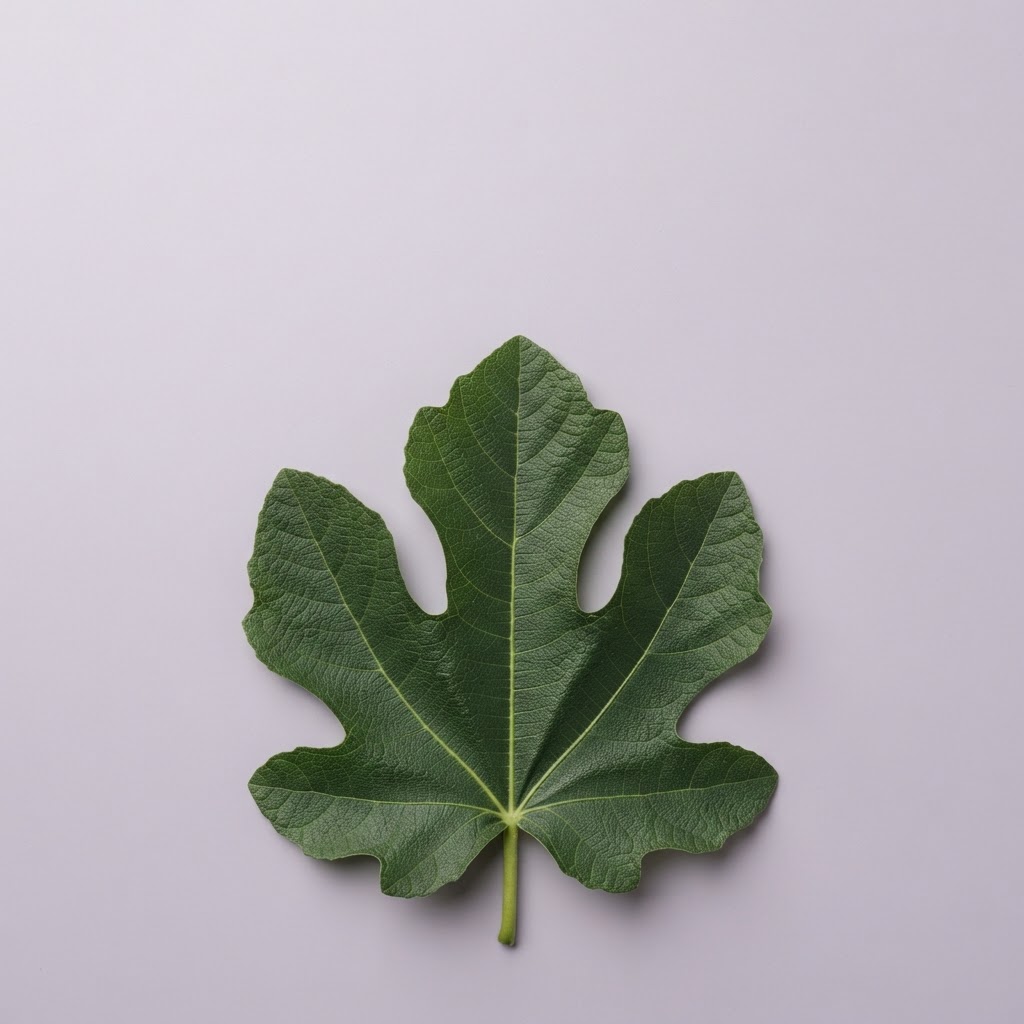
Fig leaves are among the easiest of all fruit tree leaves to recognise, largely because they are so unlike anything else in a backyard. They are big, bold and heavily lobed, and once you have handled one, the texture is something you do not forget.
There is one lookalike that catches people out, though, and a simple check settles it.
The Shape
A fig leaf is large — typically 10 to 20cm across, sometimes more on a vigorous tree — and deeply divided into three to five main lobes. The classic form has a broad, almost hand-like outline with a notch at the base and a blunt, rounded tip on each lobe.
The lobes vary in depth. Some leaves are divided almost to the central vein; others have shallow lobes that make the leaf look more like a broad, wavy oval. Both are normal, and the variation happens on the same tree — much like mulberry leaves.
- Size: 10–20cm across, sometimes larger
- Lobes: usually 3 to 5, deeply cut, with rounded tips
- Base: heart-shaped or notched where it meets the stalk
- Edge: wavy or slightly toothed, never smooth and straight
- Stalk: thick and noticeably long relative to the leaf
The Texture: Sandpaper
This is the feature that makes fig identification almost foolproof. Run your fingers over the upper surface of a fig leaf and it feels rough — genuinely rough, like fine sandpaper. The roughness comes from tiny stiff hairs covering the leaf surface.
The underside is softer and more obviously hairy, often with prominent raised veins. Colour is a medium to deep green on top and noticeably paler underneath.
Compare that with almost any other fruit tree leaf, which is smooth or glossy. If a leaf is large, lobed and feels like sandpaper, you are almost certainly holding a fig.
The Milky Sap
Break the leaf stalk — or snap a young green shoot — and a white, milky latex will bead up at the break. This sap is present throughout the fig plant, and it is one reason figs are rarely bothered by grazing animals.
A word of caution: that sap can irritate skin, particularly in strong sunlight. It can cause a contact reaction similar to a mild burn in sensitive people, and it is worth washing off your hands after pruning. Wear gloves and long sleeves if you are doing significant work on a fig tree.
The sap is also the quickest way to separate fig from mulberry, which has milky sap and variable leaves too. See the comparison below.
The Smell
Crush a leaf and smell it. Fig leaves have a distinctive green, slightly coconutty or milky aroma that is quite different from the clean citrus smell of citrus leaves or the faint apple smell of an apple leaf. It is a genuinely useful confirmation once you have smelled it a few times.
This is also the flavour note that makes fig leaves useful in cooking — they are traditionally used to wrap and steam fish and cheese, imparting a subtle coconut-like flavour.
Fig vs Mulberry: The Key Difference
These two are the pair most often confused, because both have variable lobed leaves and both produce milky white sap. Three differences settle it:
| Feature | Fig | Mulberry |
|---|---|---|
| Leaf texture | Rough and sandpapery | Smooth and glossy on top |
| Leaf lobes | Usually deeply lobed | Often simple and heart-shaped, mixed with lobed |
| Fruit | Round, soft, hollow, full of tiny seeds | Long, oblong, solid, made of packed segments |
| Fruit attachment | Sits close to the branch, no long stalk | Hangs on a short stalk |
Texture is the fastest test. A fig leaf feels rough; a mulberry leaf feels smooth. If you want the full breakdown on the other side of the comparison, see our mulberry tree identification guide.
Fig Varieties and Their Leaves
Leaf shape varies between fig varieties, though not enough to reliably identify a variety on its own. A few broad tendencies are worth knowing:
- Black Genoa: large, deeply lobed leaves with three to five prominent fingers
- White Adriatic: similar lobing but often slightly smaller leaves
- Brown Turkey: variable, often with shallower lobes
- Some varieties: produce almost unlobed leaves, which is why leaf shape alone cannot confirm a variety
To identify a variety you need the fruit — skin colour, flesh colour, size, shape and whether it is a light or dark fig. Our fig season guide covers the common varieties and when they fruit.
Practical Notes
Fig trees are vigorous and forgiving. They fruit best in full sun with restricted roots — which is why they are often planted against a wall or in a large pot. Unrestricted, a fig will produce enormous leafy growth and very little fruit.
Prune in winter while dormant, and be careful with the sap. Wear gloves and avoid working in strong sunlight. If you want to know when the fruit is ready, our guide to when figs are ready for picking explains the droop test, and this piece on fig skin answers whether you need to peel them.
The Short Version
Fig leaves are large, deeply lobed with three to five fingers, rough as sandpaper on top, and they release milky white sap when the stalk is broken. They smell green and slightly coconutty when crushed. The sandpaper texture is the feature that separates fig from mulberry, which is the only common lookalike.
Frequently Asked Questions
Fig leaves are large, 10–20cm across, deeply lobed with three to five rounded fingers, and feel distinctly rough and sandpapery on the upper surface. Breaking the stalk releases white milky sap and the crushed leaf smells green and slightly coconutty.