Interactive Tool
Food Portion Calculator
Pick a food, set who you are feeding, and get the exact amount to buy and cook — right here.
One medium banana is considered a standard serving of fruit. According to the Australian Dietary Guidelines and the USDA Dietary Guidelines, a single medium banana — which weighs approximately 118 grams peeled — counts as one serve of fruit. But how much banana should you actually eat in a day, and what does a serving look like? Let's break it down.
Quick Answer: What Counts as a Serving of Banana?
A standard serving of banana is one medium banana, which is roughly:
- Weight: 118 grams (peeled)
- Length: 18–20 cm (7–8 inches)
- Calories: 105 kcal
- Carbohydrates: 27 grams
- Fibre: 3 grams
- Potassium: 422 mg (about 12% of the daily value)
- Vitamin B6: 0.4 mg (about 25% of the daily value)
- Vitamin C: 10 mg (about 11% of the daily value)
These figures come from the USDA FoodData Central database, which is the gold standard reference for food composition data.
How Many Bananas Should You Eat Per Day?
The Australian Dietary Guidelines recommend that adults eat 2 serves of fruit per day. Since one medium banana counts as one serve, eating two bananas a day would meet your entire fruit recommendation. However, most nutritionists recommend varying your fruit intake rather than eating only bananas, as different fruits provide different nutrients.
For most healthy adults, eating 1–2 bananas per day is perfectly safe and beneficial. If you're wondering whether two bananas a day is too many, the short answer is no — for most people, two bananas is well within healthy limits. Bananas are an excellent source of potassium, vitamin B6, dietary fibre, and natural energy.
Serving Size by Banana Size
Not all bananas are the same size. Here's how the serving size changes depending on the banana you're eating:
| Banana Size | Weight (peeled) | Calories | Serves of Fruit |
|---|---|---|---|
| Extra small (<15 cm) | ~81 g | 72 | ~0.7 |
| Small (15–18 cm) | ~101 g | 90 | ~0.85 |
| Medium (18–20 cm) | 118 g | 105 | 1 |
| Large (20–23 cm) | 136 g | 121 | ~1.15 |
| Extra large (>23 cm) | 152 g | 135 | ~1.3 |
As you can see, a large banana counts as slightly more than one serve of fruit. This matters if you're tracking your fruit intake for dietary or health reasons.
Nutritional Breakdown of One Banana Serving
Potassium
Bananas are most famous for their potassium content. One medium banana provides about 422 mg of potassium, which is roughly 12% of the recommended daily intake of 3,500–4,700 mg. The Heart Foundation of Australia notes that adequate potassium intake is associated with healthy blood pressure and reduced risk of stroke.
Vitamin B6
One banana provides about 25% of your daily vitamin B6 needs. B6 is important for brain development, nervous system function, and the metabolism of protein, carbohydrates, and fats.
Dietary Fibre
A medium banana contains about 3 grams of dietary fibre. The Nutrient Reference Values for Australia and New Zealand recommend 25–30 grams of fibre per day for adults. One banana contributes about 10% of this target.
Resistant Starch
Unripe (green) bananas contain significant amounts of resistant starch, which acts like fibre — it resists digestion in the small intestine and feeds beneficial gut bacteria. As a banana ripens, the resistant starch converts to sugar, which is why ripe bananas taste sweeter. According to research indexed in PubMed, resistant starch may improve insulin sensitivity and support gut health.
What About Sugar in Bananas?
One medium banana contains about 14 grams of natural sugar (fructose, glucose, and sucrose). This is naturally occurring sugar — not added sugar. The World Health Organization (WHO) distinguishes between free sugars (added sugars and sugars in fruit juice) and intrinsic sugars (those naturally present in whole fruits). The sugar in a whole banana is intrinsic sugar, which is processed differently by the body because it comes packaged with fibre, water, and nutrients that slow its absorption.
If you're concerned about sugar intake, you might also want to read our guide on how much fruit is too much or whether fruit can make you gain weight.
Banana Serving Sizes for Different People
For Children
Children need less fruit than adults. According to the Australian Dietary Guidelines, the recommendations are:
- Toddlers (1–2 years): ½ serve of fruit per day (about half a small banana)
- Children (4–8 years): 1–1½ serves per day (one small banana)
- Older children (9–13 years): 1½–2 serves per day (one medium banana)
For Athletes
Bananas are a popular pre- and post-workout snack because they provide easily digestible carbohydrates for quick energy, plus potassium to help prevent muscle cramps. Many endurance athletes eat 1–2 bananas before exercise and another within 30 minutes of finishing. The Australian Institute of Sport recommends bananas as a natural alternative to processed sports gels for events lasting 60–90 minutes.
For People With Diabetes
People with diabetes can eat bananas, but portion size and ripeness matter. A green or slightly underripe banana has a lower glycemic index (GI) than a fully ripe one. The Diabetes Australia recommends including fruit as part of a balanced diet, but advises monitoring portion sizes and pairing fruit with a protein or healthy fat to slow sugar absorption.
How to Measure a Serving Without a Scale
If you don't have a kitchen scale, here's a simple way to estimate a serving of banana:
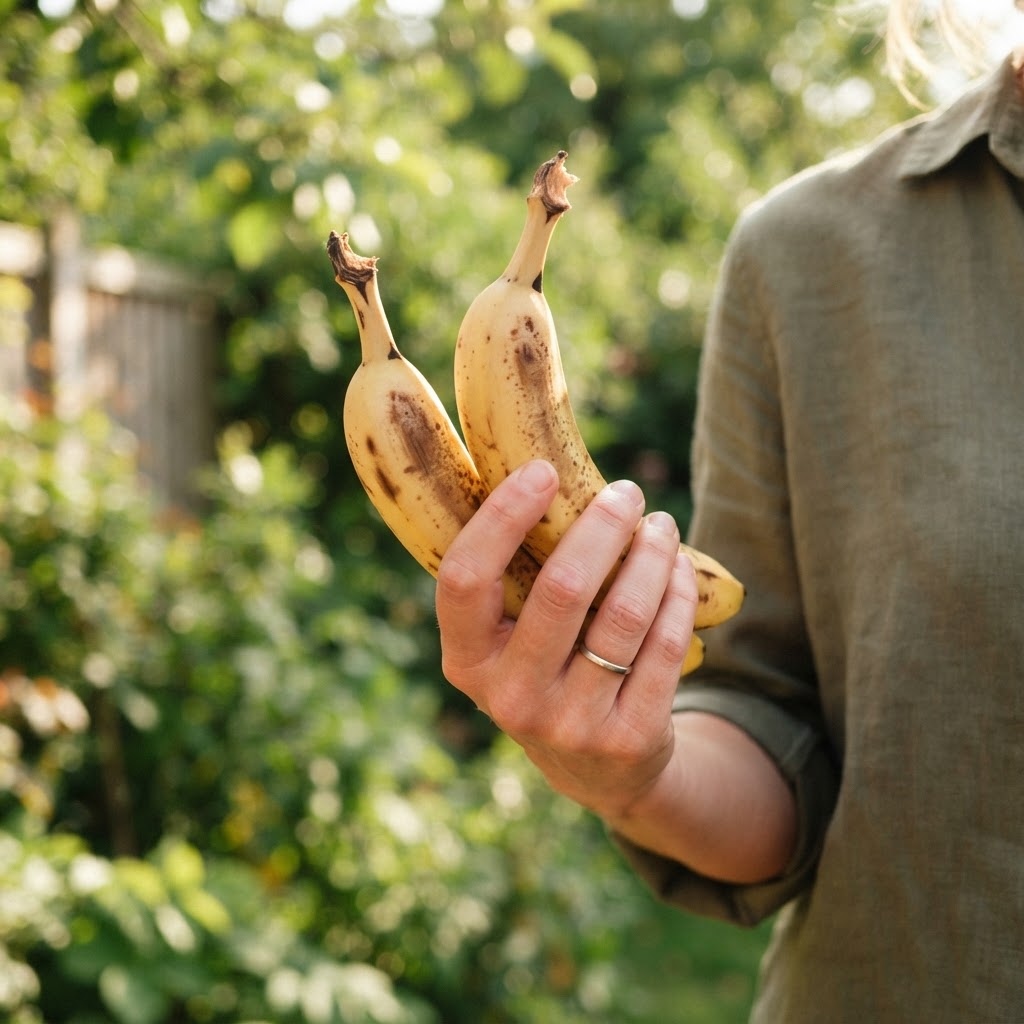
- A medium banana (one serving) is about the length of a standard ballpoint pen.
- It should fit comfortably in an adult's hand, with about 2 cm extending past your grip on each end.
- When sliced, one medium banana yields about ½ cup of slices.
- When mashed, one medium banana yields about ⅓ cup.
Using Bananas in Your Cooking
Bananas are incredibly versatile. You can eat them fresh, blend them into smoothies, mash them into baking (try our guide to ripening bananas faster if yours are still green), or freeze them for later. Overripe bananas are perfect for banana bread, muffins, and pancakes.
If you have bananas going brown on your counter, use PickFresh's Fridge Scan tool to find recipes that use them up — or scan your bananas with our freshness scanner to check their ripeness before you bake.
Frequently Asked Questions
One medium banana (about 118 grams peeled, or 18–20 cm long) is one standard serving. It contains approximately 105 calories, 27 grams of carbohydrates, and 422 mg of potassium.