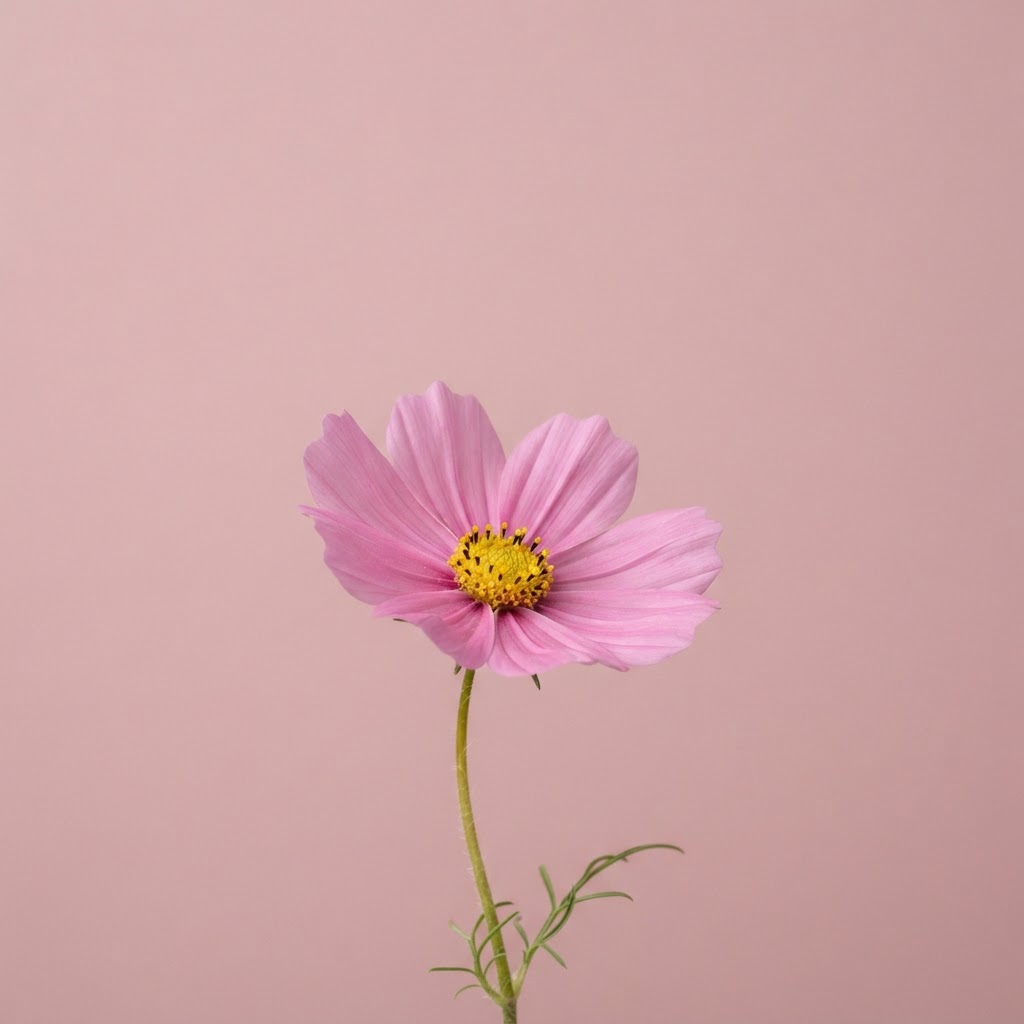
Flowers are the most photographed part of any plant and often the least diagnostic. People photograph the bloom because it is beautiful, then wonder why identification is uncertain — because the leaf, which carries far more information, is not in the frame.
That said, flower structure is genuinely powerful when you know what to look for. This guide covers the features that matter and how to use them.
Start With Petal Count
Counting petals sounds trivial and it is one of the fastest ways to narrow a flower down. The number tends to be consistent within a family.
| Petal count | Common plant families |
|---|---|
| 3 petals | Many monocots, including some lilies and irises |
| 4 petals | Mustard family — cabbage, broccoli, radish, alyssum, stock |
| 5 petals | Rose family, geraniums, tomatoes and nightshades, many fruit blossoms |
| 6 petals | Lilies, amaryllis, tulips, onions and garlic family |
| Many petals | Daisies, dandelions, chrysanthemums, sunflowers |
| No true petals | Grasses, many trees with catkins |
The four-petal group is particularly useful because the mustard family is large and includes many common garden flowers as well as vegetables. If you have a small flower with four petals in a cross shape, you are almost certainly looking at a brassica.
Flower Shape
Shape is the next filter and it is more diagnostic than colour, which varies enormously within species.
- Daisy-like heads. A central disc surrounded by ray florets. The whole "flower" is actually many tiny flowers packed together. Daisies, sunflowers, dahlias, zinnias.
- Trumpet or funnel. Petals fused into a tube that flares open. Petunias, morning glory, angel's trumpet, datura.
- Bell or campanulate. Fused petals forming a hanging bell. Bluebells, campanula, fuchsia, blueberry flowers.
- Pea flowers. A distinctive boat-shaped structure with a banner petal at the top. Sweet peas, wisteria, lupins, and all the legumes.
- Spikes. Many small flowers along an upright stem. Lavender, salvia, snapdragons, gladiolus.
- Umbels. Flat-topped clusters where flower stalks radiate from one point. Dill, fennel, carrot flowers, Queen Anne's lace.
The pea flower shape is worth learning because it identifies an entire economically important family — the legumes — on sight.
Arrangement on the Plant
How flowers are arranged is as useful as the flowers themselves. A single flower on a stem, a spike along a stem, a flat-topped cluster, or a rounded head — each points to different families. Combined with shape and petal count, arrangement usually closes the identification.
Colour: Useful, But Not Decisive
Colour is the first thing anyone notices and the least reliable identifier. Many species vary from white through pink to purple, and cultivated varieties have been bred into colours that do not occur in the wild form. Roses alone come in nearly every colour except true blue.
Use colour to narrow, never to decide. If your identification depends entirely on the colour being blue, you probably do not have it right.
Season and Habitat
When and where a flower is growing is often the detail that settles a difficult case.
A blue flower in a suburban lawn in spring is very likely a lawn weed like speedwell or a self-sown forget-me-not. The same flower on an alpine walking track is something else entirely. Habitat rules out more species than most people realise — garden bed, lawn, roadside, bushland, wetland and coastal heath all have characteristic floras.
Season matters too. Spring-flowering bulbs are a specific set of species; late-summer daisies are another. If you know the month, you have eliminated a lot.
Common Garden Flowers and Their Families
A large share of what people photograph in gardens falls into a small number of groups. Knowing these gets you most of the way.
- Roses: five petals in the simple species, many in cultivated forms, often with a distinctive scent and thorny stems.
- Daisies and their relatives: the composite head structure, from tiny lawn daisies to sunflowers.
- Lilies: six petals, often large and showy, usually with prominent stamens.
- Irises: three upright petals and three drooping ones — a structure nothing else shares.
- Geraniums and pelargoniums: five petals, often with darker markings, and distinctly scented leaves.
- Proteas and grevilleas: the Australian and South African proteaceous flowers, with their distinctive clustered or spiky structure.
Photographing Flowers Well
- Shoot in soft, even light. Overcast days or early morning produce the best detail. Harsh midday sun bleaches colour and creates hard shadows.
- Get the flower from the side as well as the front. Shape is often more diagnostic than face-on appearance.
- Include a leaf. This is the single biggest improvement you can make to your identification rate.
- Fill the frame. A flower occupying a tenth of the image gives a model very little to work with.
- Include the whole plant in one shot for habit and scale.
A Note on Safety
Flowers are not automatically safe just because they are pretty. Several common garden ornamentals are seriously toxic, including oleander, angel's trumpet, lantana, foxglove and castor oil plant. If you have small children or pets, knowing what is growing in your garden is worth the effort.
If you are identifying flowers with an eye to foraging, our broader plant identification guide covers the safety approach, and the wild berry guide covers the highest-risk group.
The Short Version
Count the petals, identify the flower shape, then look at how flowers are arranged on the plant. Those three features get you to a family reliably. Add the leaf, the habitat and the season and you will usually reach species. Treat colour as a hint, never as the answer.
Frequently Asked Questions
Count the petals, note the flower shape — daisy-like, trumpet, bell, pea-shaped, spike or umbel — and look at how flowers are arranged on the plant. Then add the leaf, habitat and season to reach a species.