What Fruit Is In Season Now?
We set your region and month automatically from your device. Change either one to check any location or any month.
- AppleFuji, Pink Lady, Braeburn
- PearBosc, Comice at their best
- Grape (late)Very sweet, all varieties
- Fig (late)Very soft and sweet
- PersimmonSoft = sweetest
- Pumpkin (early)For cooking
- Pomegranate (early)Juice-filled seeds
- QuinceFragrant
- Stone FruitQuality very poor
📅 Coming Into Season
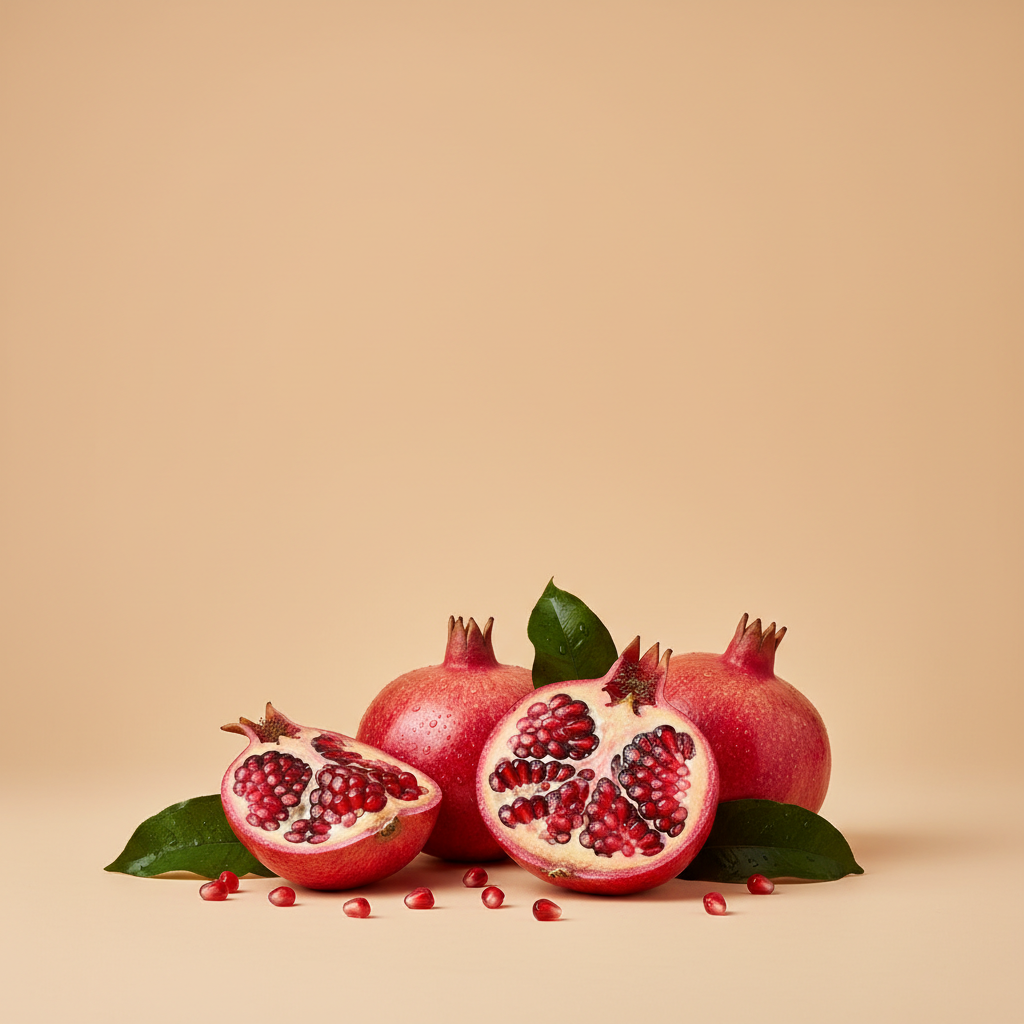
When Are Pomegranates in Season in your region?
Pomegranates in your region: peak season runs January and February, November and December. Timing shifts with local climate and supply, so treat this as a guide — the seasonal tool below breaks it down month by month.
How to Pick a Ripe Pomegranate
- Heavy for size: Heavier = more juice. A ripe pomegranate feels almost uncomfortably heavy for its size.
- Deep colour: Deep ruby-red or dark burgundy skin means high anthocyanin content and maximum sweetness.
- Angular, flattened sides: A ripe pomegranate's skin tightens as the arils inside expand, giving a squarish, angular shape.
- Tough skin: Hard, firm, slightly leathery skin is a sign of ripeness — soft skin means the arils inside are fermenting.
The Easiest Way to Deseed a Pomegranate
Cut the pomegranate in half. Hold one half over a large bowl, cut-side down. Using a wooden spoon, firmly tap the skin all over — the arils (seeds) fall into the bowl. This method takes 30 seconds and keeps your hands clean. Alternatively, score the skin in quarters, submerge in a bowl of cold water, and pull apart — the arils sink and the white pith floats.
Pomegranate Nutrition
Half a pomegranate (87g): 72 calories, 17g carbs, 3.5g fibre, vitamin C (17% DV), vitamin K, folate and punicalagins. Punicalagins are the most powerful antioxidants in pomegranate — with 3x the antioxidant activity of red wine and green tea. They have documented anti-inflammatory and heart-protective effects.