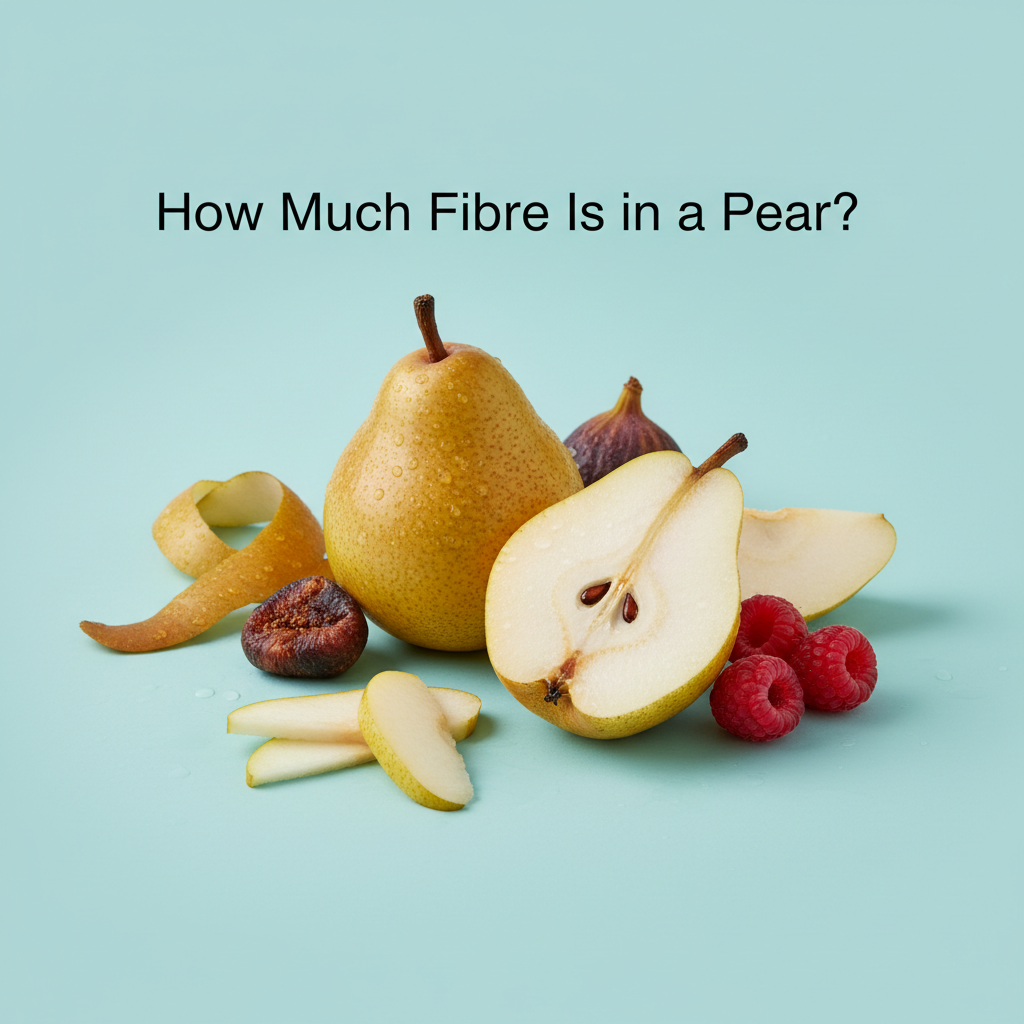
Pears are one of the highest-fibre fruits you can eat. A single medium pear contains about 5.5 grams of dietary fibre — that is roughly 18% of the recommended daily intake for adults. But the amount of fibre varies depending on the size and variety of the pear, and whether you eat the skin. Here is everything you need to know about fibre in pears.
Pear Fibre Calculator
How Much Fibre Are You Getting?
1 medium pear provides 5.5g of fibre — 18% of the recommended daily target of 30g for adults.
Fibre Content of Pears by Size
The fibre content of a pear depends on its size:
- Small pear (100g): 4.6g of fibre
- Medium pear (150g): 5.5g of fibre
- Large pear (200g): 7.0g of fibre
- Nashi pear (120g): 4.0g of fibre
A medium pear provides about 5.5g of fibre per 150g, which is approximately 3.7g per 100g. This makes pears one of the most fibre-dense fruits commonly available.
The Skin Contains Most of the Fibre
The skin of a pear contains a significant portion of its total fibre — approximately 30-40% of the total. Peeling a pear removes not only a large amount of fibre but also antioxidants, vitamins and minerals concentrated in the skin. If you want to maximise your fibre intake, always eat pears unpeeled (after washing thoroughly).
The skin contains both soluble fibre (pectin) and insoluble fibre. The flesh is also a good source of fibre, but leaving the skin on nearly doubles the total fibre content.
Soluble vs Insoluble Fibre in Pears
Pears contain both types of dietary fibre:
- Soluble fibre (about 2g per medium pear): Dissolves in water to form a gel-like substance. Pears are particularly rich in pectin, a soluble fibre that helps lower cholesterol, regulate blood sugar and feed beneficial gut bacteria.
- Insoluble fibre (about 3.5g per medium pear): Does not dissolve in water. Adds bulk to stools, promotes regular bowel movements and helps prevent constipation.
The combination of both types makes pears particularly effective for digestive health.
How Pears Compare to Other Fruits
Pears are among the highest-fibre fruits available. Here is how they compare per medium serve:
- Pear (medium): 5.5g fibre
- Apple (medium, with skin): 4.4g fibre
- Banana (medium): 3.1g fibre
- Orange (medium): 3.1g fibre
- Strawberries (1 cup): 3.0g fibre
- Blueberries (1 cup): 3.6g fibre
- Raspberries (1 cup): 8.0g fibre
Pears have more fibre than apples, bananas and oranges. Only raspberries (per cup) exceed pears in fibre content among common fruits.
Daily Fibre Targets
The recommended daily fibre intake varies by age and gender:
- Adult men (19-50): 30g per day
- Adult women (19-50): 25g per day
- Adult men (51+): 28g per day
- Adult women (51+): 22g per day
- Children (4-8): 18g per day
- Children (9-13): 24-28g per day
A single medium pear provides about 18-22% of an adult's daily fibre target. Eating two pears per day would provide over 35% of the daily target.
Health Benefits of Pear Fibre
- Digestive health: The combination of soluble and insoluble fibre promotes regular bowel movements, prevents constipation and supports a healthy gut microbiome.
- Blood sugar control: Soluble fibre slows the absorption of sugar into the bloodstream, preventing rapid blood sugar spikes. This makes pears a good fruit choice for people with diabetes.
- Cholesterol reduction: Pectin in pears binds to cholesterol in the digestive tract, helping to lower LDL (bad) cholesterol levels.
- Weight management: Fibre promotes feelings of fullness and satiety, helping to reduce overall calorie intake.
- Heart health: High fibre intake is associated with a reduced risk of heart disease, stroke and hypertension.
- Cancer prevention: Some studies suggest high fibre intake may reduce the risk of colorectal cancer.
Related Pear & Fibre Guides
- Which pear is the sweetest? See our pear Brix comparison.
- Which pear has the most fibre? Check our pear fibre ranking.
- Will pears go brown when cut? Read our pear browning guide.
- What is pear leaf tea good for? See our pear leaf tea guide.
- When are pears in season? Check our pear season guide.
- For more high-fibre foods, see our fibre-rich foods guide.
Frequently Asked Questions
A medium pear (150g) contains approximately 5.5g of dietary fibre. A small pear (100g) has about 4.6g, and a large pear (200g) has about 7.0g. The skin contains 30-40% of the total fibre, so always eat pears unpeeled for maximum fibre intake.
Freshness Checker
Type any produce to get freshness tips instantly
Powered by PickFresh AI · Scan real produce with your camera →