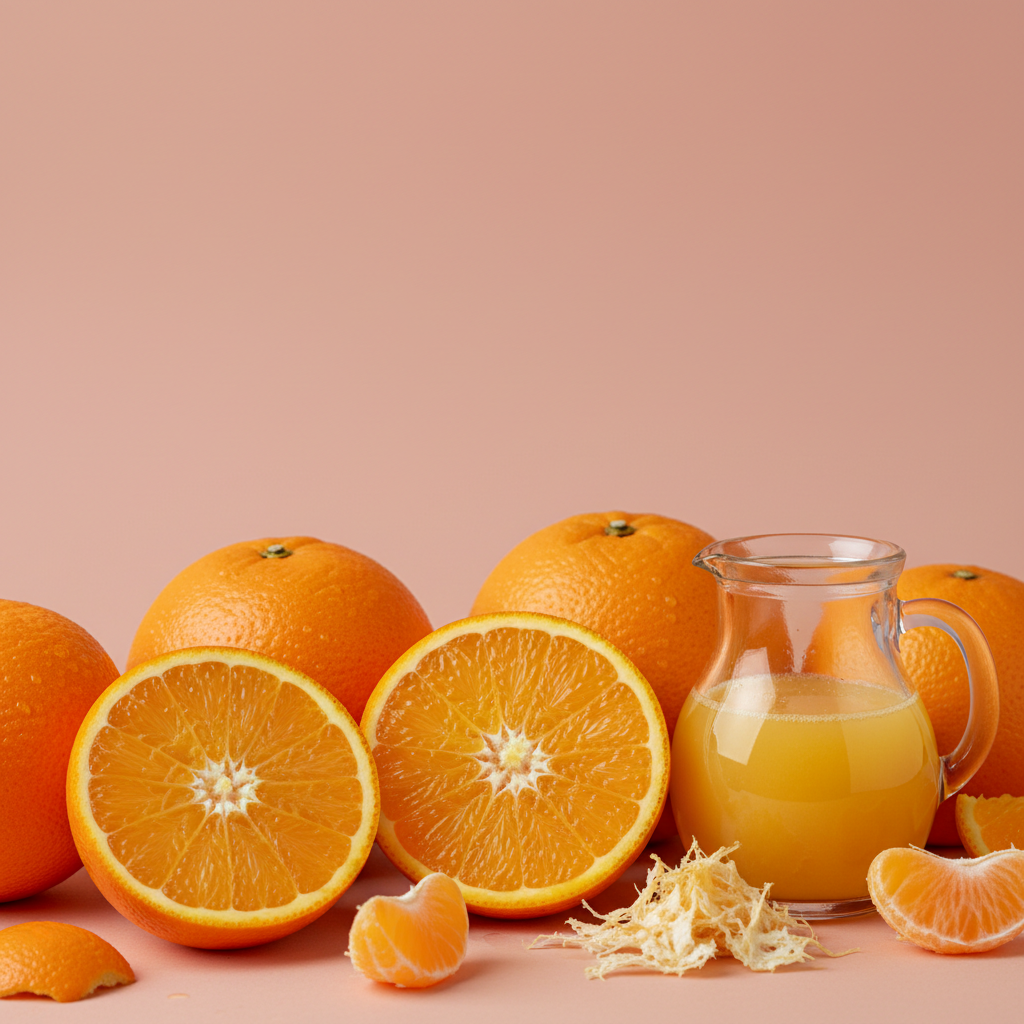
Whether you are making fresh orange juice for breakfast, mixing a cocktail, or following a recipe that calls for the juice of one orange, it is helpful to know how much juice you can expect. The answer varies depending on the orange variety, size, ripeness, and how you extract the juice — but the average is about 70-90ml per orange. Here is the complete guide.
Orange Juice Calculator
How Much Juice Will You Get?
The juicing champion. More juice, thinner skin, available summer-autumn.
Average Juice Yield by Orange Variety
Not all oranges produce the same amount of juice. Here is how the main varieties compare:
- Valencia orange: 90-110ml per fruit — the juicing champion. Valencia oranges are specifically grown for juice production due to their high juice content and excellent flavour.
- Navel orange: 70-90ml per fruit — good for both eating and juicing. Sweet and seedless, but the juice develops a bitter flavour if left sitting due to limonin compounds.
- Blood orange: 60-80ml per fruit — slightly lower yield but stunning crimson colour and raspberry-like flavour notes.
- Seville orange: 80-100ml per fruit — high yield but very bitter and sour. Used for marmalade, not for drinking juice.
- Tangelo: 70-90ml per fruit — a tangerine-grapefruit hybrid with very juicy, tangy flesh.
- Mandarin: 30-40ml per fruit — small yield per fruit, but very sweet juice.
How Many Oranges for One Glass of Juice?
A standard glass of orange juice is about 250ml. Based on average yields:
- Valencia oranges: 3 oranges per glass (90ml each)
- Navel oranges: 3-4 oranges per glass (70-90ml each)
- Blood oranges: 4 oranges per glass (60-80ml each)
For a small glass (150ml), you will need about 2 oranges. For a large glass (350ml), plan on 4-5 oranges.
Factors That Affect Juice Yield
Several factors influence how much juice you get from an orange:
- Size: Larger oranges naturally contain more juice. A 200g Valencia will yield more than a 140g one.
- Ripeness: Ripe, fully coloured oranges have more juice than underripe ones. Look for fruit that feels heavy for its size.
- Temperature: Room-temperature oranges yield significantly more juice than cold ones. If your oranges are in the fridge, let them sit for 30 minutes before juicing, or microwave for 10 seconds.
- Extraction method: Hand-squeezing yields the least juice. A citrus press or reamer extracts more. An electric juicer extracts the most. Rolling the orange on a bench before cutting breaks up the pulp and increases yield by 10-15%.
- Freshness: Freshly picked oranges have more juice than ones that have been stored for weeks. As oranges age, they lose water content.
- Season: In-season oranges (winter-spring for navels, summer-autumn for Valencia) have higher juice content than out-of-season fruit.
How to Get the Most Juice from an Orange
- Choose heavy oranges: Pick up several oranges of similar size and choose the heaviest ones — they contain the most juice.
- Bring to room temperature: Cold oranges yield less juice. Let them sit at room temperature for 30 minutes, or microwave for 10 seconds.
- Roll before cutting: Press down and roll the orange firmly on the bench for 10-15 seconds. This breaks the internal membranes and releases more juice.
- Cut across the equator: Cut the orange in half through its middle (not stem to stem) for easier juicing.
- Use a proper juicer: A citrus press or reamer extracts far more juice than hand-squeezing. A fork twisted into the cut half works in a pinch.
- Squeeze, then re-squeeze: After the first squeeze, rotate the orange half and squeeze again. You will get 20-30% more juice.
Fresh-Squeezed vs Store-Bought Orange Juice
There are significant differences between fresh-squeezed and commercial orange juice:
- Vitamin C: Fresh-squeezed orange juice retains more vitamin C because it is consumed immediately. Commercial juice may have added vitamin C to compensate for processing losses.
- Flavour: Fresh-squeezed tastes noticeably brighter and more complex. Commercial juice is often stored in oxygen-free tanks for months, which strips flavour. Manufacturers add "flavour packs" to restore taste.
- Sugar: Both contain natural fruit sugars. Commercial juice with no added sugar has the same sugar content as fresh-squeezed. However, commercial juice is often more concentrated, leading to higher sugar per glass.
- Fibre: Fresh-squeezed juice retains some pulp if you do not strain it. Commercial juice is typically more filtered. Whole oranges are always better than juice for fibre content.
- Cost: Fresh-squeezed is more expensive per glass — 3-4 oranges cost more than a glass of commercial juice.
How Much Vitamin C in One Orange?
One medium orange contains about 70mg of vitamin C, which is roughly 78% of the recommended daily intake for adults (90mg for men, 75mg for women). The juice from one orange contains a similar amount, as vitamin C is water-soluble and passes into the juice. However, vitamin C degrades when exposed to air, light and heat, so drink fresh-squeezed juice immediately for maximum benefit.
Related Orange & Citrus Guides
- Which orange is the sweetest? See our orange Brix comparison.
- How much orange juice is too much? Read our juice limit guide.
- Are orange skins good for you? Check our orange peel nutrition guide.
- Can orange juice give you heartburn? See our citrus and reflux guide.
- Can orange peel go in compost? Read our composting guide.
- When are oranges in season? Check our orange season guide.
Frequently Asked Questions
The average orange yields 70-90ml of juice. Valencia oranges yield the most (90-110ml), followed by navels (70-90ml) and blood oranges (60-80ml). For a standard 250ml glass of juice, you will need approximately 3-4 oranges.
Freshness Checker
Type any produce to get freshness tips instantly
Powered by PickFresh AI · Scan real produce with your camera →