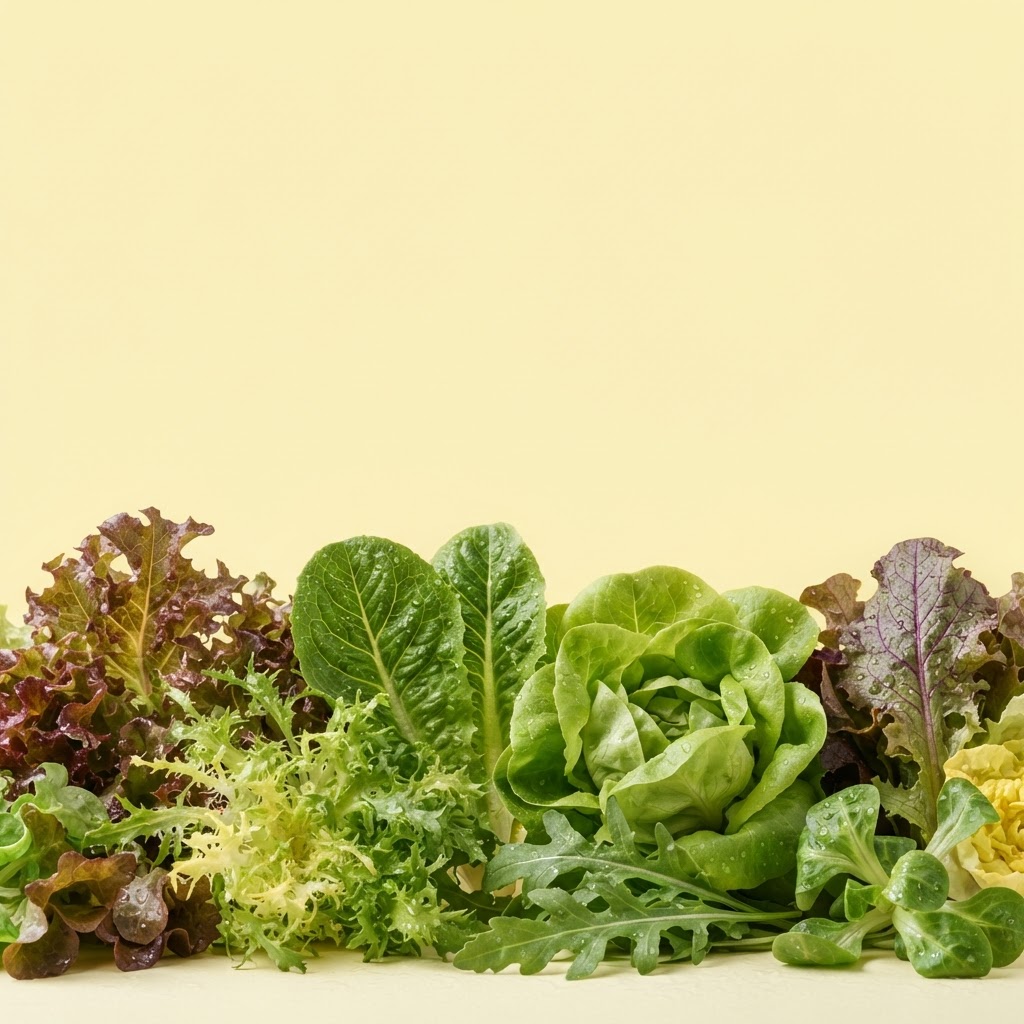
Identify the lettuce from a photo
Photograph the leaf and get the variety, how it tastes, how it behaves once dressed, and what it is best used for.
Choose a leaf photo
Drag a photo here, or tap to choose. JPG or PNG. A clear, close shot works best.
The one split that matters most
Before you worry about varieties, work out which family you have. True lettuce is mild and sweet. The chicory family, which includes radicchio, endive, frisée, puntarelle and sugarloaf, is bitter by design.
That single distinction changes everything about how you use the leaf. A mild lettuce wants a light dressing so you can still taste it. A bitter chicory wants fat, salt and something sweet to balance it, which is why radicchio is so good with blue cheese and honey and so bad with lemon juice.
The chicories also hold up. They stay crisp under a heavy dressing for an hour, where a butterhead collapses in ten minutes. That makes them the right choice for a platter and the wrong choice for a delicate starter.
The main types at a glance
| Type | What to look for | Taste | Behaviour |
|---|---|---|---|
| Crisphead (Iceberg) | Tight, heavy, pale green ball | Mild, watery, almost nothing | Very crunchy, keeps for a fortnight |
| Butterhead | Loose, soft head, buttery inner leaves | Mild and sweet | Soft, wilts fast once dressed |
| Cos or Romaine | Tall upright head, thick pale rib | Sweet with a slight bite | Crisp, holds up well |
| Loose leaf | No head, ruffled leaves in green or red | Mild, varies by variety | Soft, wilts moderately |
| Little Gem | Small, compact, mini cos | Sweet and concentrated | Crisp, the best all-rounder |
| Oak leaf | Deeply lobed leaves like an oak leaf | Mild and nutty | Soft, wilts fast |
| Frisée | Pale, feathery, finely cut leaves | Bitter | Crisp, holds up well |
| Endive | Pale boat-shaped leaves, crisp ribs | Bitter | Very crisp, holds up well |
| Radicchio | Deep maroon with white veins | Bitter and peppery | Crisp, holds up well |
| Arugula | Small jagged dark green leaves | Peppery and sharp | Wilts fast, better raw and late |
| Watercress | Small round leaves on thin stems | Peppery and watery | Wilts fast |
| Mesclun | A mix of small young leaves | Whatever is in the mix | Variable, eat quickly |
The features to look at, in order
- Head or no head. A tight ball is a crisphead or butterhead. A tall loose head is a cos. Leaves with no head at all are loose leaf.
- The rib. A thick, pale, prominent central rib down the middle of a long leaf means cos or romaine. A soft leaf with no real rib is butterhead.
- The edge. Deeply lobed like an oak leaf is oak leaf lettuce. Feathery and finely cut is frisée. Ruffled and frilly is a loose leaf or a green leaf lettuce.
- The colour. Deep maroon with white veins is radicchio. Pale yellow-green with almost no green is endive or frisée, which are blanched to reduce bitterness. Green at the base fading to red at the tip is a red leaf lettuce.
- The feel. Soft and buttery means butterhead. Stiff and crunchy with a watery snap means crisphead. Leathery and crisp means chicory.
- The smell. Rub a leaf between your fingers. Arugula and watercress smell peppery and green. Chicory smells faintly bitter. Lettuce smells of almost nothing.
What I do with each of them
Iceberg gets used for what it is actually good at: crunch. A wedge with blue cheese dressing, or shredded into a burger or a taco. I stopped pretending it is a salad green years ago and started using it as a texture.
Butterhead and Little Gem are the everyday salad. Little Gem is the one I buy most, because it is sweet, crisp and small enough that one head is a meal for two with nothing left over.
The chicories I keep for when there is something rich on the plate. Radicchio and endive cut through fat in a way no lettuce can, and they will still be crisp when everything else has gone limp.
Arugula goes on last, on top of whatever is already dressed, because it collapses within minutes. If it is going to be sitting out, do not use it.
Keeping it alive
- Whole heads keep far longer than pre-cut leaves. A cut leaf is already dying.
- Wrap in a slightly damp paper towel and put it in a bag in the crisp drawer. Dry leaves go limp, wet leaves rot.
- Do not wash until you are about to use it. Water on a leaf in the fridge is how you get slime.
- Revive a limp leaf in iced water for fifteen minutes. It will not be as good as fresh, but it will be usable.
- Keep lettuce away from apples, bananas and stone fruit. The ethylene they release browns the leaves.
I once bought a bag labelled simply "salad mix" and dressed the whole thing with a light vinaigrette, expecting the soft buttery leaves I usually get. It was almost entirely radicchio and endive. The bitterness was so strong my partner put his fork down.
That is the whole problem with lettuce. The leaves look broadly similar in a bag, they behave completely differently on a plate, and the names on the label tell you very little.
Once you can tell the chicory family from the lettuce family on sight, the rest falls into place. Here is what to look at.
Frequently Asked Questions
Start with the shape of the head and the central rib. A tight pale ball is crisphead, a soft loose head is butterhead, a tall head with a thick rib is cos, and leaves with no head at all are loose leaf. Then check the colour and edge to narrow the variety.