What Fruit Is In Season Now?
We set your region and month automatically from your device. Change either one to check any location or any month.
- AppleFuji, Pink Lady, Braeburn
- PearBosc, Comice at their best
- Grape (late)Very sweet, all varieties
- Fig (late)Very soft and sweet
- PersimmonSoft = sweetest
- Pumpkin (early)For cooking
- Pomegranate (early)Juice-filled seeds
- QuinceFragrant
- Stone FruitQuality very poor
📅 Coming Into Season
When Is Papaya in Season in your region?
Papaya are available at different times of year in your region, and supply varies through the year. Use the seasonal tool below for a month-by-month guide.
Tainung vs Red Papaya
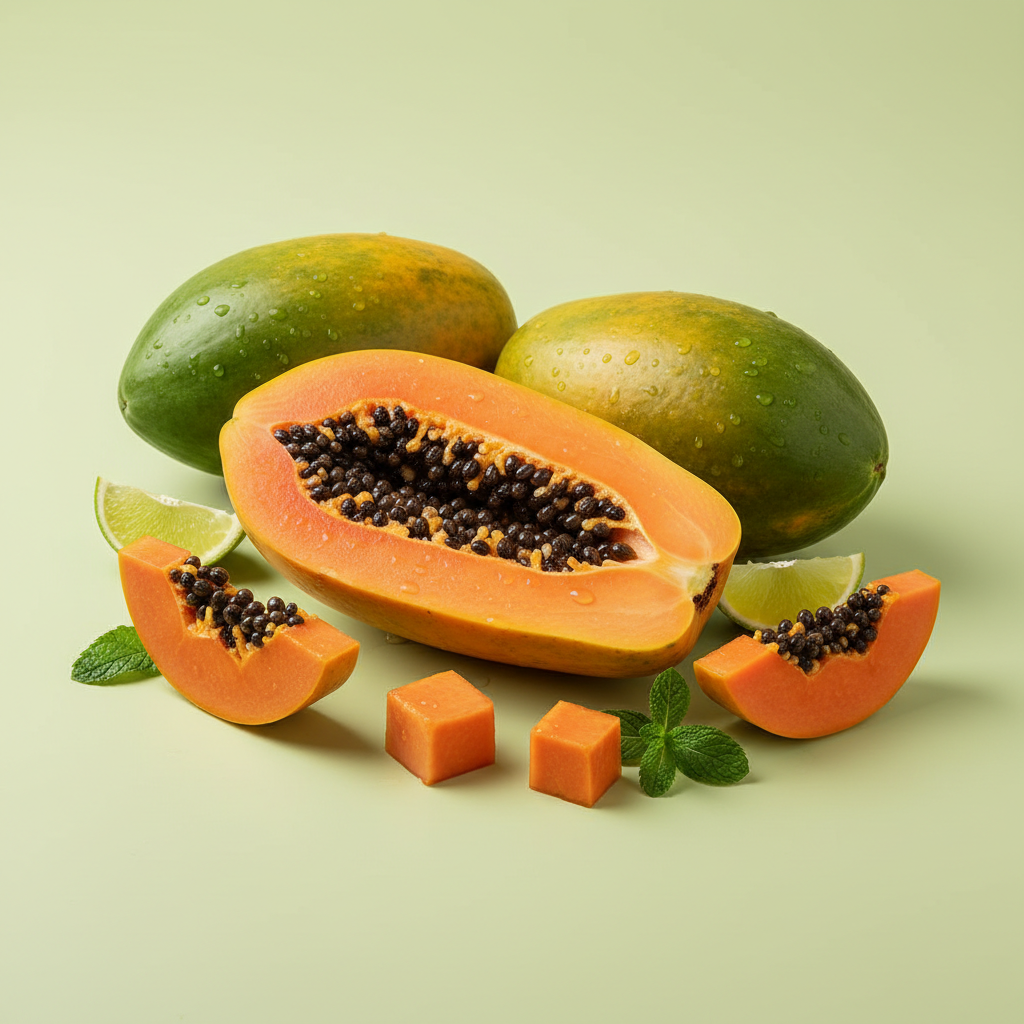
- Tainung (large papaya): The most common supermarket variety. Large, golden-yellow skin when ripe, orange-pink flesh, mild tropical sweetness. Best for smoothies and fresh eating. Available most of the year.
- Red Papaya (small papaya): Smaller, rounder, brighter red-orange flesh. Significantly sweeter and more aromatic. Preferred by most papaya lovers — worth seeking out at markets.
How to Tell if a Papaya is Ripe
- Colour: Skin should be mostly yellow-orange with minimal green patches. 80% yellow = ready to eat in 1 day. Fully yellow-orange = eat today.
- Gentle squeeze: Ripe papaya gives gently like a ripe avocado. Very firm = 2–3 more days. Mushy = overripe.
- Smell the base: A sweet, musky tropical fragrance means ripe. No smell = underripe.
Papaya Nutrition
One cup of papaya (145g): 62 calories, 16g carbs, 2.5g fibre, vitamin C (97% DV), vitamin A (31% DV), folate and papain. Papain is a powerful digestive enzyme that breaks down protein — making papaya an excellent after-meal fruit and natural meat tenderiser.
Try These Papaya Recipes
Where Does Australian Papaya Grow?
Australian papaya is grown almost exclusively in the tropical far north:
| Region | Main Varieties | Notes |
|---|---|---|
| Far North Queensland (Mareeba, Innisfail, Tully) | Tainung, Red Papaya | The heart of Australian papaya production. Tropical climate with high rainfall produces the sweetest fruit. |
| Cooktown & Cape York | Red Papaya | Smaller producers but exceptional fruit quality from pristine tropical conditions. |
| Northern NSW (subtropical) | Tainung | Small experimental plantings — fruit is available but less sweet than far-north-grown. |
Papaya is a tropical fruit that needs consistent warmth and rainfall. Australia's commercial papaya industry is concentrated in a narrow band of far north Queensland within 100km of the coast.
How to Store Papaya
Unripe papaya
Keep unripe papaya (mostly green) at room temperature until the skin turns mostly yellow-orange — this takes 2–5 days. Never refrigerate unripe papaya; cold stops ripening permanently.
Ripe papaya
Once the skin is 80%+ yellow-orange and the fruit gives slightly to gentle pressure, refrigerate and eat within 3–5 days. Cut papaya should be stored in an airtight container in the fridge and consumed within 2 days.
Can you freeze papaya?
Yes — peel, de-seed and cut into chunks, then freeze in a single layer before transferring to a bag. Frozen papaya lasts 3 months and is perfect for smoothies. The texture softens after freezing, so it's not ideal for fresh eating.
Papaya Health Benefits (Expanded)
- Papain enzyme: A powerful proteolytic enzyme unique to papaya that breaks down protein. This makes papaya an excellent digestive aid after heavy meals and a natural meat tenderiser — papain is the active ingredient in commercial meat tenderisers.
- Vitamin C: One cup provides 97% of your daily vitamin C — more than an orange.
- Vitamin A: The deep orange flesh signals high beta-carotene content — 31% of your daily vitamin A per cup, essential for eye health.
- Folate: Important for cell division and particularly important during pregnancy.
- Fibre: 2.5g per cup supports healthy digestion.
- Low calorie: Just 62 calories per cup — one of the lowest-calorie fruits available.
Green Papaya vs Ripe Papaya
Green (unripe) papaya is used as a vegetable in many Asian cuisines. It has a crisp texture, mild flavour and no sweetness. The most famous dish is Thai som tam (green papaya salad) — shredded green papaya pounded with chilli, lime, fish sauce, garlic and peanuts. Green papaya contains higher levels of papain than ripe fruit.
Ripe papaya is eaten fresh, added to fruit salads, blended into smoothies, or used in desserts. The black seeds are edible and have a peppery flavour — they can be dried and used as a pepper substitute.
Related Seasonal Guides
Frequently Asked Questions
Papaya is available most of the year in Australia, with peak quality from November to March. It is grown in far north Queensland where the tropical climate allows near-continuous harvest. Quality and price are best in summer months.