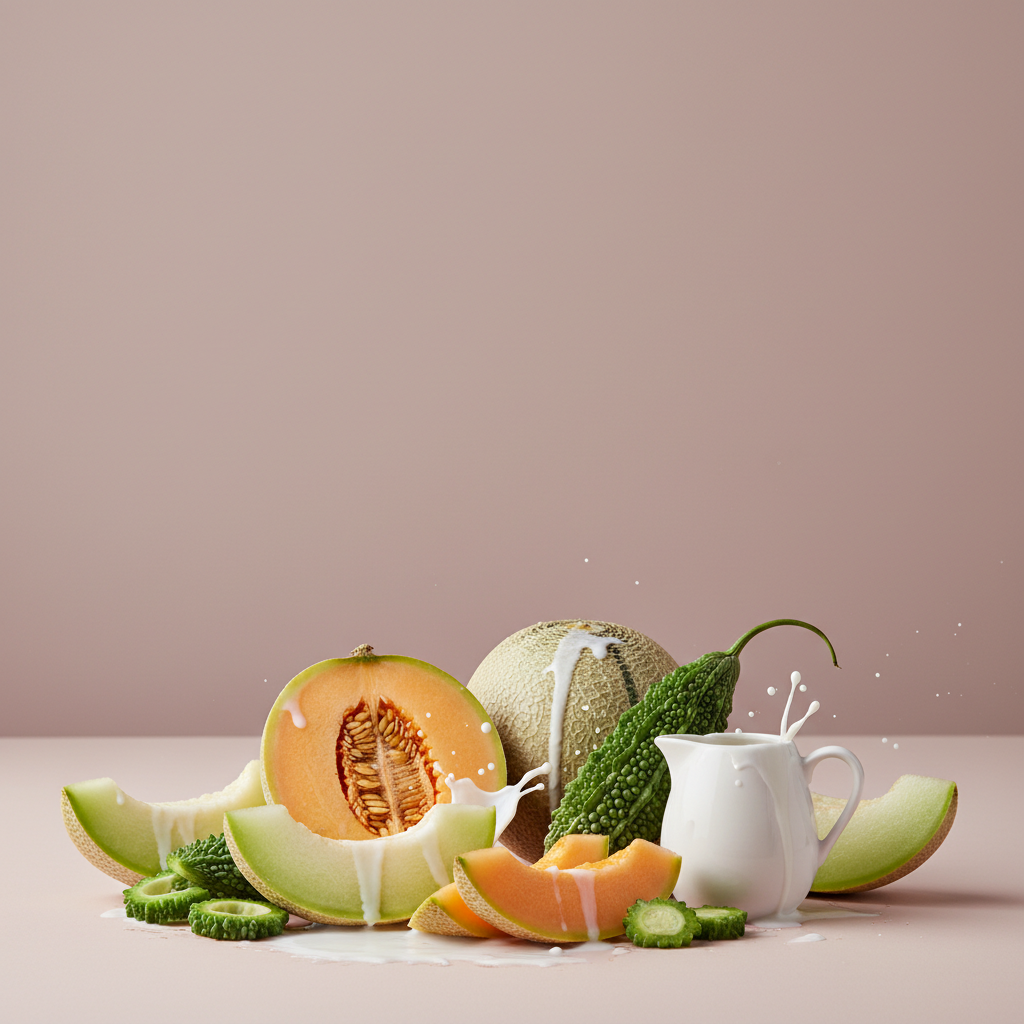

You may have heard the old saying: never eat melon and milk together. Some people swear that combining melon with dairy produces a bitter, unpleasant taste — or worse, digestive upset. Is there any truth to this? The answer is more scientific than you might think. The bitterness comes from specific compounds in melon that interact with proteins in milk. Here is the full explanation.
The Science: Cucurbitacins
Melons belong to the Cucurbitaceae family, which also includes cucumbers, pumpkins, squash and zucchini. All members of this family produce compounds called cucurbitacins— naturally occurring triterpenoids that give these plants their characteristic bitter taste.
In commercially grown melons, cucurbitacin levels are very low — breeders have selectively bred them out over centuries. However, certain conditions can cause cucurbitacin levels to rise:
- Stress during growing: Drought, heat stress, or pest damage can trigger the plant to produce more cucurbitacins as a defence mechanism.
- Improper storage: Melons stored at incorrect temperatures may develop higher cucurbitacin levels.
- Cross-pollination: If a cultivated melon cross-pollinates with a wild relative, the resulting fruit can be unexpectedly bitter.
- Underripe or overripe fruit: Cucurbitacin levels can fluctuate during ripening.
How Cucurbitacins React with Milk
When cucurbitacins come into contact with the proteins in milk (particularly casein), they can bind to the protein molecules and alter their structure. This interaction has two effects:
- Taste alteration: The binding changes how your taste receptors perceive the flavour, often amplifying any bitterness that was previously masked by the melon's sweetness.
- Texture change: The protein-cucurbitacin interaction can cause mild curdling or astringency, making the milk feel different in your mouth.
This is why a melon that tastes perfectly sweet on its own can suddenly taste bitter when eaten with milk, yoghurt or ice cream. The dairy amplifies the bitter compounds that were already present but undetectable.
Melon + Milk Pairing Checker
Will Your Melon Taste Bitter with Milk?
Tap a melon type to see how likely it is to taste bitter when paired with milk or dairy.
Which Melons Are Most Affected?
Not all melons are equally likely to taste bitter with milk. Here is a breakdown:
- Watermelon: Very rarely bitter with milk. Watermelon has extremely low cucurbitacin levels and is generally safe to combine with dairy.
- Rockmelon (cantaloupe): Occasionally bitter with milk, especially if slightly underripe. Generally safe in most cases.
- Honeydew: More likely to taste bitter with milk than watermelon or rockmelon. Test a small amount first.
- Bitter melon: As the name suggests, this is inherently bitter. Never combine with milk.
- Wild or ornamental melons: These can have dangerously high cucurbitacin levels. Never eat them, with or without milk.
Is It Dangerous to Eat Melon with Milk?
For most people, eating commercially grown melon with milk is completely safe — even if it tastes slightly bitter. The cucurbitacin levels in store-bought melons are far too low to cause harm. However, there are some exceptions:
- Toxic squash syndrome: In rare cases, commercially available melons or squash can have dangerously high cucurbitacin levels due to cross-pollination or growing stress. Symptoms include severe stomach cramps, diarrhoea and vomiting. If a melon tastes extremely bitter (even without milk), do not eat it.
- Dairy sensitivity: If you are lactose intolerant or have a dairy allergy, combining melon with milk may cause digestive symptoms that are mistakenly attributed to the melon-milk combination.
- Fermentation: Overripe melon mixed with milk can begin to ferment, producing off-flavours and potential digestive discomfort.
Tips for Combining Melon and Dairy
If you want to enjoy melon with dairy (such as in smoothies, parfaits or fruit salads), follow these tips:
- Use fresh, ripe melon — avoid underripe or overripe fruit
- Taste the melon first; if it has any bitterness on its own, do not mix it with dairy
- Watermelon and rockmelon are the safest choices for dairy combinations
- Use yoghurt instead of milk — the cultures and thickness mask any mild bitterness
- Add a sweetener like honey or maple syrup if you detect any bitterness
- Consume immediately after mixing — do not let melon and dairy sit together for extended periods
Cultural and Historical Context
The belief that melon and milk should not be mixed exists in many cultures. In Ayurvedic medicine, melon is considered a "cooling" food while milk is considered "heating," and combining foods with opposing qualities is believed to cause digestive issues. While modern science does not support all Ayurvedic food combining rules, the melon-milk caution has a scientific basis in cucurbitacin chemistry.
Frequently Asked Questions
Melons contain trace amounts of cucurbitacins — bitter compounds from the Cucurbitaceae family. When these compounds interact with milk proteins (casein), they can amplify bitterness that was previously masked by the melon's sweetness. In commercially grown melons, cucurbitacin levels are very low, so the effect is usually mild.
Freshness Checker
Type any produce to get freshness tips instantly
Powered by PickFresh AI · Scan real produce with your camera →