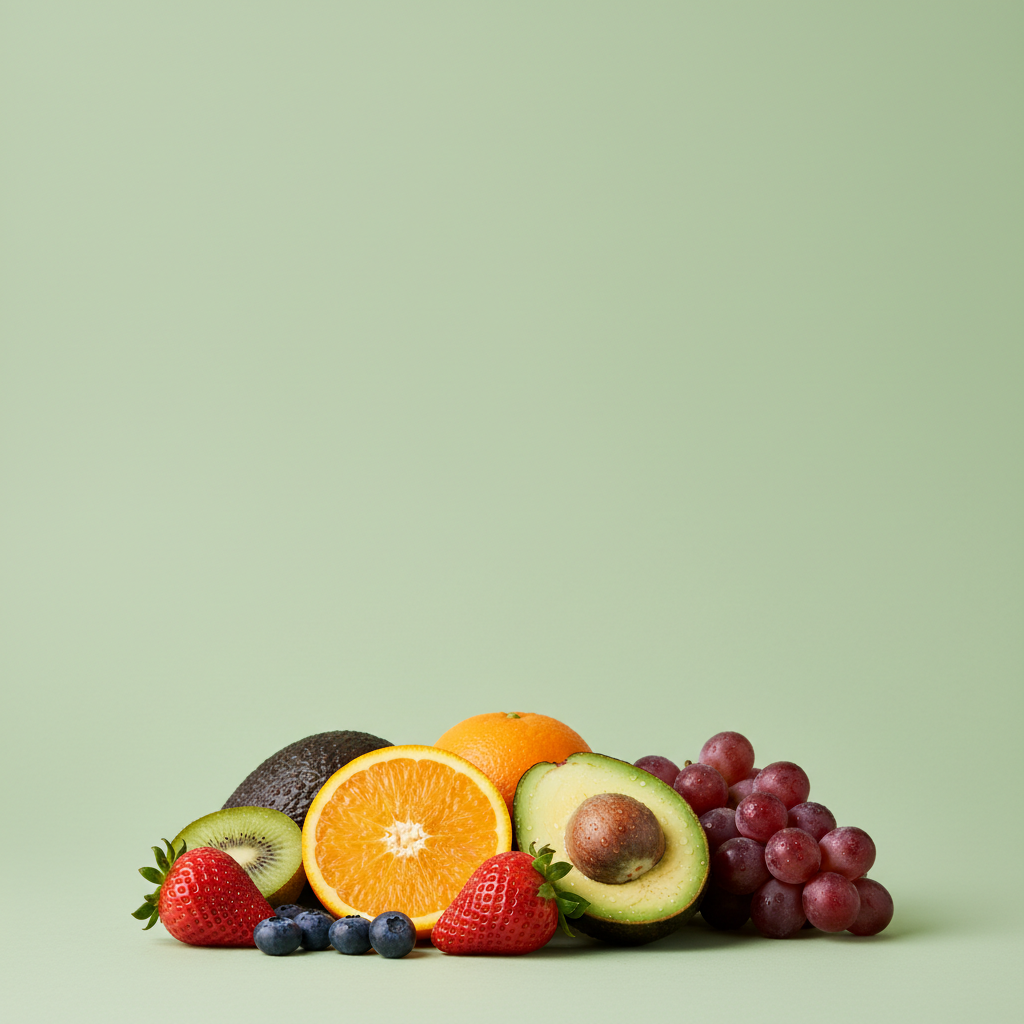
Eating fruit in season means better flavour, higher nutrition and lower prices. But what's in season depends on where you live — summer fruits in the US (June–August) are winter fruits in Australia (December–February). Use the tool below to find out what's at peak right now in your region.
What Fruit Is In Season Now?
We auto-detected your region from your timezone. Adjust below to check any location or month.
✅ Peak Season — Best Quality & Price
| Fruit | Why | Picking Tip |
|---|---|---|
| Peach/Nectarine (late) | Late summer peak | Most fragrant varieties |
| Plum (late) | Late summer | Dark purple = peak |
| Blackberry | Peak ripeness | Deep black = sweetest |
| Blueberry (late) | Late season | Quality still good |
| Watermelon (peak) | Peak season | Hollow thump = ripe |
| Cantaloupe | Peak sweetness | Golden, netted skin |
| Fig (early) | Early figs | Soft when ripe |
| Raspberry (late) | Late summer | Delicate, use immediately |
🟡 Good Quality — Available & Decent
| Fruit | Why | Picking Tip |
|---|---|---|
| Apricot (very late) | Very end of season | Quality poor |
| Grape (early) | Early varieties | Beginning of season |
| Honeydew Melon | Late season | Pale yellowish = ripe |
❌ Avoid — Out of Season
| Fruit | Why | Picking Tip |
|---|---|---|
| Peach (late month) | Season ending | Quality drops significantly |
How the Seasonal Fruit Finder Works
The tool above automatically detects your region from your device's timezone settings. If you're in the United States, it shows Northern Hemisphere seasons. If you're in China, Japan, or Europe, same — Northern Hemisphere. If you're in Australia or New Zealand, it switches to Southern Hemisphere seasons. And if you're in Southeast Asia or other tropical regions, it shows tropical fruit availability.
You can also manually change the region and month to plan ahead — for example, checking what fruit will be in season when you travel, or looking up a specific fruit to see if it's the right time to buy.
Peak Fruit Seasons by Region
Here's a quick-reference table showing when the most popular fruits are at their peak in each hemisphere. Use the interactive tool above for detailed, month-by-month data.
| Fruit | Northern Hemisphere (US, China, Europe) | Southern Hemisphere (Australia, NZ) | Tropical Regions (SE Asia) |
|---|---|---|---|
| Strawberry | Apr–Jun | Sep–Nov | Year-round |
| Mango | May–Sep | Nov–Feb | Year-round (peak Mar–May) |
| Peach / Nectarine | Jun–Aug | Dec–Feb | Limited |
| Cherry | Jun–Jul | Nov–Dec | Not available |
| Watermelon | Jun–Aug | Dec–Feb | Year-round |
| Blueberry | Jun–Aug | Nov–Feb | Not available |
| Apple | Sep–Nov | Mar–May | Not available |
| Pear | Sep–Nov | Mar–May | Not available |
| Orange (Navel) | Dec–Mar | Jun–Sep | Not available |
| Mandarin | Nov–Feb | Jun–Aug | Not available |
| Grape | Sep–Oct | Mar–May | Not available |
| Fig | Aug–Oct | Feb–Apr | Not available |
| Pomegranate | Oct–Dec | Apr–May | Not available |
| Lychee | Jun–Jul | Dec–Feb | May–Jul |
| Pineapple | Year-round (imported) | Year-round | Year-round |
| Avocado | Year-round (imported) | Sep–Jan | Year-round |
| Passionfruit | Jun–Aug | Dec–Apr | Year-round |
| Kiwifruit | Oct–Dec | Mar–Jun | Not available |
Why the Same Fruit Has Different Seasons by Region
Fruit ripening is driven by sunlight, temperature and rainfall patterns. The Earth is tilted on its axis, which means when the Northern Hemisphere leans toward the sun (June–August), the Southern Hemisphere leans away — and vice versa. So summer in New York is winter in Sydney, and the fruits that thrive in heat (stone fruit, berries, melons) flip their season by six months between hemispheres.
Tropical regions near the equator don't have the same four-season cycle. Instead, they have wet and dry seasons. Tropical fruits like mango, pineapple, papaya and lychee are available year-round, with peak quality during the local wet/monsoon season.
| Region | Summer (peak fruit season) | Winter (citrus season) | Key Fruits |
|---|---|---|---|
| United States & Canada | June–August | December–February | Cherries, peaches, blueberries, watermelon |
| China | June–August | December–February | Lychee, longan, yangmei, peaches |
| Europe (UK, Germany, France) | June–August | December–February | Strawberries, cherries, apples, pears |
| Australia & New Zealand | December–February | June–August | Mangoes, stone fruit, berries, lychee |
| Southeast Asia (Thailand, Vietnam, Philippines) | Year-round tropical | Year-round tropical | Mango, pineapple, papaya, mangosteen, durian |
| South Africa | December–February | June–August | Mangoes, citrus, grapes, stone fruit |
| South America (Brazil, Argentina) | December–February | June–August | Mangoes, papaya, grapes, citrus |
Why Eat Seasonal Fruit?
Better Flavour
Fruit harvested in season is picked at peak ripeness, when sugars and flavour compounds are at their highest. Out-of-season fruit is often picked underripe and ripened artificially with ethylene gas in cold storage. It looks ripe but tastes flat and mealy.
Higher Nutrition
Studies show that vitamin C, antioxidants and other nutrients decline the longer fruit sits after harvest. In-season fruit travels shorter distances and spends less time in storage, retaining more of its nutritional value. A strawberry picked in season can have 2–3x more vitamin C than one shipped out of season.
Lower Cost
When fruit is in season locally, supply is abundant and prices drop. Out-of-season fruit must be imported or grown in heated greenhouses, both of which add significant cost. You'll often pay 50–70% less for in-season produce.
Lower Environmental Impact
Seasonal local fruit travels shorter distances, reducing transport emissions and cold-storage energy. It also avoids the environmental cost of heated greenhouse production for out-of-season crops.
How to Store Seasonal Fruit
Once you've bought in-season fruit, proper storage extends its life. Here are storage tips for the most common fruits:
| Fruit | Storage Method |
|---|---|
| Berries | Don't wash until ready to eat. Store in fridge in original container lined with paper towel. Use within 3–5 days. |
| Stone fruit (peach, nectarine, plum) | Ripen at room temperature, then refrigerate for 3–5 days. Bring to room temp before eating for best flavour. |
| Citrus | Store at room temperature for 1 week, or refrigerate for up to 3–4 weeks. Keep in a mesh bag for airflow. |
| Apples | Refrigerate in crisper drawer for up to 4 weeks. Keep away from other produce — apples release ethylene gas. |
| Mangoes | Ripen at room temperature until fragrant and slightly soft. Refrigerate once ripe for up to 5 days. |
| Melons (whole) | Store at room temperature until cut. Once cut, refrigerate in an airtight container for 3–4 days. |
| Grapes | Store unwashed in fridge in their original bag. Wash just before eating. Use within 1–2 weeks. |
| Bananas | Keep at room temperature. To slow ripening, wrap stem in plastic. Never refrigerate — skins turn black. |
Signs a Fruit Is Ripe and Ready to Eat
- Aroma: Ripe fruit smells fragrant at the stem end. No smell means it's underripe.
- Gentle pressure: Most fruits yield slightly to gentle pressure when ripe. Hard means underripe; mushy means overripe.
- Weight: Heavier fruit for its size has more water content and is juicier.
- Colour: Skin colour should be vibrant and uniform (varies by fruit — learn each one's ripe colour).
- Stem test (avocado): If the small stem button comes off easily and is green underneath, it's ripe. Brown underneath means overripe.
Want to scan produce for freshness at the supermarket? Download the PickFresh app to check ripeness instantly with your camera.
Frequently Asked Questions
In the US (Northern Hemisphere), summer (June–August) brings peaches, cherries, strawberries, blueberries, watermelon and mangoes. Winter (December–February) is peak citrus season — oranges, mandarins, grapefruit and lemons. Use the interactive tool above to see the exact list for any month.
Freshness Checker
Type any produce to get freshness tips instantly
Powered by PickFresh AI · Scan real produce with your camera →