Peaches are one of the most flavourful summer fruits — but not all peaches taste the same. Depending on the variety, ripeness and whether it's white or yellow-fleshed, a peach can taste wildly different. Here's a complete flavour guide.
Quick Answer: What Does a Peach Taste Like?
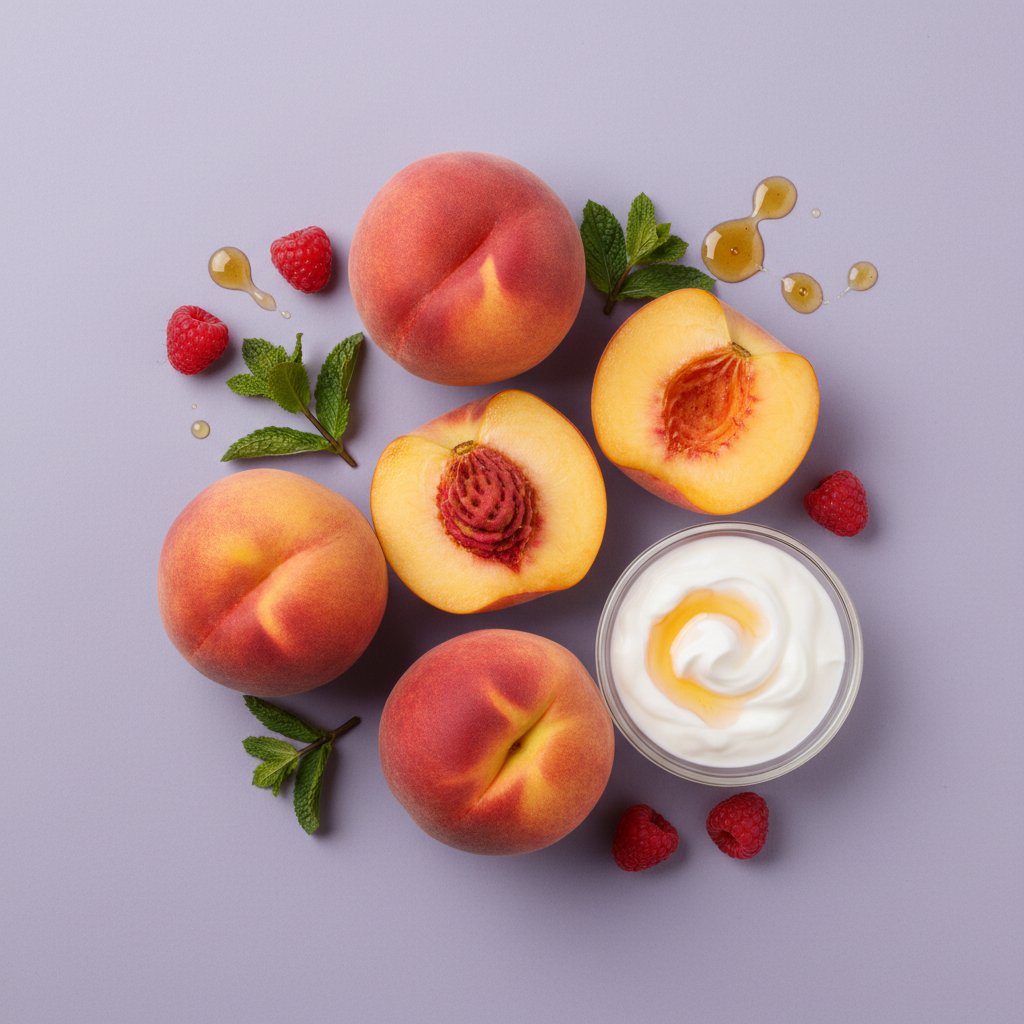
A ripe peach tastes sweet, juicy and aromatic, with flavour notes of honey, nectarine, apricot and floral blossoms. Yellow-fleshed peaches have a tangy, slightly acidic balance, while white-fleshed peaches are sweeter and more delicate with a perfumed, almost vanilla-like flavour. The skin adds a slight tartness.
Peach Flavour by Variety
| Variety Type | Sweetness | Acidity | Flavour Notes |
|---|---|---|---|
| Yellow-fleshed peach | Medium-High | Medium | Tangy, classic peach flavour, honey, citrus hints |
| White-fleshed peach | High | Low | Sweet, floral, perfumed, vanilla, delicate |
| Donut/Saturn peach | High | Low | Intensely sweet, almond notes, mild acidity |
| Nectarine (smooth skin) | Medium-High | Medium | Similar to peach, slightly more concentrated |
| Clingstone peach | High | Low-Medium | Sweet, rich, used for canning |
| Freestone peach | Medium-High | Medium | Balanced sweet-tart, good for eating fresh |
What Does a Ripe Peach Taste Like?
A perfectly ripe peach is a completely different experience from an underripe one. Here's how the flavour changes with ripeness:
Underripe (Hard)
Tastes starchy, tart and crunchy. The sugars haven't fully developed, and the flavour is flat and acidic. The flesh clings to the pit.
Ripe (Slightly Soft)
The sweetness peaks, the juice flows, and the aroma is intense. The flesh yields to gentle pressure but still holds its shape. This is the ideal eating stage — the flavour is a perfect balance of sweet and tangy.
Overripe (Very Soft)
Extremely sweet but the texture becomes mushy. The acidity drops, making it taste one-dimensional. Still excellent for smoothies, baking and jams, but less enjoyable to eat fresh.
What Gives Peaches Their Flavour?
The distinctive peach flavour comes from a complex mixture of compounds:
- Lactones: These give peaches their characteristic creamy, fruity aroma — the compound most people associate with "peach flavour" in candies and drinks.
- Esters: Contribute fruity, sweet notes like banana and apple.
- Terpenoids: Add floral and citrus notes, particularly in white peaches.
- Aldehydes: Provide green, fresh notes that are more prominent in underripe fruit.
- Sugar content: A ripe peach has 8–12% sugar by weight, primarily sucrose, fructose and glucose.
White Peach vs Yellow Peach: Which Tastes Better?
This comes down to personal preference:
- Choose yellow peaches if you like a classic, tangy peach flavour with a balance of sweet and sour. They're the standard for pies, cobblers and canning.
- Choose white peaches if you prefer sweeter, more delicate flavours with floral and vanilla notes. They're best eaten fresh or in desserts where their subtle flavour can shine.
How to Tell if a Peach Will Taste Good
Even within the same variety, individual peaches can taste completely different. Here's how to pick a peach that will actually taste good:
- Smell it: A ripe peach has a sweet, floral aroma at the stem end. No smell means it was picked too early and may never develop full flavour.
- Check the background colour: Ignore the red blush — it's a sun exposure indicator, not a ripeness signal. Look at the background colour between the red patches. It should be golden yellow or warm cream, not green.
- Feel for give: Gently press near the stem. A ripe peach yields slightly. If it's rock hard, it needs 2–3 more days at room temperature. If it's mushy, it's overripe.
- Check the shape: A good peach is full and round with a defined cleft. Flat or wrinkled peaches are often overripe or were damaged in transit.
- Weight: A heavy peach for its size means it's juicy. Light peaches are often dry inside.
For more picking tips across all fruit, see our how to pick ripe fruit guide.
Peach Flavour in Different Preparations
How you prepare a peach changes its flavour dramatically:
| Preparation | Flavour Effect | Best Peach Type |
|---|---|---|
| Fresh, raw | Full flavour, all compounds intact | White or donut |
| Grilled | Caramelised sugars, smoky depth, intensified sweetness | Yellow freestone |
| Baked (pie/cobbler) | Concentrated sweetness, softer texture, skin adds complexity | Yellow freestone |
| Poached | Delicate, infused with poaching liquid flavours | White or yellow |
| Blended (smoothie) | Fresh flavour, skin adds nutrients and slight tartness | Any ripe peach |
| Jam/preserves | Intensely concentrated, deeper and richer | Clingstone |
| Dried | Very sweet, chewy, flavour concentrates | Yellow freestone |
Grilling is a particularly underrated way to eat peaches — the heat caramelises the natural sugars and creates a flavour that's completely different from raw. Cut a peach in half, remove the pit, brush with a little oil, and grill cut-side down for 2–3 minutes. Serve with vanilla ice cream and a drizzle of honey.
The Science of Peach Aroma
The distinctive smell of a peach comes from over 100 volatile compounds, but a few dominate the profile:
- Gamma-decalactone: The single most important compound — this is what gives peaches their characteristic "peachy" smell. It's so distinctive that it's used in artificial peach flavouring.
- Hexanal: Gives a fresh, green, leafy note — more prominent in underripe peaches.
- Linalool: Adds a floral, lavender-like quality, especially in white peaches.
- Benzaldehyde: Contributes an almond-like note, particularly noticeable near the pit.
- Ethyl acetate: Provides a sweet, fruity ester note.
These compounds develop during ripening, which is why an underripe peach has very little aroma. The lactone compounds in particular increase dramatically as the peach softens — this is why a ripe peach's smell is so intoxicating. A peach with no smell will never taste good, no matter how long you wait.
Peach vs Nectarine: Taste Difference
Since peaches and nectarines are the same species, their flavour is very similar. However, there are subtle differences:
- Nectarines tend to be slightly sweeter and more intense: Without the fuzzy skin to protect the fruit, nectarines may concentrate their sugars more.
- Peach skin adds a slight tartness: The fuzz and skin compounds add a tart note that nectarines (with smooth skin) don't have. See our guide on peach skin.
- Texture is the biggest difference: Nectarine flesh is typically firmer and smoother, while peach flesh is softer and juicier.
For most recipes, peaches and nectarines are interchangeable. If a recipe calls for peaches and you only have nectarines, use them — the result will be nearly identical.
What Pairs Well with Peach Flavour?
Peaches have a versatile flavour that pairs with both sweet and savoury ingredients:
- Sweet pairings: Vanilla, honey, cinnamon, almond, raspberry, cream, mascarpone, coconut
- Savoury pairings: Prosciutto, burrata, goat cheese, basil, mint, balsamic vinegar, jalapeño
- Drink pairings: Prosecco (for bellinis), bourbon, white wine, green tea
- Spice pairings: Ginger, cardamom, nutmeg, lavender, rosemary
A classic peach and burrata salad — sliced peaches, torn burrata, fresh basil, olive oil and balsamic glaze — is one of the best ways to experience how peach flavour transforms in a savoury context.
Want to taste peaches at their absolute best? Check our peach season guide to buy them at peak ripeness, or learn which peach variety is sweetest.
Frequently Asked Questions
A ripe peach tastes sweet, juicy, and aromatic, with flavour notes of honey, nectarine, apricot, and floral blossoms. Yellow-fleshed peaches have a tangy, slightly acidic balance, while white-fleshed peaches are sweeter and more delicate with a perfumed, almost vanilla-like flavour. The skin adds a slight tartness. An underripe peach tastes starchy, tart, and flat.
Freshness Checker
Type any produce to get freshness tips instantly
Powered by PickFresh AI · Scan real produce with your camera →