Strawberries are one of the most nutrient-dense fruits you can eat — but how much counts as a single serve? Here's the quick answer and a visual guide so you'll never have to guess again.
Quick Answer: What Is a Serving of Strawberries?
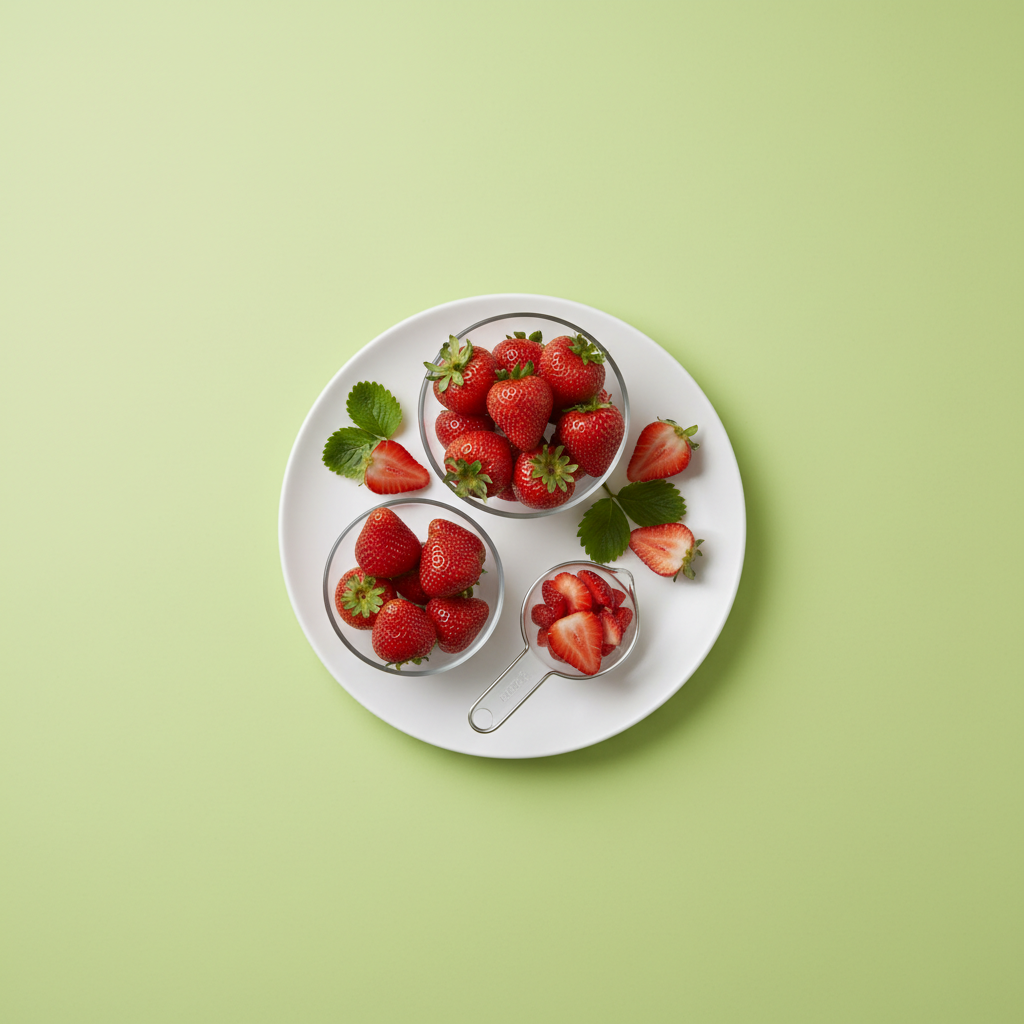
One serve of strawberries is 1 cup of whole strawberries (about 150g), which is approximately 8 medium strawberries. This counts as one of your "2 serves of fruit per day" recommended by the Australian Dietary Guidelines.
Visual Serving Guide
| Strawberry Size | Count Per Serve | Weight |
|---|---|---|
| Small (15g each) | 10 berries | ~150g |
| Medium (18g each) | 8 berries | ~150g |
| Large (25g each) | 6 berries | ~150g |
| Extra large (30g each) | 5 berries | ~150g |
| Sliced | 1 cup | ~150g |
| Puréed | ½ cup | ~115g |
Nutrition Per Serving (150g)
| Nutrient | Amount | % Daily Target |
|---|---|---|
| Calories | 48 kcal | ~2% |
| Sugar | 7.4g | ~30% of WHO limit |
| Fibre | 1.4g | ~5% |
| Vitamin C | 89mg | ~99% |
| Folate | 36µg | ~9% |
| Manganese | 0.6mg | ~26% |
| Potassium | 153mg | ~4% |
How Many Strawberries Should You Eat Per Day?
The Australian Dietary Guidelines recommend 2 serves of fruit per day for adults. That means you could eat up to 16 medium strawberries (2 cups) to hit your fruit target. However, it's best to vary your fruit intake — eating different fruits gives you a wider range of nutrients.
For children, the recommended serves are:
- Ages 2–3: 1 serve per day (½ cup strawberries)
- Ages 4–8: 1.5 serves per day (¾ cup)
- Ages 9–18: 2 serves per day (1 cup)
Can You Eat Too Many Strawberries?
Strawberries are very low in calories and sugar compared to most fruits, so overeating them is unlikely to cause weight gain. However, eating more than 4 serves of fruit per day can push you close to the WHO's recommended daily sugar limit of 25g (6 teaspoons).
One serve of strawberries (7.4g sugar) is well within the limit — you'd need to eat over 3 cups to exceed it. So strawberries are one of the safest fruits to eat in larger quantities.
How to Measure a Serving Without Scales
No kitchen scales? Use these visual shortcuts:
- 1 serve = 1 cup: Cup both hands together — that's roughly 1 cup.
- 1 serve = 8 medium berries: About the size of a medium egg each.
- 1 serve = your fist: A closed fist is approximately 1 cup of whole berries.
Strawberry Serving Sizes for Different Uses
The official serving is 1 cup (150g), but in practice the right amount depends on what you're making:
| Use | Amount | Calories | Notes |
|---|---|---|---|
| Snack (fresh) | 1 cup (8 medium) | 48 cal | Full serving, eaten whole |
| Smoothie | 1 cup | 48 cal | Blend with banana and milk |
| Cereal / yoghurt topping | ½ cup (4 berries) | 24 cal | Sliced over breakfast |
| Dessert (with cream) | 1 cup | 48 cal + cream | Classic strawberry shortcake |
| Jam (cooked) | 2 cups → 1 jar | 96 cal per jar | Added sugar increases calories |
| Baby food (6+ months) | 2–3 mashed | 15 cal | Soft, mashed, no chunks |
| Salad topping | ½ cup, sliced | 24 cal | Adds sweetness to green salad |
Strawberries vs Other Fruits: Serving Size Comparison
How does a serving of strawberries compare to other common fruits?
| Fruit | 1 Serving | Calories | Sugar | Vitamin C |
|---|---|---|---|---|
| Strawberries | 1 cup (150g) | 48 cal | 7.4g | 89mg (99% DV) |
| Banana | 1 medium (118g) | 105 cal | 14g | 10mg (11% DV) |
| Apple | 1 medium (182g) | 95 cal | 19g | 8mg (9% DV) |
| Orange | 1 medium (131g) | 62 cal | 12g | 70mg (78% DV) |
| Blueberries | 1 cup (148g) | 84 cal | 15g | 15mg (16% DV) |
| Grapes | 1 cup (151g) | 104 cal | 23g | 5mg (5% DV) |
Strawberries are the clear winner for vitamin C per calorie — one serving gives you nearly 100% of your daily vitamin C for just 48 calories. They're also the lowest-sugar fruit on the list, making them ideal for anyone watching their sugar intake. See our sugar in food guide for more on fruit sugar content, or our how much fruit is too much guide for daily limits.
Health Benefits of One Serving of Strawberries
One cup of strawberries delivers an impressive nutritional punch:
- Nearly 100% of daily vitamin C: Essential for immune function, collagen production, and iron absorption. See our vitamin C foods guide.
- High in manganese: 26% of your daily target — important for bone health and metabolism.
- Rich in folate: 9% of daily target — crucial for cell division and pregnancy health. See our folate guide.
- Powerful antioxidants: Anthocyanins (the red pigment) are linked to reduced risk of heart disease and improved cognitive function. See our heart-healthy foods guide.
- Low glycemic index (GI 41): Won't spike blood sugar, making strawberries safe for diabetics. See our fruit and blood sugar guide.
- High water content (91%): Contributes to hydration and helps you feel full.
How to Store Strawberries to Maximise Freshness
Strawberries are delicate and spoil quickly. To get the most from each serving:
- Don't wash until ready to eat: Moisture promotes mould. Keep berries dry in the container.
- Check for mould: Remove any mouldy or bruised berries immediately — mould spreads fast.
- Refrigerate: Store in the crisper drawer at 2–4°C. They'll last 5–7 days.
- Vinegar bath: For longer storage, soak in 1 part vinegar to 3 parts water for 5 minutes, dry thoroughly, and refrigerate. This kills mould spores and can extend shelf life to 2 weeks.
- Freeze excess: If you can't eat them in time, freeze whole on a tray, then transfer to a bag. Frozen strawberries last 6 months — see our freezing berries guide for the technique.
For comprehensive storage advice across all produce, see our fruit and vegetable storage guide.
Can You Eat Strawberry Leaves and Stems?
When measuring a serving, you don't need to remove the leaves meticulously — they're edible. Strawberry leaves contain beneficial flavonoids and can be used in tea or blended into smoothies. See our guide on whether strawberry leaves are edible for more. For most uses, hull the berry (remove the green calyx) for better texture, but know that the leaves aren't harmful if consumed.
Want to know when strawberries are at their sweetest? Check our strawberry season guide for the month-by-month availability calendar.
Frequently Asked Questions
One serving of strawberries is 1 cup of whole berries (approximately 150g), which is about 8 medium strawberries. This provides 48 calories, 7.4g of sugar, 89mg of vitamin C (99% of daily value), and 1.4g of fibre. This counts as one of the 2 serves of fruit per day recommended by the Australian Dietary Guidelines.
Freshness Checker
Type any produce to get freshness tips instantly
Powered by PickFresh AI · Scan real produce with your camera →