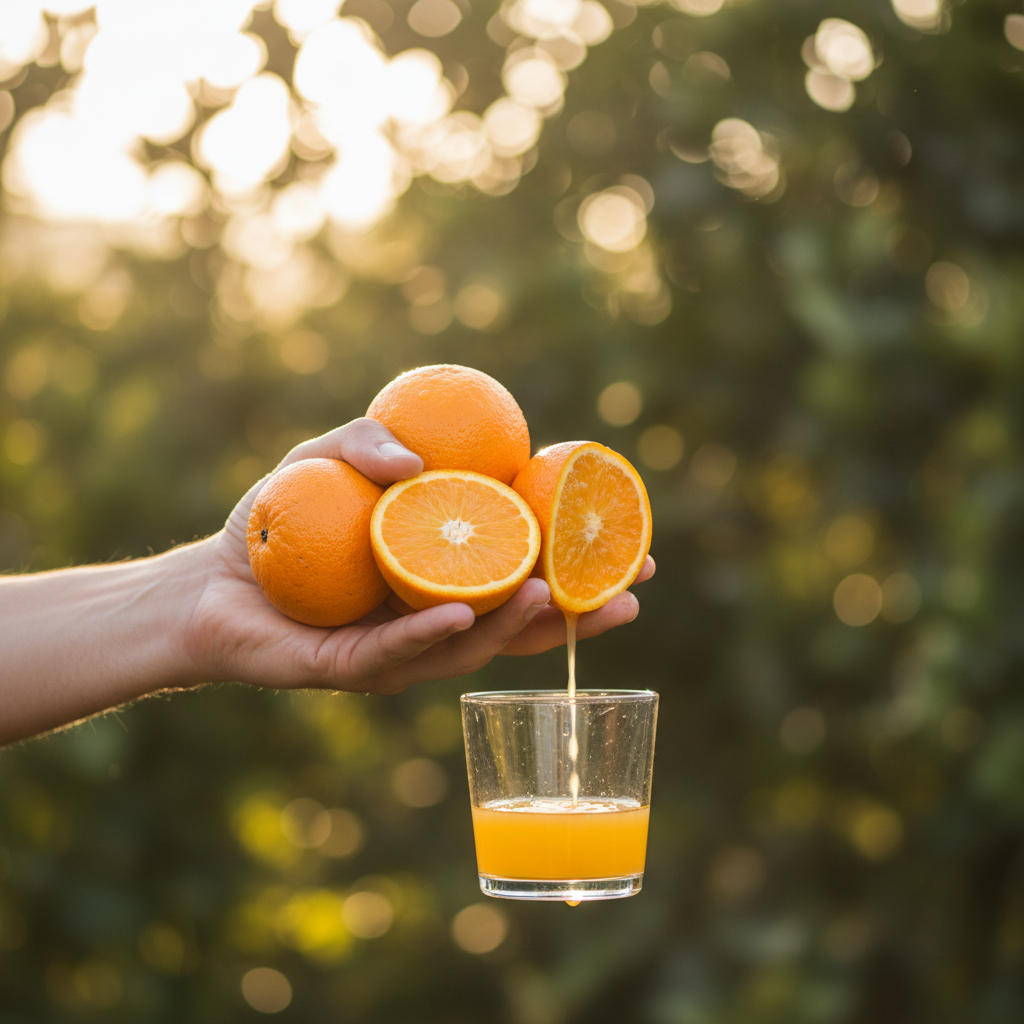
Orange juice is a breakfast staple around the world — refreshing, vitamin C-rich and deliciously sweet. But despite its healthy image, orange juice is surprisingly high in sugar and low in fibre compared to whole fruit. Drinking too much can lead to weight gain, blood sugar spikes, dental erosion and other health issues. Here is how much is too much, and how to enjoy orange juice responsibly.
Daily Orange Juice Limit Calculator
What Is Your Recommended Daily Maximum?
Adults should limit fruit juice to 1 cup (250ml) per day. Choose whole fruit whenever possible for fibre and satiety.
Each cup (250ml) of orange juice contains approximately 21g of sugar — equivalent to about 5 teaspoons.
Sugar Content of Orange Juice
A standard glass of orange juice (250ml) contains approximately:
- 21g of sugar — about 5 teaspoons
- 110 calories
- 25g of carbohydrates
- 0.5g of fibre — compared to 4g in a whole orange
- 120% of daily vitamin C
The sugar in orange juice is natural fructose, but without the fibre of whole fruit, it is absorbed rapidly into the bloodstream. This causes a faster blood sugar spike than eating a whole orange, which contains the same sugar but with 8 times more fibre to slow absorption.
Recommended Daily Limits
Health authorities worldwide recommend limiting fruit juice intake, especially for children:
- Children under 4: Maximum 120ml (½ cup) per day
- Children 4-18: Maximum 180ml (¾ cup) per day
- Adults: Maximum 250ml (1 cup) per day
- Adults over 65: Maximum 200ml (¾ cup) per day
The Australian Dietary Guidelines recommend that fruit juice should not be a regular substitute for whole fruit. Most adults should aim for two serves of whole fruit per day, with juice as an occasional treat rather than a daily habit.
Health Risks of Too Much Orange Juice
Drinking excessive amounts of orange juice can lead to several health issues:
- Weight gain: Liquid calories are less filling than solid food. A large glass of orange juice (350ml) contains 150 calories — the same as a can of soft drink. Studies show people who drink juice regularly are more likely to gain weight.
- Blood sugar spikes: Without fibre to slow absorption, the sugar in juice enters the bloodstream rapidly. This is particularly concerning for people with diabetes or insulin resistance.
- Dental erosion: Orange juice is acidic (pH 3.5-4.0) and high in sugar. Frequent consumption erodes tooth enamel and promotes cavities. Dentists recommend drinking juice through a straw and rinsing with water afterwards.
- Increased triglycerides: High fructose intake from juice can raise blood triglyceride levels, a risk factor for heart disease.
- Gastrointestinal issues: Large amounts of fructose can cause bloating, gas and diarrhoea, especially in people with fructose malabsorption or IBS.
- Kidney stones: Very high vitamin C intake (above 2000mg per day) can increase the risk of kidney stones in susceptible individuals. This would require drinking about 6-7 cups of orange juice — an extreme amount.
Whole Orange vs Orange Juice
A whole orange is significantly healthier than a glass of juice:
- Fibre: A whole orange has 4g of fibre; a glass of juice has 0.5g. Fibre slows sugar absorption, promotes fullness and supports gut health.
- Satiety: Eating a whole orange makes you feel full. Drinking juice does not trigger the same satiety signals, leading to overconsumption.
- Sugar absorption: The fibre in whole fruit slows sugar absorption, resulting in a gentler blood sugar curve. Juice causes a rapid spike and crash.
- Calorie density: It takes 3-4 oranges to make one glass of juice. Most people would not eat 4 oranges in one sitting, but drinking the equivalent juice is easy.
- Nutrient retention: Whole oranges retain all nutrients, including those in the pith and membrane that are removed during juicing.
How to Enjoy Orange Juice Responsibly
- Limit to one small glass (150-200ml) per day
- Choose freshly squeezed over commercially processed juice
- Dilute with water (50/50) to reduce sugar and calorie intake
- Drink with a meal, not on an empty stomach, to slow sugar absorption
- Use a straw to protect tooth enamel
- Rinse your mouth with water after drinking juice
- Prefer whole fruit over juice whenever possible
- Avoid giving juice to children under 12 months; dilute for older children
Related Orange & Sugar Guides
- How much juice is in one orange? See our juice yield guide.
- Which orange is the sweetest? Check our orange Brix comparison.
- Are orange skins good for you? See our orange peel nutrition guide.
- Can orange juice give you heartburn? Read our citrus and reflux guide.
- How much fruit is too much? See our fruit sugar limit guide.
- Sugar in food guide? Check our comprehensive sugar guide.
Frequently Asked Questions
For adults, more than 250ml (1 cup) per day is considered excessive. Children under 4 should have no more than 120ml (½ cup), and children 4-18 should limit to 180ml (¾ cup). Drinking more than the recommended amount regularly can lead to weight gain, blood sugar spikes and dental erosion.
Freshness Checker
Type any produce to get freshness tips instantly
Powered by PickFresh AI · Scan real produce with your camera →