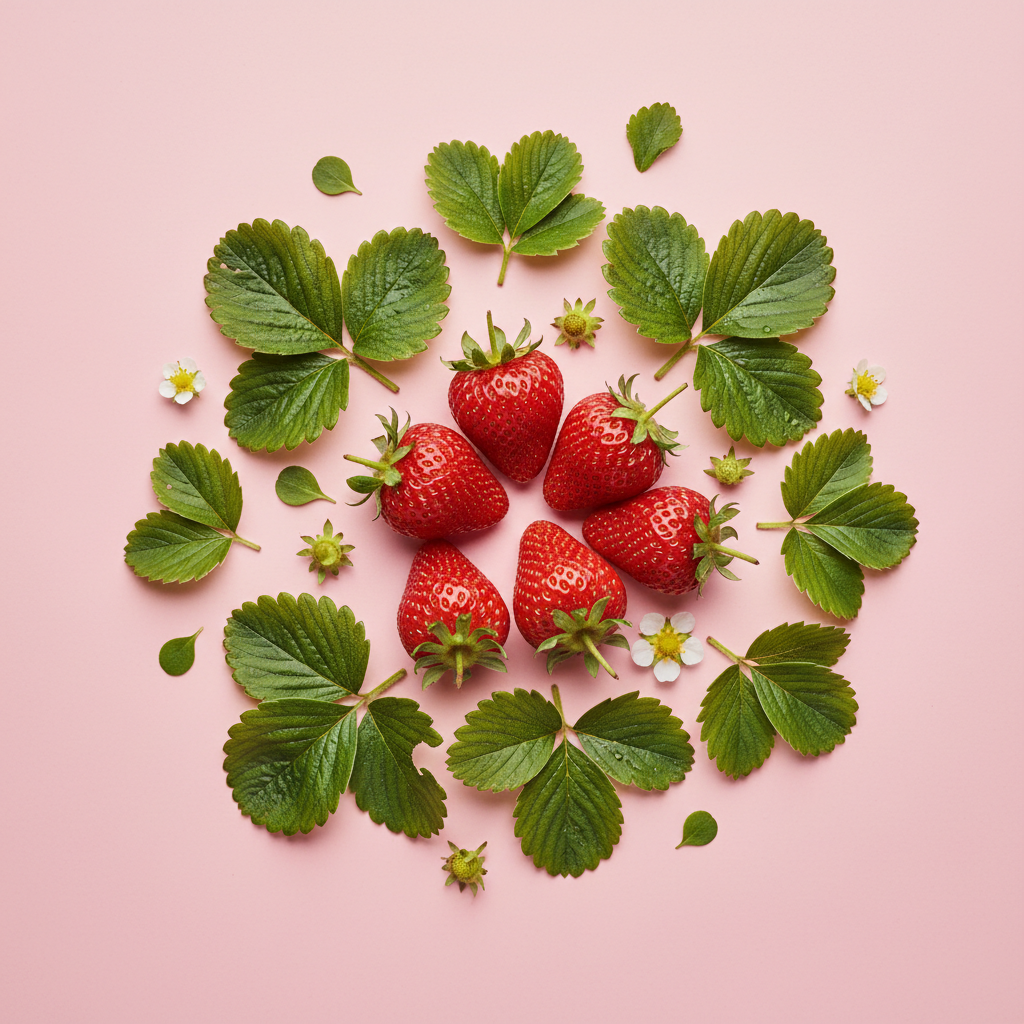

Most people chop off the green leafy top of a strawberry and toss it straight in the compost. But those leaves are completely edible — and they've been used in traditional medicine for centuries. Here's what you need to know about eating strawberry leaves safely.
Quick Answer: Yes, Strawberry Leaves Are Edible
Yes, strawberry leaves are edible and safe to eat. They're not toxic to humans. The leaves can be used fresh in salads, dried for tea, or blended into smoothies. The most popular way to consume them is as strawberry leaf tea, which has a mild, slightly sweet flavour.
What Do Strawberry Leaves Taste Like?
Raw strawberry leaves have a mild, slightly grassy flavour with a hint of sweetness. They're not bitter like some other fruit leaves. When brewed as tea, they produce a light, refreshing infusion that's somewhere between green tea and chamomile.
The young, tender leaves from the top of the strawberry are the best for eating raw — they're softer and milder. Older leaves from the plant itself can be tougher and more astringent, making them better suited for tea.
How to Eat Strawberry Leaves
| Method | How | Best Leaves |
|---|---|---|
| Strawberry leaf tea | Dry leaves, steep in hot water for 5 min | Any age |
| Raw in salads | Chop finely, mix with greens | Young, tender leaves |
| Blended in smoothies | Add a few leaves with fruit | Young leaves |
| Pesto | Blend with olive oil, nuts, parmesan | Any age |
| Garnish | Use whole as a decorative accent | Fresh calyx leaves |
How to Make Strawberry Leaf Tea
The most common way to consume strawberry leaves is as a herbal tea. Here's how to make it:
- Harvest or save leaves: Use the green tops from strawberries you've bought, or pick fresh leaves from your garden.
- Wash thoroughly: Rinse under cold water to remove any dirt or pesticide residue.
- Dry the leaves: Air-dry for 2–3 days, or use a dehydrator at 40°C for 4–6 hours.
- Steep: Place 1 tablespoon of dried leaves in a cup, pour boiling water over them, and steep for 5 minutes.
- Strain and enjoy: Add honey or lemon if desired.
Are There Any Risks?
Strawberry leaves are generally safe, but there are a few things to be aware of:
- Pesticides: Conventionally grown strawberries are heavily sprayed. Wash leaves thoroughly or choose organic.
- Allergies: If you're allergic to strawberries, you may also react to the leaves.
- Tannins: Strawberry leaves contain tannins, which can cause nausea in large quantities. Stick to 1–2 cups of tea per day.
- Medication interactions: If you take blood thinners or diuretics, consult your doctor before drinking strawberry leaf tea regularly.
Which Parts of the Strawberry Plant Are Edible?
The strawberry plant is one of those rare fruits where almost every part is edible. Here's the full breakdown:
| Part | Edible? | How to Use |
|---|---|---|
| Fruit (flesh) | Yes | Eat fresh, bake, blend |
| Leaves (calyx/top) | Yes | Tea, salads, smoothies, pesto |
| Runners | Technically yes | Not commonly eaten — tough and stringy |
| Flowers | Yes | Edible garnish, mild flavour |
| Roots | No | Not consumed |
The calyx — the green leafy top — is what most people mean when they ask about strawberry leaves. It's the part you'd normally discard. But the leaves of the strawberry plant itself (if you grow your own) are also edible and often more nutritious, as they've had more time to develop beneficial compounds.
Should You Remove the Leaves Before Eating?
For most recipes, yes — hull the strawberry and remove the calyx. Not because the leaves are harmful, but because they have a different texture and flavour than the fruit. Eating strawberries with the leaves on is like eating an apple with the stem attached: technically fine, but not the best experience.
However, there's growing interest in using the whole strawberry — leaves included — to reduce food waste. If you're making a smoothie, toss the whole berry in (washed, with the green top). The leaves add a slight bitterness and a nutritional boost from the flavonoids. See our food waste reduction guide for more ways to use food scraps.
Nutritional Benefits of Strawberry Leaves
While the fruit gets all the attention, strawberry leaves contain their own set of beneficial compounds:
- Quercetin: A flavonoid with documented anti-inflammatory properties. See our anti-inflammatory foods guide.
- Kaempferol: An antioxidant linked to heart health and reduced cancer risk in laboratory studies.
- Tannins: Astringent compounds that may support digestive health and have mild antimicrobial properties.
- Vitamin C: Present in moderate amounts, though less than in the fruit itself. See our vitamin C foods guide.
- Calcium and iron: Present in trace amounts.
For the full breakdown of health benefits and what the research actually says, see our companion guide on whether strawberry leaves are good for you.
How to Wash Strawberry Leaves Properly
Strawberries are consistently on the Environmental Working Group's Dirty Dozen list of most pesticide-contaminated produce. If you're planning to eat the leaves, washing is critical:
- Rinse under running water: Hold the strawberry (leaves attached) under cold running water for 15–20 seconds, gently rubbing the surface.
- Vinegar soak: For extra cleaning, soak strawberries in a solution of 1 part white vinegar to 3 parts water for 5 minutes, then rinse thoroughly. This removes pesticide residue and kills mould spores.
- Baking soda soak: Alternatively, soak in 1 teaspoon baking soda per 2 cups of water for 5 minutes. Baking soda is particularly effective at breaking down pesticide residues.
- Dry gently: Pat dry with a paper towel before using. Wet strawberries spoil faster.
If you can, buy organic strawberries when you plan to eat the leaves — it significantly reduces pesticide exposure. For more on food safety and storage, see our fruit and vegetable storage guide.
Can You Eat the Leaves of Other Berry Plants?
Strawberry leaves aren't the only edible berry leaves:
- Raspberry leaves: Well-known as a herbal tea, traditionally used for menstrual and pregnancy support.
- Blackberry leaves: Similar to raspberry leaves, used as a mild astringent tea.
- Blueberry leaves: Edible, high in antioxidants, used in some herbal teas.
- Blackcurrant leaves: Used in French tisanes and traditional medicine.
Always research before eating any plant leaves — some fruit plant leaves (like cherry and apricot) contain compounds that can be harmful in large quantities.
Wondering about the health benefits? See our full guide on whether strawberry leaves are good for you.
Frequently Asked Questions
Yes, strawberry leaves are completely edible and safe to eat. They are not toxic to humans. The green leafy top (calyx) of the strawberry can be used fresh in salads, dried for tea, blended into smoothies, or made into pesto. The most common way to consume them is as strawberry leaf tea, which has a mild, slightly sweet flavour.
Freshness Checker
Type any produce to get freshness tips instantly
Powered by PickFresh AI · Scan real produce with your camera →