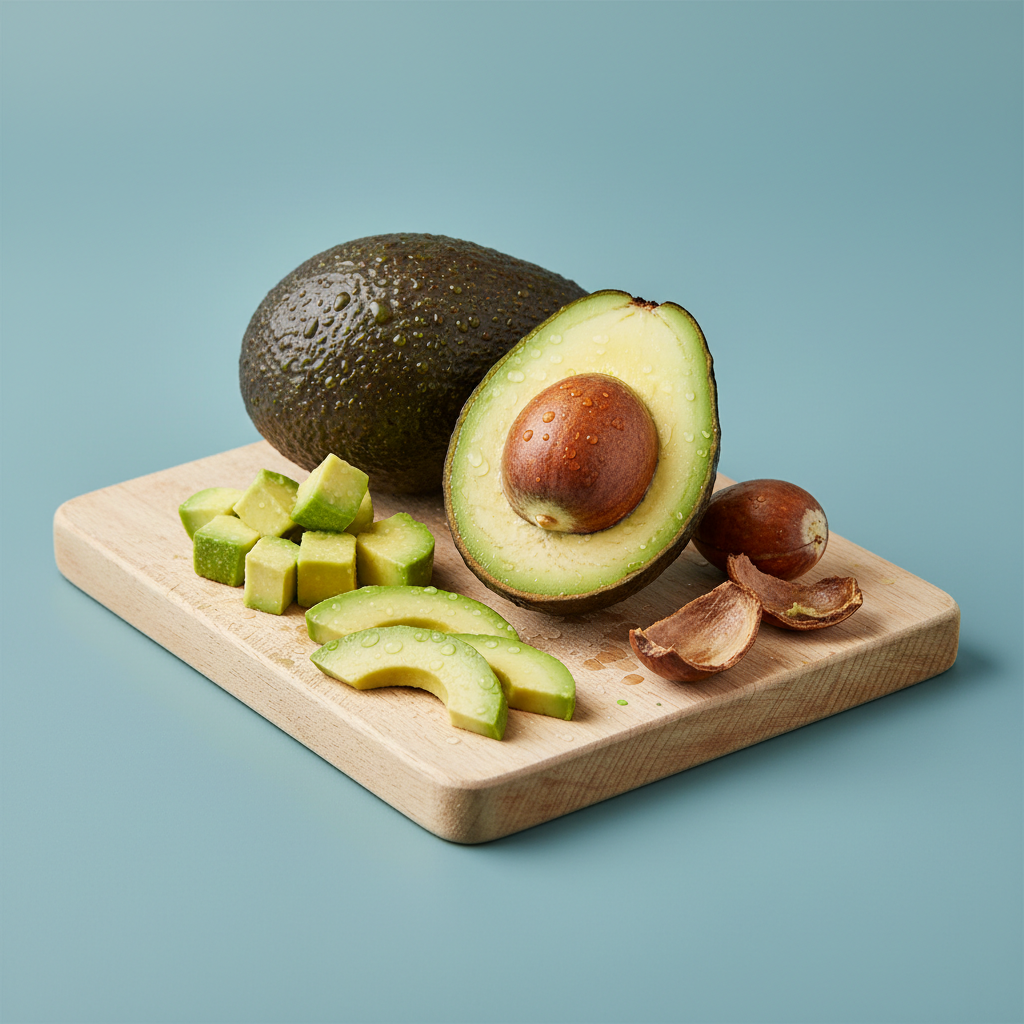
If you've cut open an avocado and wondered whether that giant seed in the middle is edible, you're not alone. Avocado seeds (pits) make up 13–18% of the fruit's total weight, and viral videos claim they're a secret superfood. But is it actually safe to eat them? Here's what the science says.
Quick Answer: Are Avocado Seeds Edible?
Avocado seeds are technically edible but not recommended for regular consumption. While they contain beneficial antioxidants and fibre, there is insufficient research on their safety, and some studies have raised concerns about toxicity. The avocado flesh provides all the proven health benefits without the risk.
What's in an Avocado Seed?
| Compound | Amount in Seed | Benefit |
|---|---|---|
| Dietary fibre | ~70% of seed weight | Digestive health |
| Procyanidins | High | Antioxidant |
| Catechins | High | Antioxidant (also in green tea) |
| Persenone A & B | Present | Anti-inflammatory |
| Fatty acids | Moderate | Heart health |
The Case FOR Eating Avocado Seeds
Proponents point to several potential benefits:
- High antioxidant content: The seed contains 70% of the avocado's total antioxidants, including procyanidins and catechins that are also found in green tea and red wine.
- Dietary fibre: The seed is about 70% fibre by weight — far more than the flesh.
- Anti-inflammatory: Compounds like persenone A & B show anti-inflammatory properties in laboratory studies.
- Waste reduction: Billions of avocado seeds are discarded each year — eating them would reduce food waste.
The Case AGAINST Eating Avocado Seeds
Despite the potential benefits, there are legitimate safety concerns:
- Limited research: Almost all studies on avocado seed compounds are in vitro (test tube) or animal studies. No long-term human trials exist.
- Potential toxicity: Some studies have found that avocado seed extract may have toxic effects in certain concentrations. The California Avocado Commission officially states that the seed is not recommended for human consumption.
- Antinutrients: The seed contains tannins and other antinutrients that can interfere with mineral absorption and cause digestive discomfort.
- Digestibility: The seed is extremely hard and fibrous. Even when ground into powder, it can cause digestive irritation.
- Taste: The seed is bitter and astringent — far from palatable.
What the Authorities Say
| Authority | Position |
|---|---|
| California Avocado Commission | Does not recommend eating the seed due to insufficient safety data |
| FDA (US) | No GRAS (Generally Recognised as Safe) status for avocado seed |
| EFSA (Europe) | No novel food approval for avocado seed |
| Research community | More studies needed; current evidence insufficient |
If You Still Want to Try It
If you decide to eat avocado seeds despite the warnings:
- Dry the seed in the oven at 120°C for 2 hours.
- Remove the outer skin.
- Cut into small pieces.
- Grind into a fine powder using a food processor or blender.
- Add 1 teaspoon to smoothies or baked goods (start with a small amount).
Disclaimer: Given the limited research, we don't recommend making avocado seed a regular part of your diet. The flesh of the avocado is well-studied, safe and provides all the proven health benefits you need. The seed is best composted.
Avocado Seed Tea: A Safer Alternative?
Some people brew avocado seed tea by boiling grated seed in water for 10–15 minutes. The theory is that hot water extracts the antioxidants (catechins and procyanidins) while leaving behind the harder-to-digest compounds. There's no research confirming this is safe either, but the dose of any single compound would be much lower than eating the seed directly. If you're curious about the antioxidant benefits, you're far better off drinking green tea — it contains the same catechins, has decades of safety research behind it, and tastes much better. See our anti-inflammatory foods guide for evidence-based options.
What to Do with Avocado Seeds Instead
If you're not eating them, here are practical uses for avocado pits:
- Grow an avocado plant: Suspend the pit over water with toothpicks, pointy side up. Roots appear in 2–6 weeks. It won't fruit in most Australian climates, but it makes a attractive houseplant.
- Compost them: Avocado seeds break down slowly but add carbon to your compost. Chop them in half first to speed decomposition.
- Natural dye: Boiled avocado seeds and skins produce a pink-to-brown natural dye for fabric and Easter eggs.
- Avocado seed face scrub: Dried, ground seeds are used in some DIY skincare as a natural exfoliant. Use finely ground powder and avoid if you have sensitive skin.
The Nutritional Case for Just Eating the Flesh
Here's the thing: you don't need the seed to get the health benefits of avocado. The flesh is one of the most nutrient-dense foods you can eat. One serving of avocado (1/3 of a medium fruit) gives you:
| Nutrient | Per Serving (50g) | Why It Matters |
|---|---|---|
| Monounsaturated fat | 5g | Lowers LDL cholesterol, raises HDL |
| Fibre | 3g | Satiety, gut health, blood sugar control |
| Potassium | 250mg | Blood pressure regulation — see our potassium guide |
| Folate | 40mcg (10% DV) | Cell division, pregnancy health |
| Vitamin K | 10.5mcg (9% DV) | Bone health, blood clotting |
| Vitamin E | 1mg (7% DV) | Antioxidant, skin health |
All of these nutrients are well-researched, proven safe, and present in meaningful amounts in the flesh. The seed's antioxidant content, while higher in raw quantity, comes with unanswered safety questions. The maths is simple: eat the flesh, compost the seed.
Why the "Superfood Seed" Trend Exists
The avocado seed trend started around 2016 when a study from Penn State University found that avocado seed extract had anti-inflammatory properties in laboratory testing. Health blogs ran with the headline "Avocado seeds are a secret superfood" without the context that the study was in vitro (test tube), used concentrated extract, and the researchers themselves noted that human safety studies were needed.
Social media amplified the trend, with viral videos showing people blending seeds into smoothies. The problem: the dose used in the lab studies bears no resemblance to eating a whole ground seed, and the safety profile is completely different. If you're looking for anti-inflammatory foods with proven safety, our anti-inflammatory guide lists evidence-based options.
Want to know how much avocado flesh to eat? Read our avocado serving size guide, or learn whether avocado causes weight gain.
Frequently Asked Questions
Avocado seeds are technically edible but not recommended for regular consumption. While they contain antioxidants and fibre, there is insufficient research on their safety for humans, and some studies have raised concerns about toxicity. The California Avocado Commission and FDA do not recommend eating avocado seeds. The flesh provides all the proven health benefits without the risk.
Freshness Checker
Type any produce to get freshness tips instantly
Powered by PickFresh AI · Scan real produce with your camera →